

Gordon Ramsay's Trick To Shiny, Silky Polenta Is Already Hiding In Your Pantry

Polenta is one of those dishes that sounds Italian and fancy, but really it's made from a bag of cornmeal — you might even have one sitting in the back of your cupboard as you're reading this. But when that humble cornmeal is cooked slowly in stock, stirred through with butter, then topped with a little parsley, Parmesan, and black pepper, you're left with something cozy, golden, and impressively delicious. And when it comes to making polenta, Gordon Ramsay doesn't stop there — he finishes his off with a drizzle of extra virgin olive oil, describing it in a video shared to Instagram as "the final coat of jewels." This simple touch makes the polenta's surface glisten, the texture loosen ever so slightly, and the flavor carry those extra notes of richness.
This easy upgrade works because olive oil has a silkiness that butter alone can't provide, so instead of melting into the base, it sort of spreads across the top, keeping every spoonful glossy. Instead of dulling or taking over the rest of the flavors, olive oil amplifies them. Of course, not every trick lands when it comes to polenta; rush it and you'll end up with lumps, or add too little liquid and it'll be grainy. And if you're still up for experimenting, baking soda is another trick to achieving creamy polenta — though it's slightly less glamorous than a drizzle of olive oil.
Riffs, upgrades, and other additions worth trying
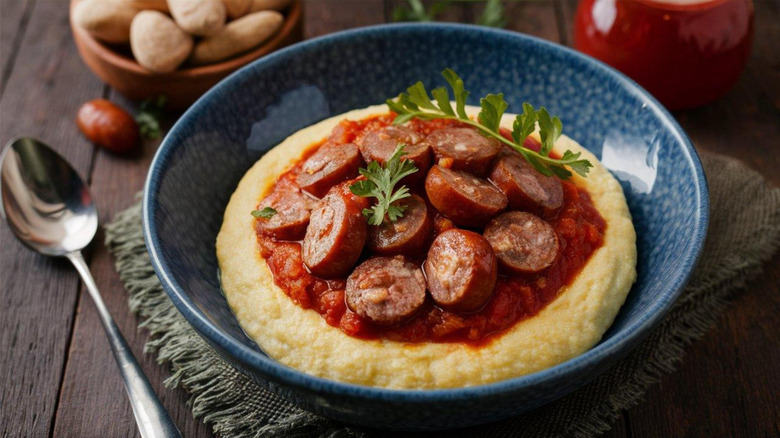
Once you've mastered the basics, polenta is basically a blank canvas waiting for some extra personality. Instead of Gordon Ramsay's recommended standard extra virgin olive oil, you could swap in a flavored olive oil, like one infused with chili or rosemary, or even a lemon-infused olive oil, to add some new flavor dimensions. Italians love to top their polenta with sausages cooked in a tomato sauce, which is a delicious option, but you could also try topping a bowl with roasted mushrooms, garlicky shrimp, or even a poached egg for a little variation. After all, while there are differences between grits and polenta, you can still pair polenta with similar things you'd pair grits with and make it part of your breakfast rotation. And texture is also fair game for experimentation — if you let the polenta firm up overnight, you can then cut it into shapes and suddenly you have a portion of polenta fries.
The best part is that none of these additions nor the base recipe require rare ingredients or hours of fussing around, really all you need is cornmeal, salt, butter, Parmesan, and a bottle of olive oil to recreate Ramsay's classic polenta dish. At the end of the day, a good portion of glossy polenta is so much more than just comfort food — it's good enough to impress at a dinner party and still manages to bring all the comfort you'd expect from that steaming bowl of golden goodness.