

The Old-Timey Apple Dessert You Can Make With Buttered Bread
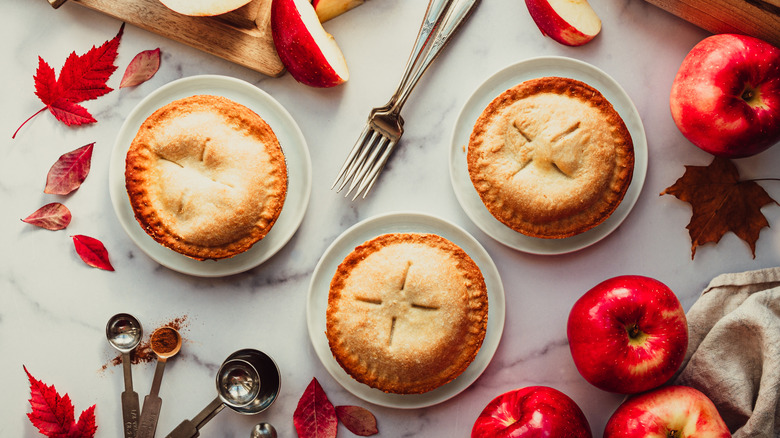
As fall's bounty starts to appear in orchards and ultimately in markets and stores, you may be wondering what to do with all of those apples. With a hearty texture and abundant natural sweetness, apples practically beg for a dessert transformation. If you love a showstopping meal finale, but baking isn't necessarily in your wheelhouse, this Julia Child classic is going to blow you away. Enter the Charlotte aux pommes or apple Charlotte. As Child waxed, even if you don't love a dessert, you are bound to like an apple dessert. This sweet centerpiece leans heavily into assembly territory, as opposed to baking, and uses surprisingly few ingredients.
Created to honor England's Queen Charlotte, apple Charlotte is a centuries-old French dessert that sounds extremely fancy and offers up a beautiful reveal moment after being baked, but is little more than boiled down apples and, shockingly, buttered sandwich bread. Lots and lots of butter. After all, Julia Child prepared this recipe on her famed cooking show, "The French Chef," and as we know from her top cooking tips, she embraced using plenty of rich ingredients, including butter. In the case of apple Charlotte, the butter (always clarified) serves to create the golden bread texture that encases this baked treat and gives it its structure, as well as makes it taste rich and luscious.
A molded showstopper of white bread and apples
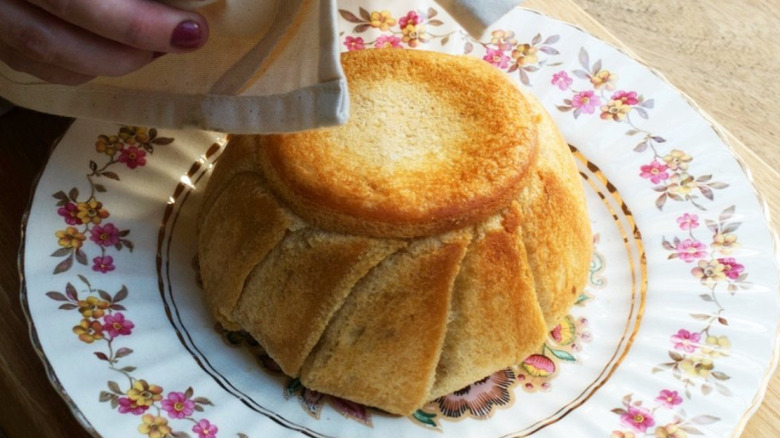
The apple Charlotte starts with sliced apples that are cooked down on the stovetop with sugar, vanilla, apricot jam, and dark rum. In Julia Child's cooking show's Charlotte aux pommes episode, she emphasized to always use dark rum when cooking or baking (or you may as well not use it at all), as the dark variety is the one that imparts depth of flavor.
The crux of the dessert is the white bread that lines the baking dish, and Child advised to use one with high sides for best results. Always practical and never too fussy when doling out advice, she recommended sliced white bread that is "un-sqishy," that is, it has enough substance to give the dessert some stability for when you flip and unmold it after baking. The pieces of bread, with crusts removed, should be first cut to line the bottom of the mold, and then be buttered and sautéed (as opposed to seared or pan-fried) to give the dessert's base, which will ultimately become the top, some color. Line additional butter-coated bread slices along the perimeter of the baking dish, slightly overlapping them to give the dessert its signature appearance.
Once the mold is completely lined with bread, scoop in the homemade apple filling. Add more bread to fully encase the dessert and, you guessed it, pour more butter over it to facilitate that beautiful browned exterior and prevent the apple Charlotte from sticking to the baking dish. After about half an hour in a very hot oven, let it rest for another half hour to firm up before flipping. From there, it's time for the big reveal and a final apricot glaze before serving. Child suggested topping the Charlotte with cream or custard and serving it with Champagne, Sauternes, or coffee — how civilized and dreamy. And to think it all started with apples and white bread.