

Robert Irvine Swears By These 2 Simple Staples To Elevate Almost Any Dish

Say goodbye to bland and boring meals and give them a flavor boost that chef Robert Irvine himself abides by. All you need to do is reach for two powerhouse ingredients that are common staples in most Southeast Asian cuisines: rice wine vinegar and ginger. Irvine swears by these flavor boosters. Given the versatility in their abilities to enhance almost any dish — from aromatic broths, salad dressings, savory sauces, and flavorful marinades — it's no wonder that these two coveted ingredients are among the must-pack list for Irvine's travels. Rice wine vinegar, also known as rice vinegar (which is different from rice wine), does more than just season your sushi rice. Unlike rice wine, it has a more distinct acidic kick that adds a layer of nuance to any recipe it's incorporated in, be it in an Asian-inspired marinade or even to liven up a fruity gin and tonic.
When using ginger in any recipe, there comes the question of whether to use fresh ginger or reach for the ground ginger in your spice rack. The former usually imparts a sweeter, more complex and pungent flavor, but involves the added step of finely chopping it. On the other hand, ground ginger delivers a similar flavor profile and bypasses the need to peel and chop, making for a more convenient choice. However, it may lack the depth and complexity of fresh ginger for those with an attuned palate. Irvine's recipes use both fresh and ground ginger, but bear in mind that ground ginger can be more potent than its fresh counterparts, which means a little goes a long way.
Why you should be cooking with ginger and rice vinegar
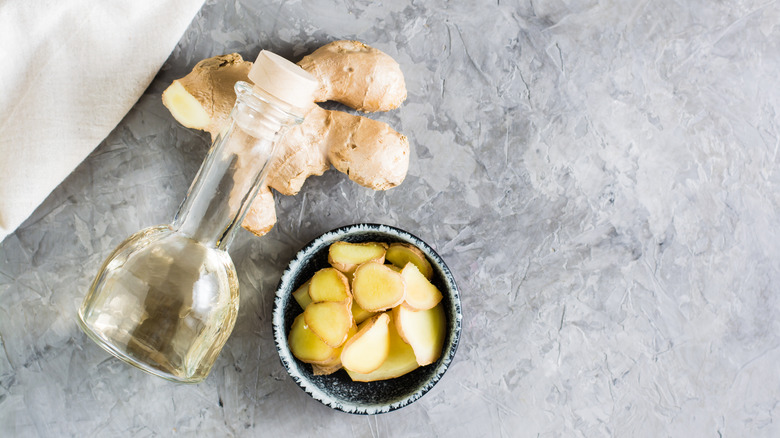
There's a clear gastronomic component that underlies why ginger and rice vinegar deserve to be on the list of mandatory flavor boosters in your pantry. Ginger affords a unique balance of sweet, spicy, and piquant warmth, which the acidity from the rice wine vinegar adeptly cuts through to create an overall balanced flavor profile. Furthermore, when active compounds in ginger interact with those of rice vinegar, they work in tandem to create a flavor with added depth and complexity.
Both ginger and rice vinegar have historical uses in culinary practices in East Asia. In addition to its potential in the kitchen, ginger was also valued for its purported medicinal properties. On the other hand, rice vinegar was commonly used as a preservative before its untapped ability to elevate the flavor of a dish was discovered and harnessed. Plus, both offer nutritional benefits as well, with ginger being known for its anti-inflammatory properties and beneficial effects on digestive health, while rice vinegar may help regulate blood sugar and cholesterol levels. With these two ingredients on hand, healthy eating gets way more interesting and enjoyable. For an appetizer, you can breathe new life into a gyoza dipping sauce by adding a splash of rice vinegar and some freshly minced ginger or a pinch of ground ginger to soy sauce and sesame oil. The two work great in stir-fries and sautés, and also in one of our favorite ways to serve and eat tofu: a crispy ginger-glazed tofu bowl.