

Blade And Flat Iron Steak Are From The Same Cut: Here's The Only Difference
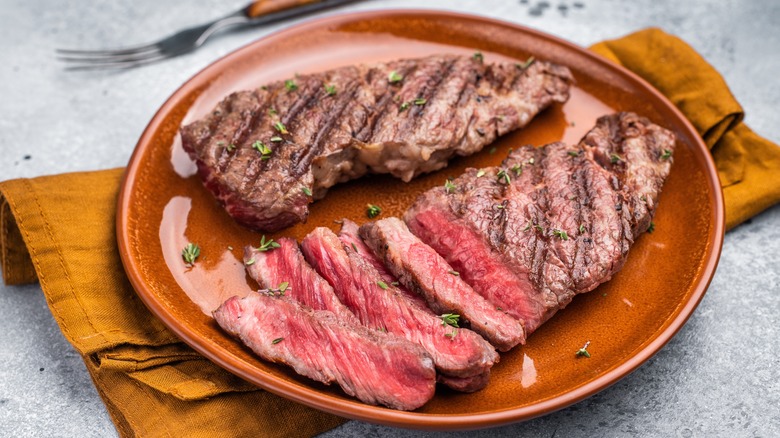
Steak is a blanket term for many different cuts of meat from a cow. There are tender steaks with plenty of marbling, such as ribeye, as well as leaner steaks with less fat, like sirloin. And if you've ever heard the terms "blade" or "flat iron" steaks, you should know that these actually come from the same cut of beef — there's just one key difference.
"Blade steak and flat iron steak are the same muscle on the cow, just cut (and/or referred to) differently. The muscle comes off of the exterior of the shoulder blade and so has tons of flavor," Koji Fujioka, butchery manager at The Local Butcher Shop, told Chowhound exclusively. "As a whole, the muscle has a flat seam of connective tissue we call 'silver skin' which runs parallel down the middle."
Fujioka explained that when you cut the steak and include that tissue, you're cutting a blade steak. But if the cut of beef has that silver skin removed (something you can ask your butcher to do for you), it's then referred to as a "flat" or "flat iron" steak. If you want a flat steak but accidentally end up with the blade cut, then it's best to remove the muscle yourself once the meat is cooked. "You can remove it before, but you'll lose more meat that way," he said. Either way, while these distinct cuts may both come from the chuck primal, they shouldn't necessarily receive the same treatment in the kitchen.
Blade and flat iron steaks benefit from different cooking methods
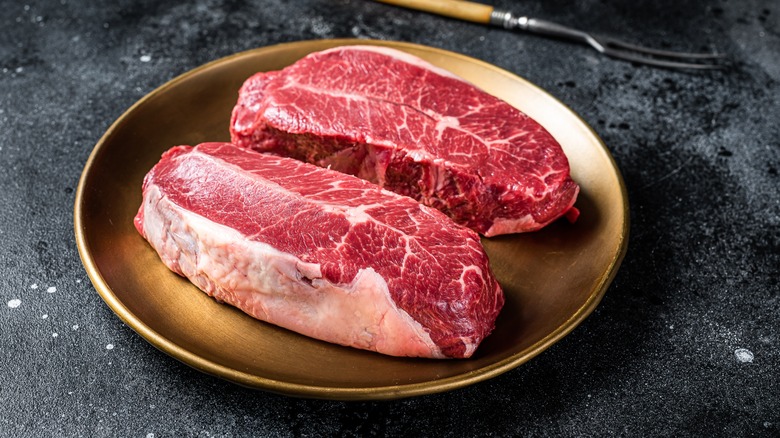
The most critical difference between blade and flat iron steaks is the connective tissue, and that tissue's presence determines how the meat should be cooked. It's extremely tough, so depending on the amount in your particular steak, you may not want to just sear it the way you would with other cuts. For blade steaks with connective tissue, Koji Fujioka instructed, "Leave the silver skin in the muscle, cut it into chunks or medallions, and then slow cook (or 'braise') it until it's tender and the meat pulls apart." To braise this kind of steak, you might try using the braisage method, which takes several hours but yields fantastic results. For a flat steak without that connective tissue, you can sear it quickly over high heat.
While Fujioka suggested removing the silver skin after cooking, you can also remove it during the prep stage. You have to first feel for the start of the connective tissue with your hands, then slowly slice the top layer of meat away from it using a sharp knife, going from the top of the steak to the bottom. Then, flip the meat over, and slide the knife between the silver skin and the other side of the meat. This creates two flat iron steak cuts and allows you to enjoy a tenderer beefy bite.