

You Can Learn A Lot About A Whiskey By Just Looking At It
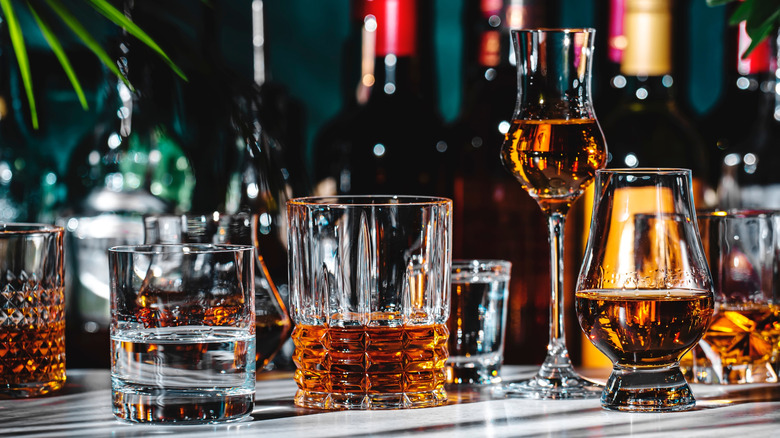
For those who consider themselves avid whiskey drinkers, you'll already know that a spirit's mere appearance can reveal a great deal about the distillation process and the flavors you may experience. Those who are a little less versed may not know that there are thousands of different types of whiskey products, and that some whiskeys are even clear. The sheer market variety is a result of the newly established American craft distilleries in recent years, all offering spirits which range in flavor, taste, length of barrel aging, and smokiness (some of which you can tell just by looking).
To help you develop a keen eye for whiskey, Chowhound reached out to Deena Sayers, the beverage director at The Stand in New York City. "Generally, a darker hue suggests longer aging, a higher barrel char, or both," she says. Whiskey is most often aged in oak barrels, and less commonly in virgin oak barrels, which are really only best for shorter-term aged spirits.
Whiskeys can range in color from light, semi-translucent sand to deep reddish brown, and each tonal range has something to say about its contents. Sayers states that darker hues suggest longer aging or a higher barrel char, and that the hue's depth can also indicate a woodier or smokier final product. The color of your spirit isn't exclusively reflective of its aging process, so you can expect the color to be representative of its relative flavors as well.
Adding water can enhance your whiskey experience

Serving whiskey with a few drops of water is a controversial practice. Some whiskey purists think that this spirit is best enjoyed for its truest qualities — best presented without any added ice or water. Others believe that making use of water can elevate the whiskey-drinking experience by opening up your senses to flavor notes you wouldn't otherwise experience.
"A little water dilutes the spirit and helps open up the flavor profile," says Deena Sayers. "Adding water is especially helpful with higher-proof whiskies, older expressions, or anything with bold, intense flavors. It softens it and allows the natural flavors to shine through."
Regardless of whether you land on the side of adding water or stand against the practice entirely, there's more consensus on whether you should pre-chill your whiskey glasses. Ultimately, the type of whiskey you plan to drink, the nuanced flavors you're after, or the general temperature you prefer to enjoy it at is up to personal preferences. If you're one to prefer your whiskey in a more complex drink, make sure you avoid these common mistakes when crafting whiskey cocktails.