

The Important Oil Advice To Keep In Mind When Frying Your Own Donuts
We may receive a commission on purchases made from links.
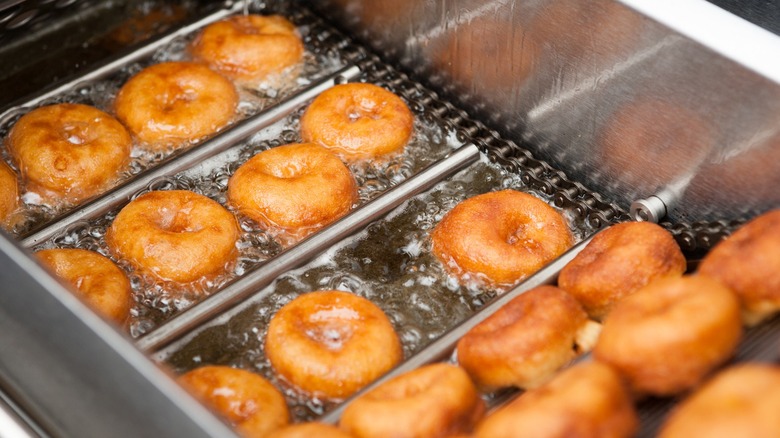
There's nothing quite like walking into a donut shop and smelling the freshly-fried dough. Believe it or not, it's actually pretty simple to make donuts in your own kitchen. Once you've picked your recipe (we're partial to custard-filled Boston cream donuts) and prepared your dough, following a few simple frying tips can make all the difference between oily or overcooked donuts and rings of sugar-coated perfection. Hannah Taylor, author of "Measure with Your Heart," spoke exclusively with Chowhound to share her top tips on how you can create crispy-on-the-outside, soft-on-the-inside donuts in the comfort of your own home.
One thing you shouldn't leave to chance when deep-frying is the oil temperature — around 350 degrees Fahrenheit is the sweet spot for donuts. "That's hot enough to give you that golden outside with a fluffy middle, but not so hot that they brown before the inside cooks through," Taylor says. "I like to keep a thermometer clipped to the pot so I can glance at it often. Oil has a mind of its own, and it can swing up or down quickly, especially once you start adding dough."
She adds that she likes to check the oil with the thermometer before dropping in each batch. This allows her to make sure that every donut can puff up and float to the top. If your oil temperature is too high, your donuts will brown too quickly, leaving you with a raw center. When the temperature is too low, your donuts will soak up oil, creating a greasy result. It's all about finding balance.
How to check your donuts without a thermometer
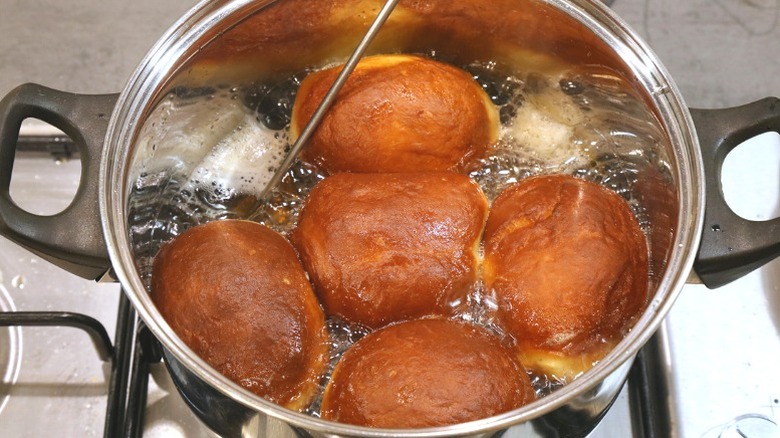
If you don't have a kitchen thermometer, you can use visual cues to figure out whether your oil is the right temperature for donuts. "One is the wooden spoon test. Stick the end of a wooden spoon or chopstick in the oil, and if you see steady little bubbles form around it, you're good to go," says Hannah Taylor. "If the bubbles are wild and furious, that oil is too hot and needs a minute to calm down."
No wooden spoon on hand? "Another trick is to drop in a tiny pinch of dough or a breadcrumb," recommends Taylor. "If it sinks, then slowly rises with little bubbles, the oil's ready. If it shoots right back up and browns instantly, that's your sign it's too hot." Be sure to remove tester pieces of dough so you don't end up with burnt bits sticking to the pan. It would be a mistake to toss frying oil when you can reuse it for another recipe. When in doubt, you can simply keep a close watch on your oil — if it's smoking, it's way too hot. As Taylor poetically puts it, "Oil should shimmer like sunlight on water, not smoke like a campfire."