

The Scientific Reason Some People Can't Handle Raw Tomatoes
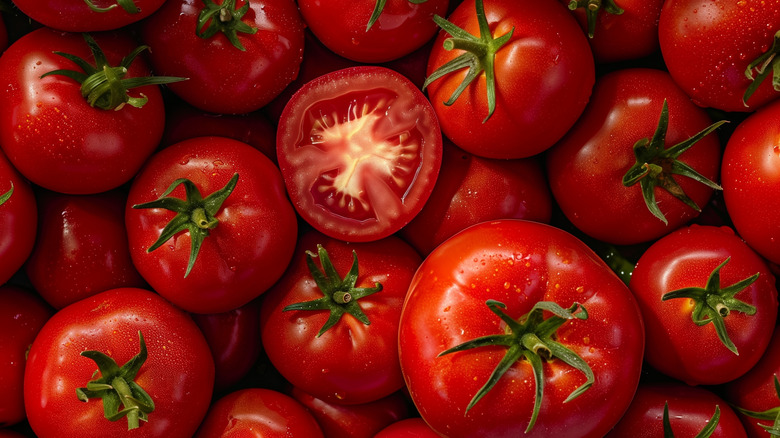
Tomatoes are one of those vegetables (well, botanically speaking, a fruit) that seem to find their way into everything. From pizza and pasta to classics like the tomato sandwich, not to mention the best Bloody Mary you've ever tasted, tomatoes are almost everywhere. The fact that they can so easily be incorporated into various dishes is great, as it helps us get high doses of vitamins C and K. Still, for the unlucky among us, tomatoes — specifically raw ones – cause more harm than good due to their ability to cause digestive distress.
This is because tomatoes are a member of the nightshade family (alongside potatoes, eggplants, and peppers.), These foods contain naturally occurring chemical compounds known as alkaloids, which act as a defense mechanism against pests. The main alkaloid found in tomatoes is solanine. While most people can tolerate these compounds just fine with no ill effects, those with a nightshade sensitivity will have trouble digesting tomatoes and may present other unpleasant digestive symptoms too, such as bloating, nausea, and gas.
How to know if you have a tomato intolerance

Unfortunately, there is no way to test for a nightshade intolerance. Medical professionals can test for specific allergens, but that's different from an intolerance. Tomato allergy symptoms usually include rashes or swelling around the face or throat, eczema, or abdominal pain. The best thing to do to verify nightshade intolerance is to eliminate them from your diet and reintroduce them later to see if any symptoms subside. Unripe, raw tomatoes will be the worst offenders when it comes to this sensitivity, because they tend to have more alkaloids present. Opting for cooked tomatoes — like those found in the tastiest tomato soup of your life – will help mitigate symptoms.
While there is no concrete evidence that alkaloids in nightshades can further aggravate inflammatory or autoimmune conditions like irritable bowel syndrome, many people with these issues cut nightshades like tomatoes out of their diet as a precaution to minimize flare-ups. For cooking swaps, beets or carrots can be used instead of tomatoes, mushrooms instead of eggplants, and sweet potatoes can be used instead of white potatoes.