

If You Struggle With Spice, Don't Order This Thai Curry
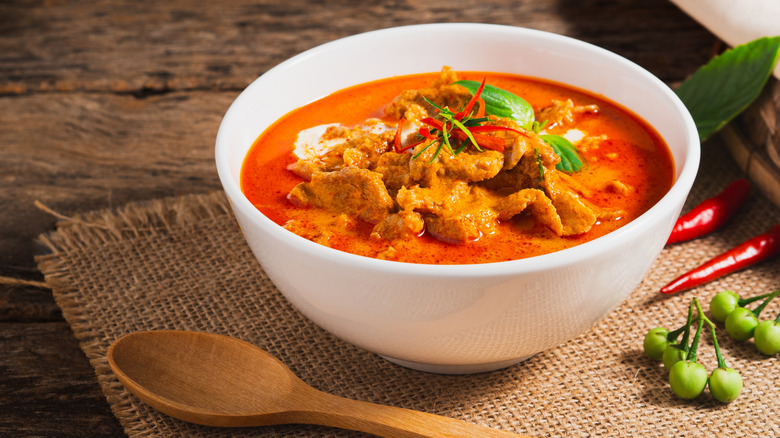
Of all the various curries that you can find around the world, Thai curry stands as one of the most celebrated. The vibrant and aromatic dishes come in a veritable spectrum of colors, with the three most common being yellow, red, and green — the colors indicating differences in the curry paste that serves as the heart of the dish. But it's worth noting that different curries will have different levels of spiciness, so we called up a professional in the field to ascertain which curries you should avoid if you want to steer clear of anything too hot.
Aom Srisuk has her hands in New Orleans' culinary scene, operating as the executive chef and owner of both Good Catch as well as Pomelo — two purveyors of Thai cuisine. And when it comes to particularly piquant curries, she advises that you stay away from two popular dishes. "Green curry is typically the most spicy of the popular Central Thailand curries," she states, saying that "the green color comes in part from fresh green chilis." She then highlights a second spicy option, saying that "red curry is typically the next spiciest, made with soaked dried red chilis." So, as tempting as these two curries may appear, definitely use caution if you're looking to avoid a spicy encounter at dinner.
Which curries are milder?
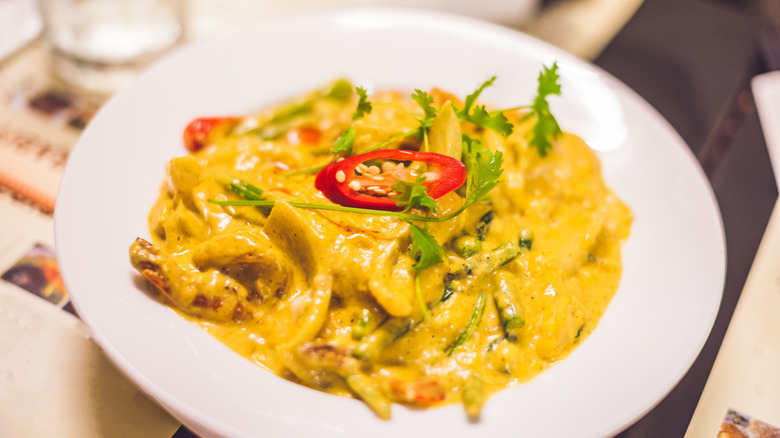
Of the three main colors of curry, Aom Srisuk recommends yellow curry to those less spice-inclined, saying that "yellow curry is turmeric-forward, as it's made with curry powder in it. Just a bit of dry chili adds more depth than heat." This presence of turmeric and other ingredients such as cumin, nutmeg, and lime give you amazing depth of flavor while also making the overall paste less biting in terms of spiciness. As such, yellow curry is usually a wise choice for those seeking a delicious but mild dish.
Srisuk mentions that two other curries are also pretty tolerable in terms of spice, since the additions of other ingredients help to mellow out the chilis in the paste. The two in question are massaman and panang curries, the latter making for an excellent curry tomato bisque. "Massaman is typically considered the mildest," says Srisuk. "Full of warm spices, but no heat — cinnamon, cardamom, star anise, and clove make this a delightfully flavorful, but not spicy dish." As for panang, it's all about quantity: "Panang curry paste is, at its base, similar to red curry, but with fewer red chilis and the addition of peanuts which mellow it out." These are distinguishing factors that define what kind of curry they are, and each of these can be favorite dishes to order in lieu of pad Thai next time you're in the mood for some Thai fare.
How to know if a curry is going to be spicy
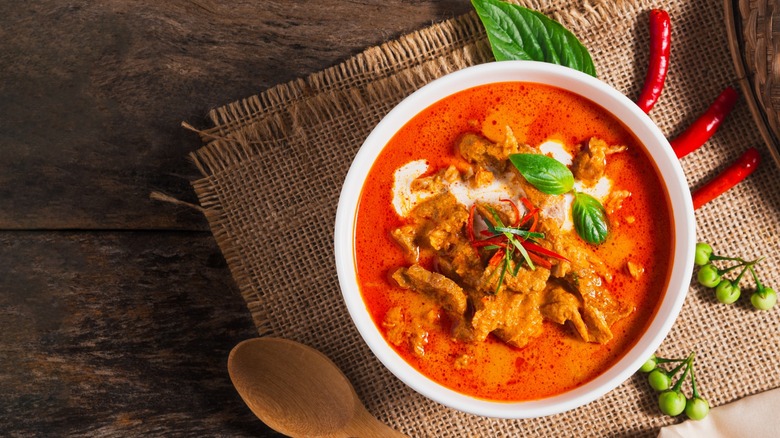
There's always a certain level of risk involved when visiting a restaurant or branching out and trying a new dish, especially if you don't have a very high spice tolerance. Even with Aom Srisuk's suggestions in mind, you don't exactly want to order a dish only to find that it simply isn't suited to your personal tastes. You don't want to leave a restaurant with a bad taste in your mouth (literally), which is why you should always see if you can taste a curry beforehand — at least, that's what Srisuk advises.
Since curry pastes are sometimes already pre-made, ready to be used in their respective dishes, it could be possible for you to sample them to see if the level of spice is to your liking. "If they have the curry already made, it's reasonable to ask for a taste of the base and see if the restaurant offers that option," says Srisuk. And even if you order your curry and it's still too hot to handle, you can always leave that plain rice on the side to help temper things. That's right, don't automatically mix the rice into your curry, a common mistake made by Americans according to our expert — leave the rice be so you have some reprieve from the symphony of spices going on in the rest of the dish. Do these things, and it should be no problem to tackle Thai curry, regardless of your spice tolerance.