

9 Mistakes Everyone Makes When Making Pickled Sausage
We may receive a commission on purchases made from links.
If you've got some fresh Polish sausage lying around, here's a tip: Pickle it. Sounds a little out there, but brine-soaking links have been puckering palates all over the Midwest, as well as parts of Europe like the Czech Republic. They're a natural fit with cheese plates or kosher dills. "Many eat them as a snack just as they are. Others like to slice them and top with mustard or offer them on the ever popular charcuterie boards," notes Mary Lussier, whose business Muddy Trail Jerky Co. produces dried meats and pantry wares out of Greenwich, New York.
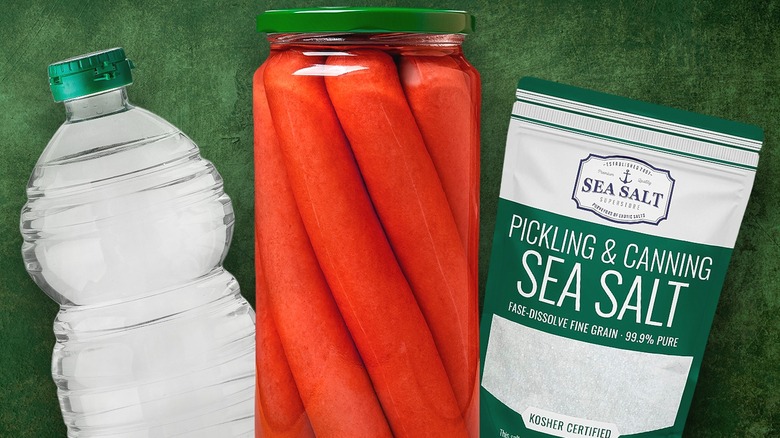
Jugs of red-dyed wieners boasting the Penrose label used to be a staple on convenience store shelves. Considering those went the way of the do-do due to a facility fire, duping them at home is the next best thing. But if you want to relive those legendary treats, to pickle your sausage correctly is the first step. "Do your research," states Lussier. "Pickling anything with protein like sausage is very different from pickling cucumbers or beans." And she's correct. From our conversation, we tracked the most ubiquitous issues that jeopardize the finger food beyond anything else. Between mis-measuring your ingredients to ignoring cleanliness measures, allow these mistakes to offer a blueprint — one where your jar makes it to the finish line, not the trash can.
1. Not following a recipe

Right off the bat, you're probably wondering why a recipe would be necessary to pickling some sausage. We're not making beef Wellington here, we're spiking weenies with vinegar; how hard can it possibly be? Still, to honor the authentic techniques means a thorough set of instructions is crucial. Before getting anywhere near the kitchen, pin down your recipe first. Having proper directions at your disposal makes all the difference, and Mary Lussier advises sticking to recipes that aren't overly complicated. This will help you succeed from the first batch to the last.
Simply put, clear and concise steps help home cooks avoid regrettable errors that could be prevented. Minus preferential factors like spices, jarring your sausage is going to require some exacting methods: how long to boil the brine, say, or the quantity of salt to kickstart the pickling and stave off spoilage. And if you're home canning, only stick to recipes that have been developed by professionals. For safety's sake, the CDC emphasizes following procedures that have been extensively tested in a lab environment. While we understand honoring one's family traditions, your grandmother's hand-written formula might not adhere to modern standards.
2. Pickling sausage that's overly lean or fatty
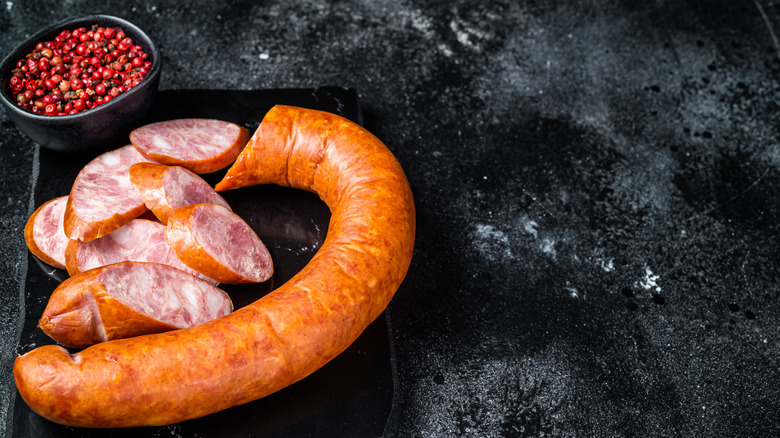
You might be wondering about the kind of sausage to soak in your brine. Scouring authentic recipes demonstrates that any pork or beef blend is acceptable, whether it's Little mokies or Polish kielbasa (a reminder that the meat must always be pre-cooked — never raw). Speaking with Mary Lussier, beginner canners should really pay attention to the fat content if they haven't already. It can affect the distinctive characteristics of your pickled meat. "Too much fat and it is really greasy. Too little fat and it is dry and unflavorful," Lussier says.
Mind you, a little fat is necessary when handling sausage links. After all, the plump bite we associate with the perfect weenie wouldn't be possible without it. But the mouthfeel will gain new dimension in a vinegar-based solution like brine. The wetness and chemical reactions at play, will seep into the meat, affecting the sausage's texture so that's it's much moister than it was at the start.
When picking up your supplies, check the package — definitely stay away from any meat labeled "low fat." On another note, the protein source itself could be a culprit for negatively impacting your pickling project. Links made from ground poultry like chicken are much leaner than pork. You might be tempted to make the swap for health reasons, but experts advise against it to for the best finished product.
3. Seasoning with table salt
Salting is one of those old-world preservation techniques that's never gone out of style. In pickling sausages, the sodium crystals draw out that tell-tale piquant sourness, all the while warding off impurities that could contaminate your batch. Not any old salt will do though, however. Newcomers should skip the table salt when going about marinating meat links. The reason being, the salt cooks rely on for seasoning purposes contains extra additives that could mess with the pickling process. Best case scenario, regular salt will only cause a few surface-level issues — a murky vinegar solution, for one. But at worst, it could fail to properly safeguard the meat from spoiling, which is where toxic pathogens can truly run loose once you've sealed up the jar.
Thankfully, it isn't too hard getting your hands on the specialized stuff. If you're interested in home pickling as a long-term hobby, reviewers have had excellent luck with this 14-ounce bag of Pickling & Canning Sea Salt. Do keep in mind a potential downside to this salt type, which is perishability. Pickled foods don't last in storage like you think, and oily meats can potentially go off more quickly when there's canning salt in the mix. Aways abide by food safety guidelines.
4. Not using the right vinegar
When asked to name another mistake, Muddy Trail Jerky Co.'s Mary Lussier brought up vinegar — namely, "not using the same acidity of vinegar." The contents of your jar need to be swimming in acid. Those sulphuric compounds are the barrier against unsavory organisms, which can potentially brew away under the lid if you're not careful. The amount that should be present in a bottle fit for pickling is 5%. Never pick a bottle that's beneath this threshold. Should you mix and match your brine with varying styles — the aroma of apple cider vinegar is a popular one — it still needs to contain this percentage to safely preserve your sausages over time.
Considering meat producers can't necessarily "sample" the sausages during the marinading stage, it's important to select the right kind of vinegar upfront. Make sure the bottle isn't too high in acid either — it might be harsh, and not be intended for consumables. Anything labeled "white" or "distilled white" should harbor this acid content, but closely inspect the bottle to ensure the quantity is accounted for. This Natural Distilled White Vinegar from Lucy's Family Owned would tick the box. Sausage naturally holds onto juices, which can water down the vinegar — and its acidity. So pat them dry when packing them in.
5. Neglecting to clean your containers
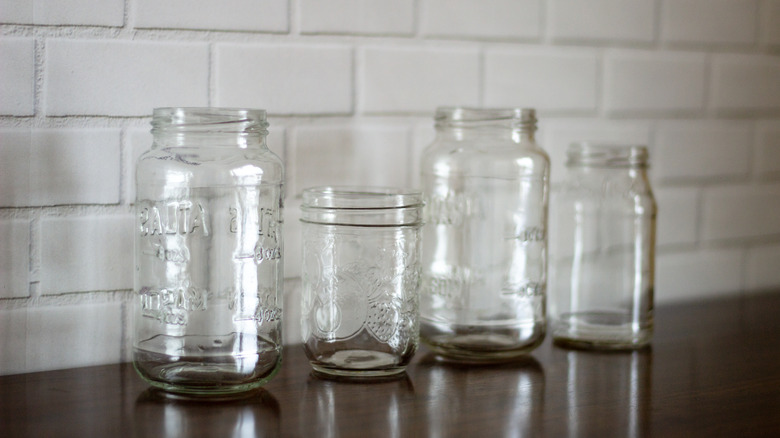
If rinsing a jar under hot water is your typical standard of "clean," we're afraid pickling sausage demands some tougher protocols. Seasoned home canners understand this, but it bears repeating: cleaning your glassware is a must. You don't want nasty germs to build up and infect your wares — botulism being the likeliest of culprits in contaminating preserved goods. Even when your 16-ounce Wide Mouth Mason Jars are brand-spanking new, they need to be thoroughly sanitized before any food touches it.
Following instructions from reputable sources, like the National Center for Home Food Preservation, is bound to set your pickled sausage up for success. To disinfect the jars, they'll need to sit in heated, boiling water for 10 minutes. Acquiring a an appliance like a pressure canner or boiling water canner is recommended, since the appliance is tailored to keeping out impurities (when in doubt, check trusted resources). And it's basically hands-off to boot. Simply lower them into the chamber — the mouth of the lids should face up — get your timer going, and take them out with canning tongs once they're finished.
6. Dumping whole seasonings and brine all at once
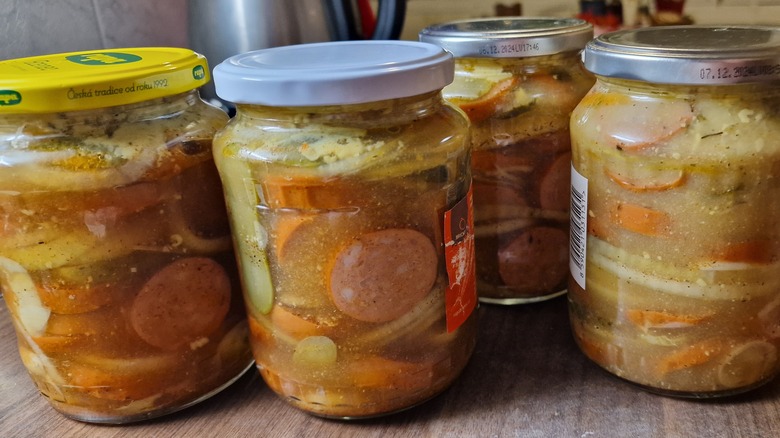
Sanitary practices aside, there really isn't a ton to pickled sausages. When you boil it down to the basics, you simmer a brine, stuff them in a jar, and let those weenies percolate in acid-kissed spices. Well, how you assemble the contents ensures your sausage gains its tangy kick during its down time. You want all the seasoning agents to mingle, to impart your meat with the full range of flavoring power. That's why with whole add-ins, like garlic cloves or peppers, dumping them straight into the brine isn't effective at balancing out the flavors. Add them in with the sausage, a little at a time.
Anyone who's put together mason jar salads will find this solution a breeze. It's simple. Pad out your cans by forming layers. Drop in a few sausages, then sprinkle in the other ingredients, repeating until the vessel is adequately stuffed. Then, submerge it in the liquid. Mary Lussier does it like this at Muddy Trail Jerky Co., "We fill our jars with cooked sausage, then a few flavorful items like garlic, black peppercorns, bay leaf, etcetera. Pour the hot brine over the sausage, then seal them hot." Ensure your pickled meats don't overflow by allowing some breathing room at the top of the can — aim for about ¼ inch to ½ inch of free space.
7. Measuring the ingredients by volume
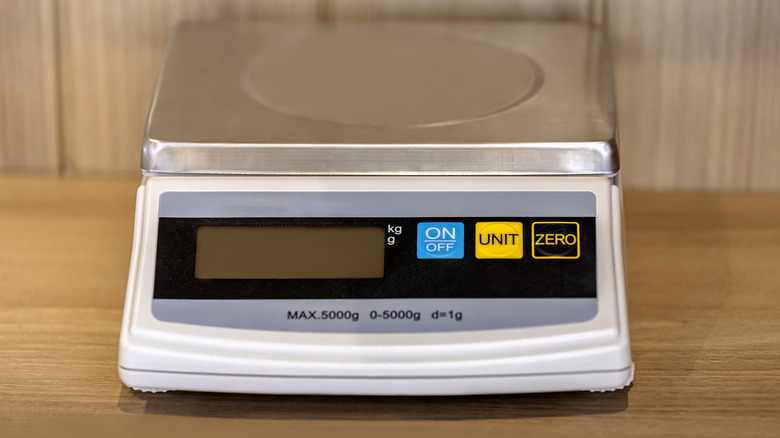
More often than not, American kitchens — including your own — will be stocked with measuring utensils. They're essential, right? You might not think twice about them, but that doesn't always mean they're proper for every culinary project. Teaspoons and tablespoons don't account for a substance's density — only the volume, or the space they take up. And because excellent pickled sausage feature balance — on sourness, pungency, spice, the whole nine yards — tossing your brining mix together with these tools would sacrifice the precise ratios meat manufacturers rely on.
Instead, take this extremely helpful tip from Mary Lussier, and weigh your ingredients on a scale, "100 grams instead of ¼ cup for accuracy." A single cup of rice will not weigh the same as a cup of vinegar, and while this doesn't always matter, these inconsistencies cannot be afforded to pickling sausages the correct way. If obtaining a gadget like this inspires worry, fortunately decent ones aren't usually too pricey. This Etekcity Digital Food Kitchen Scale will eliminate doubt and garner equal allotments every time for just under $15. A small price to pay for zero errors in pickling your sausage to perfection.
8. Not testing the pH levels
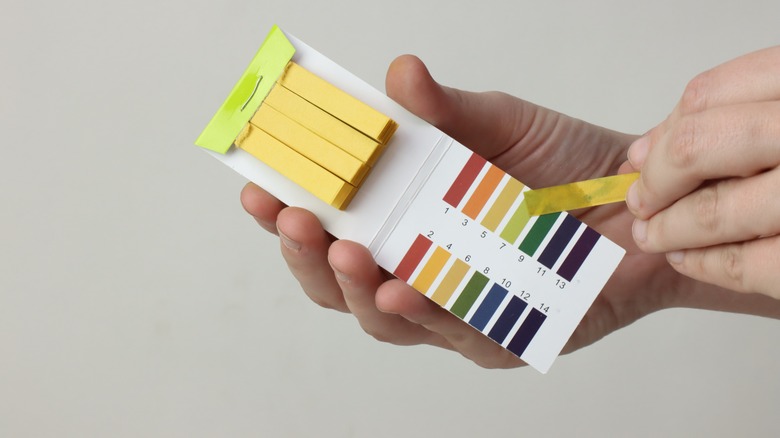
Botulism, or its scientific alias Clostridium botulinum — it's the last thing you want to encounter preparing your sour weenies. Make sure you keep this bacteria at bay with one of Mary Lussier's go-to tips. Measure the sausage's pH. Long story short, pH refers to the presence of acid that naturally occurs in meat — an aspect that's significant for treating the sausage without inducing rot or inviting organisms (at least the bad kinds). Watch out for an amount below 4.6: That's where microbes thrive, and according to the CDC, means hobbyists should never resort to hygienic shortcuts.
Assuming you've never needed an opportunity to test pH, handy tools are out there for scoring fool-proof results (here's a Digital pH Meter for Food to get you started). It's an extra step to stick in your back pocket for a few reasons. By not second-guessing, testing the levels lets you know the links are suited for canning. Besides awarding you with an excellent pickled batch as a result, it also gives you the peace of mind that your pickled sausage isn't harboring any harmful to consume.
9. Improperly sealing or storing the jar
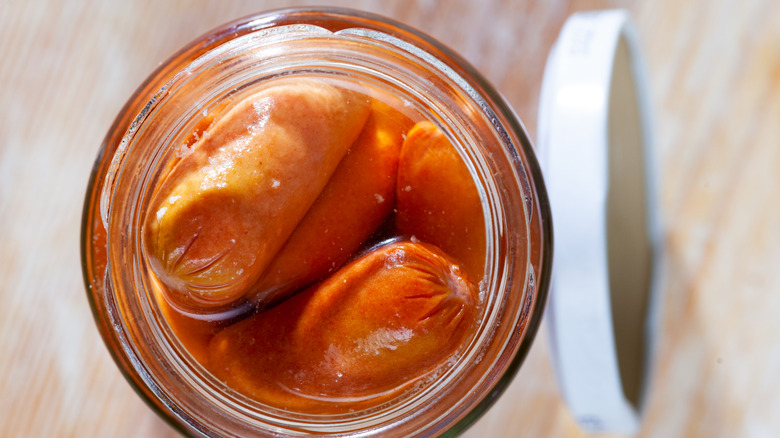
Pickled sausages are a preserved product. That salty, savory vinegar is the key to deliciousness, and a long-lasting snack to have on hand. But that doesn't mean expiration dates don't apply. Incorrectly sealing your can, or stashing them in an environment unsuitable for cooked meats, is a huge mistake regardless of canning versus vacuum-sealing your mason jars. Reveals Mary Lussier, "I spent 16 hours in a training class on pickling and found the capping is very critical to the success of pickling."
How and where you let the sausages marinate mainly depends on the method you used. For a quick pickle – where it's not intended to last a long time on the shelf – your sausages should always be refrigerated, and no longer than a week. Unopened, a professionally-canned batch can withstand a year or two — just keep them somewhere cool. "Ours are shelf stable and then should be refrigerated after opening (due to the scheduled process)," says Lussier. "If there is not a proper seal on the lid, they should be refrigerated at all times." Some of these storage mistakes can even ruin your food, according to Lussier. "These are not something I would recommend messing around with, as it could lead to getting sick."