

The Vital Step For Homemade Bagels With The Perfect Color And Texture
We may receive a commission on purchases made from links.
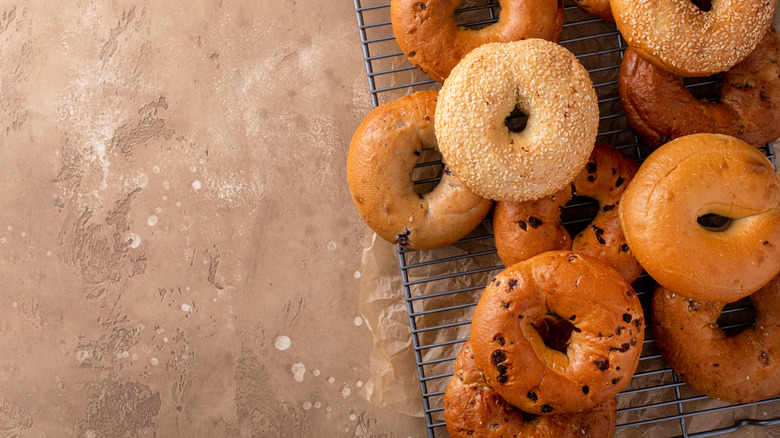
Although making homemade bagels can seem like a crazy difficult process, if you follow some simple advice, they can be delicious and downright rewarding to make in your own kitchen (and, depending on where you live, even better than from the local bagel shop). You should use active dry yeast rather than fast-rising for your bagels because they need time to develop. And the best flour to use for bagels is something with a high protein content that will give them more chew and flavor. But there's one vital step that you definitely should follow that comes to us from an expert. In a Chowhound exclusive, Josh Small, CEO and Managing Director of DoughCo Bagels, says it's all about the bath water.
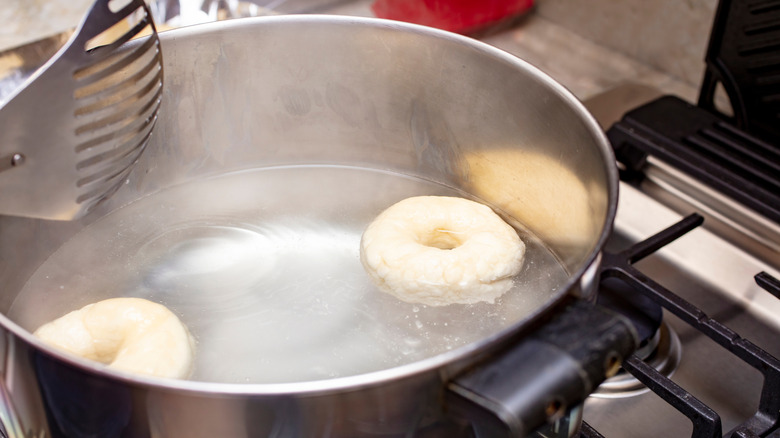
Small says you should prepare a malt bath for boiling bagels to caramelize their exterior. He continues, "Boiling with malt is the most important step in making bagels because the boiling phase creates a juxtaposition between the exterior and interior of the bagel." While your malt bath could be made with sugar, honey, or molasses, barley malt (something like Eden Organic Traditional Barley Malt Syrup) is the best choice for its deep, not-too-sweet flavor and dark color. To make a malt bath, you'll need about ¼ cup of barley malt syrup for 2 to 3 quarts of water. "Without this step," Small says, "bagels would be roll-like." They wouldn't have their nice exterior sheen and properly caramelized, chewy crust.
More expert tips on making homemade bagels
Josh Small says there are two main methods for shaping bagels at home, explaining, "You can use the simpler method of rolling the dough into a ball and poking a hole in the center. Then you can stretch the dough slightly into a bagel shape." He says, however, that the more traditional method, the one used by most bagel shops in New York City, "is to roll the dough into about a 10-inch log, and then wrap the dough around your hand by connecting and pressing the ends."
When it's time for the malt bath, Small warns against keeping them in too long — that's one of the mistakes everyone makes with homemade bagels. Limit it to less than one minute total — or 30 seconds on each side. If you overboil them, you'll begin to fully cook them in water, rather than just glazing and caramelizing the exterior, and they'll come out flat. "Oven spring is how much the bagels rise in the oven," Small says, and " ... the longer the bagels are in the bath, the less oven spring they will have."
Small recommends baking them at 475 degrees Fahrenheit for about 16 to 20 minutes, and you should rotate the cooking sheets about halfway through the bake to increase oven spring. "As a rule of thumb," he says, "the plain bagels will typically bake more quickly than seeded bagels." Whatever recipe you may be using for your bagel dough, if you add these expert tips to the process, you can get an authentic NYC bagel no matter where you live.