

Why Buffet-Style Catering Is The Smartest Choice When Hosting Big Events
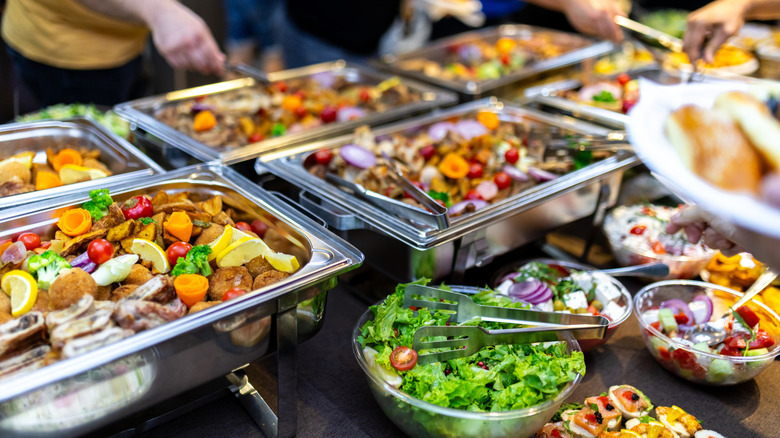
If you've ever hosted a party for a large crowd, you know the level of effort it requires to cook for all of the guests. Catering might be the way to go when you have a more flexible budget because it provides a more stress-free environment — and leaves you some room to actually enjoy your own party. But then comes the decision: Do you offer a sit-down meal with table service, or go with a buffet-style setup where guests get plates of food at their leisure? While there is some room for error when planning a dinner party, for ease and budget, buffet is the winner.
"If we're getting into the 12-plus people realm, buffet-style is definitely the easiest," Katherine Lewin, founder of Big Night, told Chowhound. Lewin, whose brand partnered with Makers Mark on a zine all about cocktail parties, says she prefers family-style for a smaller crowd but encourages buffets to keep things easy and efficient when the number of guests gets past a dozen.
Catering lets the host do minimal work
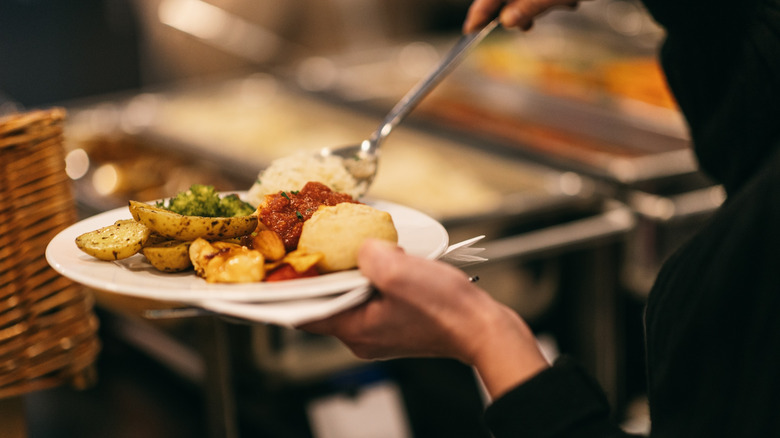
When you pay someone to cook and serve, it takes the heavy lifting off the host. If you don't want to fully eliminate the idea of cooking — or you want to limit the amount of work you put in without breaking the bank — you can always have a catering company prepare some foods while you prepare others. For an event such as Thanksgiving, where food is the focus, Katherine Lewin says to split it up the way you want.
"I find that if you focus on the few dishes that you're really passionate about (maybe it's your Thanksgiving sides), and then fill in the rest (maybe your Thanksgiving turkey) with help from a restaurant, you'll both be less stressed and also keep spending to a reasonable place," Lewin says. Regardless of who your catering company is — even if it's Shake Shack — consult with the caterer to make sure both of you are making enough food. "I would always tell the restaurant or caterer how much I think I need of each item, and then have them help me gut-check by letting them know how many we'll be."
Buffets tend to be more budget-friendly
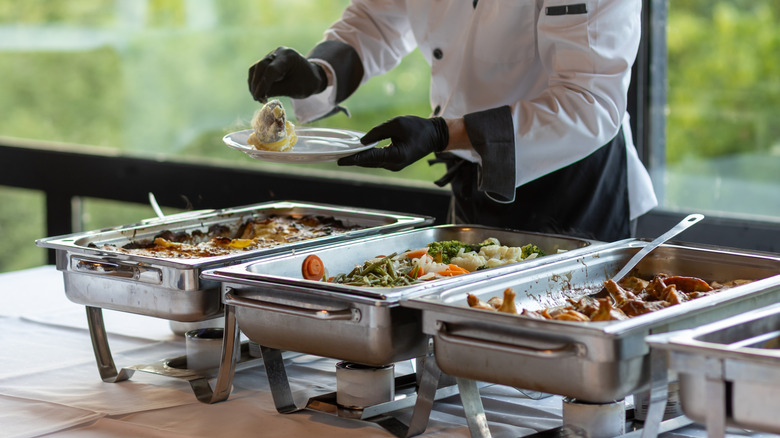
While catering reduces the work load, and splitting the dishes between you and a caterer can keep the budget in check, buffet-style is a great option for further stretching those dollars. Sit-down meal service requires more employees, meaning you have to fork over more cash and tips. Plus, the labor costs are lower because the food can be prepared in big batches as opposed to being styled and plated in one-person servings, which is more time intensive.
If you're not measuring out exactly how much you need per plate, have a good understanding of how much your crowd may eat. "I have both a good assortment of dishes (to accommodate different preferences and restrictions) and enough of each dish that everyone could easily have a generous portion," Katherine Lewin says. Your leftovers should hold up for a few days in the refrigerator, so feel free to eat them throughout the week or send guests home with to-go boxes.
Guests can eat what they please
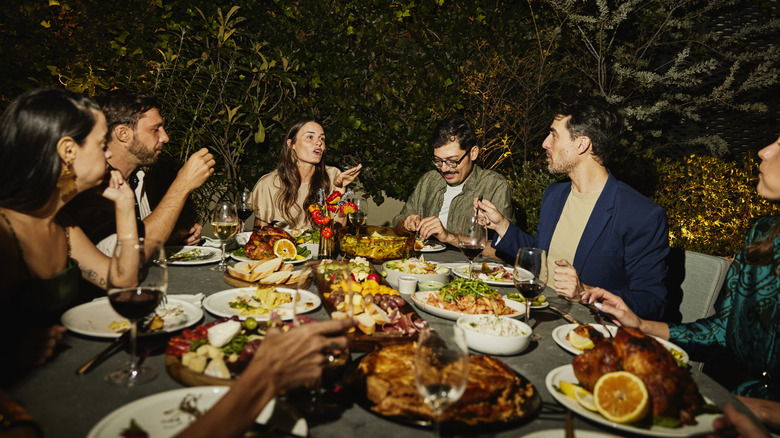
The good part about a buffet is that as long as you have options, nobody gets stuck eating something they don't like. They can request as much or as little of a certain food as they want, and there are often multiple options to choose from, including meats, pastas, and a number of sides. Plus, guests don't have to wait for food to come around to their table, and it's not inappropriate to go back for seconds, which may not be possible when you're eating a plated dinner. A buffet also means that once your partygoers get their food, they can eat at their own pace and don't have to wait for a server to come around and check on them. From a social interaction point of view, a buffet line also lets them get up during dinner hour and chat in line with someone they might not be sitting near.
You need less room for a buffet
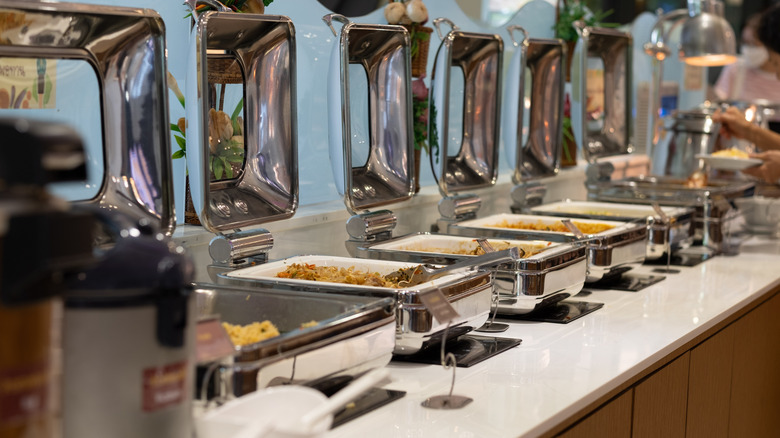
When it comes to setup, a buffet is easier. Food can be prepared off-site and more easily transported, and all you need for an effective buffet is a long table for serving plus the ability to keep food warm. Of course, you still need places for people to eat, but dinner service can be more casual because you don't have to worry about servers having room to maneuver between tables. "The thing about hiring caterers is, they're the professionals, and they know what to do!" Katherine Lewin said. "The best thing you can do is make sure you have plenty of clear space for them to do what they do best, and then get out of the way."
We could all use some practical advice for hosting a dinner party, so Lewin also explained you can still make meals personal even if you're not cooking. "Little touches go a long way — like handwritten menus and place cards, or asking the chefs to incorporate a friend's favorite ingredient into the dessert."