

The Common Appliances That Are Famously Absent From In-N-Out's Kitchens
California is a big state. No, not just big: massive. And no region of the sprawling state is exactly the same. Within it are deserts, forests, valleys, and mountains. The film industry, tech industry, and farming all contribute to what is the fourth biggest economy in the world. Though pop culture certainly has a few notions about what being a Californian means, the reality is much more nuanced. However, there is one thing, at least, that all (if not most) Californians seem to love: In-N-Out Burger.
The West Coast fast food chain is an absolute icon. Known for its fresh offerings of delicious burgers and fries, the chain has attracted a fair number of devotees. Native Californian and world-renowned chef Julia Child is known to have loved an In-N-Out burger. Representing the other coast, the famous curmudgeon Anthony Bourdain also adored the chain's food, particularly its burger, which he felt was the best of all fast food burgers.
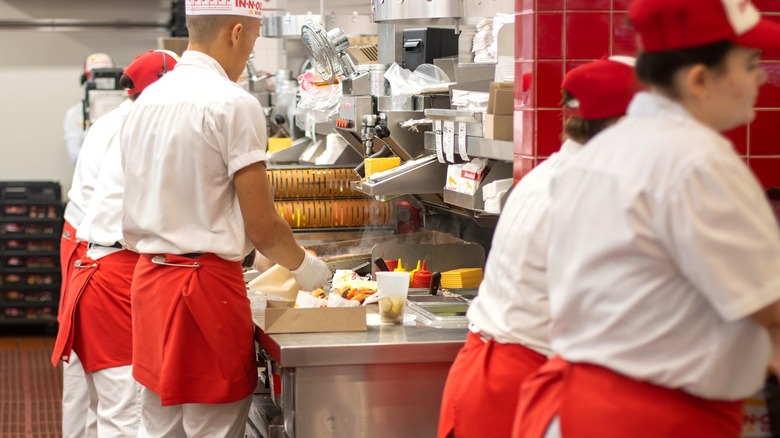
So, what does In-N-Out Burger have that makes it so amazing? Perhaps the question should be, what does In-N-Out not have? The answer may surprise you. While microwaves and freezers may be staples in most kitchens (commercial or domestic), you won't find either at In-N-Out. This is because the chain has a strict "no freezing policy." In fact, the beef used at In-N-Out is never, ever frozen, even in transport. And no, your burger won't ever be microwaved either, nor will it be reheated. This means that all of its beef, and its other ingredients, including produce, are (and must be) fresh.
Limited appliances are due to chain's commitment to freshness
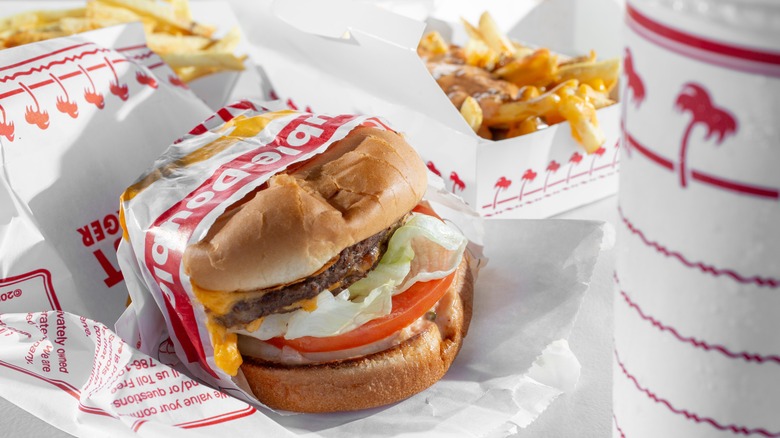
Despite the universal praise heaped upon the chain and its long list of devoted diners, In-N-Out has remained a largely regional fast food chain. In fact, most of its locations are in the chain's home state of California. So why is this chain still so regional, while other fast food upstarts, like the quintessentially Southern Chick-fil-A, took the United States by storm? It comes down to freshness. According to In-N-Out policy, any given restaurant location must be located within a 300 mile radius of one of the chain's distribution locations. This ensures that each location receives the highest quality and freshest products possible.
Additionally, In-N-Out only uses 100% USDA certified chuck cut beef, which is processed in-house at its distribution centers, which are located throughout California and in Texas. The chain also uses fresh produce, supplied by California farms. These produce items, such as lettuce, tomatoes, and onions, are then processed and prepared for use in-house at each location. These all contribute to making a seriously amazing burger. Well, that and the chain's famous sauce, a thousand island style sauce that goes on nearly every menu item at the chain except, maybe, the milkshakes. Still, if you're not on the West Coast, or in Texas, Utah, Nevada, Arizona, or Colorado, you won't be able to find an In-N-Out near you. That, however, is about to change.
Things are a little less limited now, as the chain expands to new regions
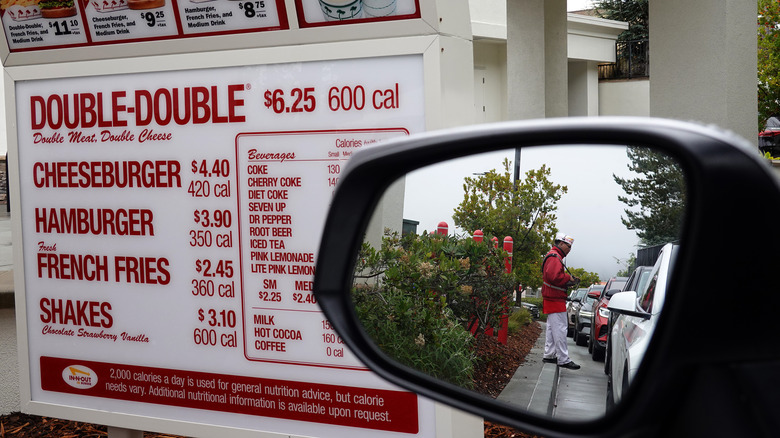
When In-N-Out opened its first location in 1948, it was not more than a small, roadside burger stand. The inaugural restaurant, located in the suburbs of Los Angeles, soon became a hit. And through the years, more and more locations began to open throughout the state. To California residents, the chain was a treasure. In-N-Out signaled home. It was a delicacy available only in the Golden State. However, in 1992, the chain opened its first out-of-state location in Las Vegas, Nevada. In the years following this out-of-state spin-off, locations began to pop up in other states west of, or within, the Rocky Mountains.
In 2011, the chain made its biggest leap yet, to Texas. The chain now has several locations within the Lone Star state, but most of its locations are still in California. However, the chain's California supremacy may soon be coming to an end, as the chain is now moving to even more eastward, all the way across the Mississippi River, to Tennessee. The chain is also bringing a new, separate regional base of operations to the state. However, the corporate base of operations is to remain in California. The first Tennessee locations are expected to open in 2026, and we can only assume that these restaurants will keep to the same standards of freshness that make the West Coast burger chain so beloved.