

Philadelphia's Undying Love For Tomato Pie Goes Way Back
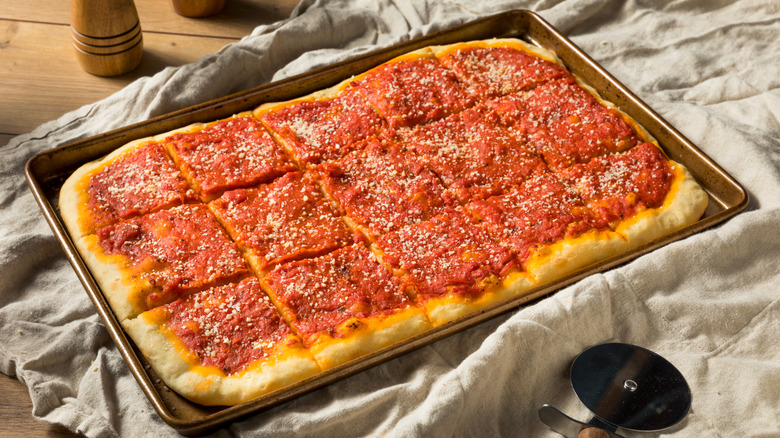
Philadelphia, Pennsylvania, is full of personality. It's the sixth-largest municipality in the United States, and its regional dialect, museums, and food culture help make it a truly unique city to explore. Watching someone make an authentic Philly cheesesteak will likely be part of the experience. However, Philadelphia's history runs much deeper than these literal and figurative landmarks. To scratch the surface and get a deeper look at its rich culinary past and present, you'll need to know about the tomato pie.
Philadelphia's tomato pie, not to be confused with its Southern counterpart of the same name, dates back to the early 20th century. As with many foods and drinks, the likelihood that local households were tinkering with the same components prior to that recorded time is high. That being said, it's fair to credit the area's Italian bakeries for developing this pie. Inspired by Sicilian tradition, these chefs would top a thick, sometimes focaccia-adjacent crust with a light sprinkle of cheese over tomato sauce or gravy.
Making tomato pie at home
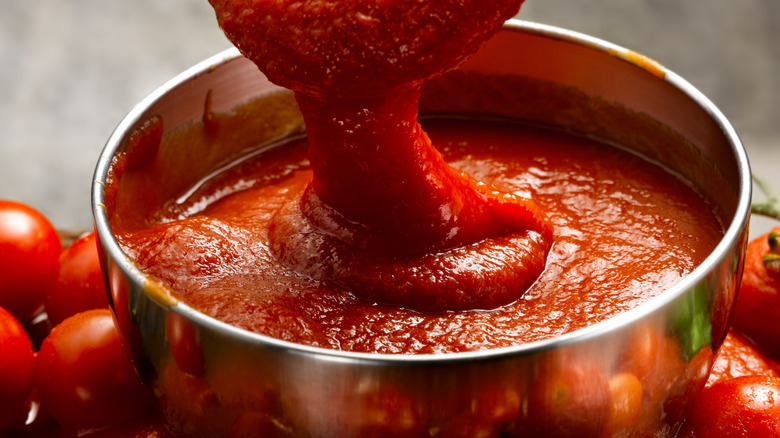
Philadelphia restaurants, such as Cacia's Bakery, have perfected the tomato pie, and you can recreate it at home with the right tips. Imagine a pillowy square of dough with the taste, texture, and fragrance of real-deal San Marzano tomatoes. Instead of caking mozzarella on top, crown that jawn with a touch of Parmesan or Romano cheese. The lack of heavy cheese is a somewhat surprising tradition of restraint from a city that often decorates its sandwiches with Cheez Whiz.
Some of the pizza recipes you already have in rotation might also be easily reconfigured into this unique Northeastern recipe, provided that you color within some fairly forgiving lines. Philadelphia tomato pie should be square, for example. Its crust must be taller than something like a classic, foldable New York slice to rise up to the challenge of its rival — think of something closer to a deep-dish or stuffed pizza crust.
As logical as it seems to finish this pie with a nice, mild Fior di Latte or a creamy Burrata to balance the acid and sugar of the tomato, you'll need to extinguish such a desire. The Philadelphia tomato pie's glaring omission is what imbues it with a true taste of the town. Cheese is secondary to the key flavors of the fresh tomatoes and doughy crust — anyone who says otherwise is merely in it for the thrill of the fight.