

Are Hatch Chiles Hotter Than Jalapeños?
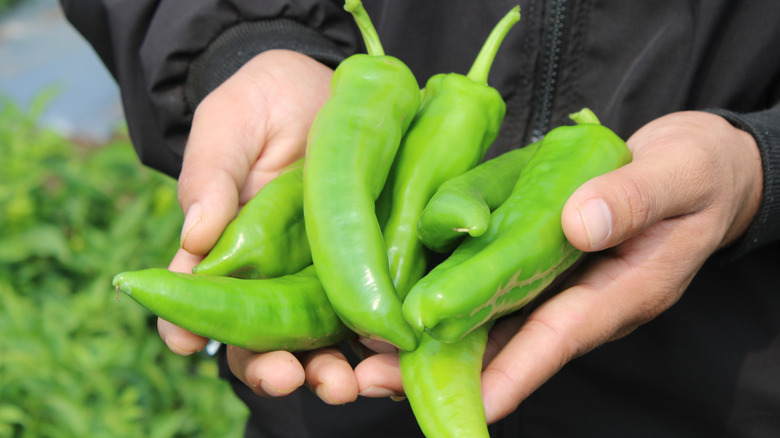
Hatch chiles and jalapeños are two common peppers that are particularly popular in Mexican cuisine, be it in a salsa, served as a roasted side, or incorporated into a filling. Both impart a notable touch of heat that complements the spices, seasonings, and other aromatic ingredients of any recipe they're featured in. However, for those sensitive to spice, is there one pepper that is more palatable than the other?
Hatch chiles, which are exclusively grown in the Hatch Valley along the Rio Grande in New Mexico, usually range between about 1,000 and 1,800 on the Scoville Heat Unit (SHU) scale. On the other hand, jalapeños measure between 2,500 and 8,000 SHU, meaning jalapeños can be over three times spicier than Hatch chiles. But depending on the variety, some Hatch chiles can be on par with jalapeños when it comes to spice and reach 8,000 SHU. However, this depends on the type of Hatch chile you purchase; some rival jalapeños, while others offer a peppery sweetness.
Jalapeños have a more vegetal pungency that supplements their natural spice, and one of the easiest hacks to identify how hot a jalapeño will be is to inspect the exterior skin for white lines or specks. This visual cue indicates that the pepper is more mature and, therefore, spicier. That said, the heat from Hatch chiles' spice is more apparent at first when eaten raw, but one of the preferred ways of preparing the peppers is to roast them. This draws out some rich, smoky notes, and even a buttery mouthfeel. Overall, Hatch chiles are a great choice if you are seeking a milder option to jalapeños.
The science behind spice
There's no denying that the diverse world of hot peppers offers plenty to be enjoyed, avoided, and possibly even discovered. For some, even bell peppers with 0 SHU can be too hot to handle. On the other end of the spectrum, some spice enthusiasts may even dare to take on the hottest pepper in the world. For those in the happy middle, dabbling with peppers like jalapeños and Hatch chiles is a safe zone wherein you can savor a spicy kick without feeling you've ignited your digestive tract. But have you ever stopped to wonder why some peppers are spicier than others? The answer lies in the chemical compound capsaicin, which is what is measured on the Scoville scale. The higher the capsaicin concentration, the spicier the pepper.
When capsaicin comes in contact with its target receptors, it creates a burning and sometimes painful sensation. This is why, when working with peppers with SHU levels like the Carolina Reaper or Scorpion peppers, it's best to minimize direct contact with the skin and use plastic gloves to protect yourself. There's a fine line between an enjoyable kick of heat and unadulterated pain, which ultimately depends on individual tolerance. While it is possible to gradually build your tolerance to spicier peppers, for some, it's not a gamble worth taking.