

How Accurate Are The Scales At Your Grocery Store?
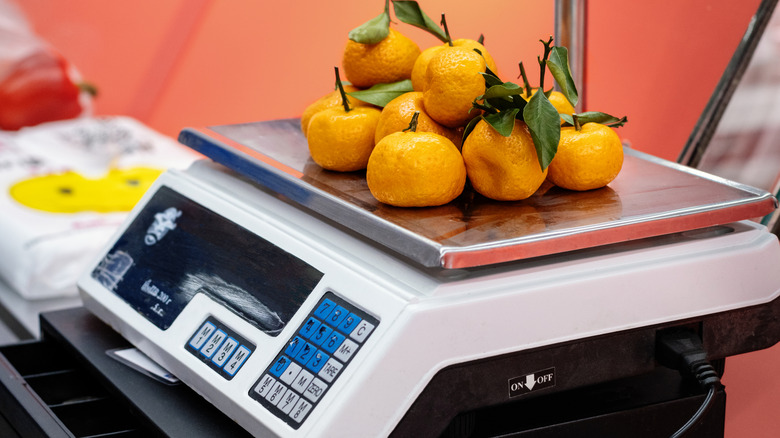
Have you ever wondered if the grocery store might be taking advantage of you with rigged scales for a little extra money? The average American grocery budget is tight, but rest assured that the scales aren't literally tipped against you. There's a surprising amount of regulation around ensuring scales are accurate and trustworthy. It's not just for grocery stores, either. If you prefer buying meat from a butcher shop over a supermarket, that shop also needs to weigh products using scales that are "legal for trade."
The Department of Commerce has its own sub-department dedicated to weights and measures, and this sub-department has a bunch of inspectors whose job is to go around and check that commercial scales are correct. They'll put certified weights down on the scales (for example, a weight they bring with them that's confirmed to be exactly one pound) to make sure that they match. Inspectors will also verify the accuracy of the scale by checking a range of weights for all types of light and heavy loads. They'll also weigh pre-packaged food items to check that stores are charging customers for the appropriate food weight — not the weight of the packaging.
What happens when scales are wrong?
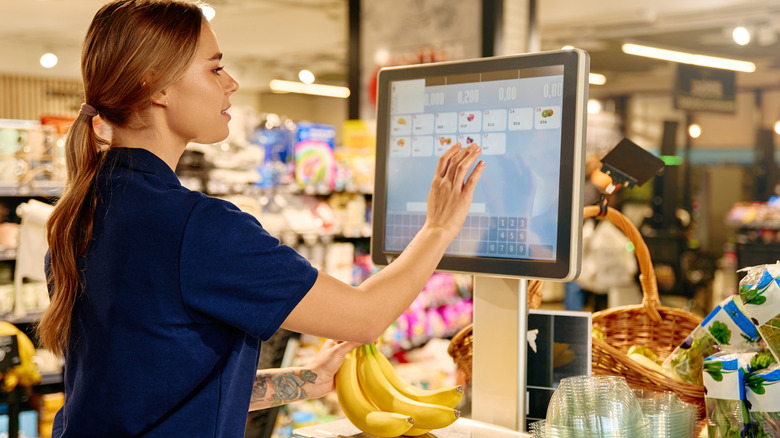
If an inspector catches a faulty scale, they can take it out of service immediately. It shouldn't be used again until it's fixed. While the exact rules vary by state, stores can receive fines if their scales are overcharging customers, although they're given leeway for very small variations, and inspectors can sometimes adjust scales on the spot.
Modern digital scales should be accurate, as they're checked for accuracy before they're shipped to a store. All scales should have some kind of marker indicating that they were approved before going into service, showing when they were last inspected. If you purchased something at a supermarket and the weight seemed incorrect, you can report the issue to your local authorities. Sometimes, this can be as simple as filling out a form online. Although, since the enforcement of scales is done by states, it may not be so straightforward everywhere.
In any case, you probably don't need to worry too much about it. Where statistics regarding supermarket scales have been published, they generally show that the vast majority of scales work well. An inspection by the Wisconsin Department of Agriculture, Trade, and Consumer Protection found that 99.6% of scales were accurate in the state, and the Colorado Department of Agriculture also reported near-perfect accuracy in retail scales from 2023 to 2024. So rest easy: Your supermarket probably isn't trying to scam you on this front. Bear in mind that the same rules might not apply to your scale at home, so it's best to choose a high-quality kitchen scale for more accurate results.