

The 8 Best Paper Coffee Filters, According To A Competition Barista
We may receive a commission on purchases made from links.
Filter coffee is the best. Truth be told, I prefer it to espresso or any other unfiltered styles like French press or Turkish brews. Sure, an iced Americano on a hot summer's day or a flat white on a cozy fall morning hits the spot, but I prefer black filter coffee. It's unique in that it requires specific — and sometimes proprietary — paper filters for a few key reasons. The most obvious reason is that it prevents coffee particles from entering your brew. The result is the distinctly clean and smooth brew you expect. However, the paper filters also serve as a means to modulate the brewing process, since not all filters are created equally. Different papers, pulp substrates, and even cottons are used with varying degrees of thickness, combined with various geometries and folding patterns, to determine just how much coffee can actually flow through them. In turn, this affects how strong or weak your final beverage will be. A super-thin filter, like those used for AeroPress brews, will filter out less coffee than, say, a much thicker Chemex filter.
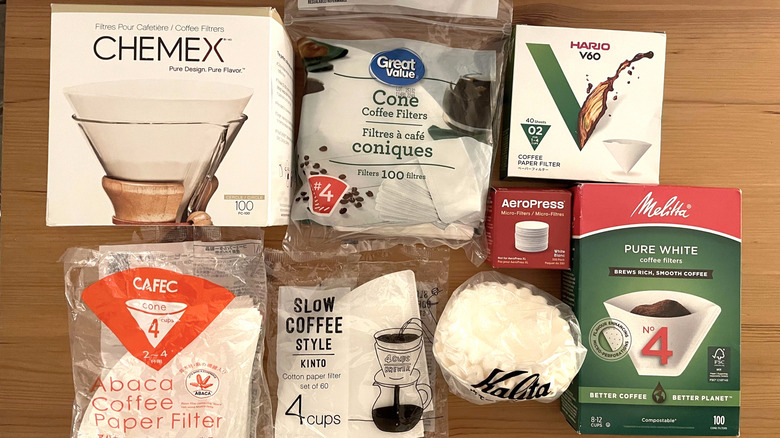
As a former competition barista who placed third in the Canadian National AeroPress competition in 2018 and fourth in the Canadian National Brewers Cup competition in 2019, I spent an inordinate amount of time investigating paper filters. Finding the right filters was key to my relative success, and I've opted to share my filter knowledge with you here. Let's explore these eight filters and see how they stack up.
1. Hario V60 02
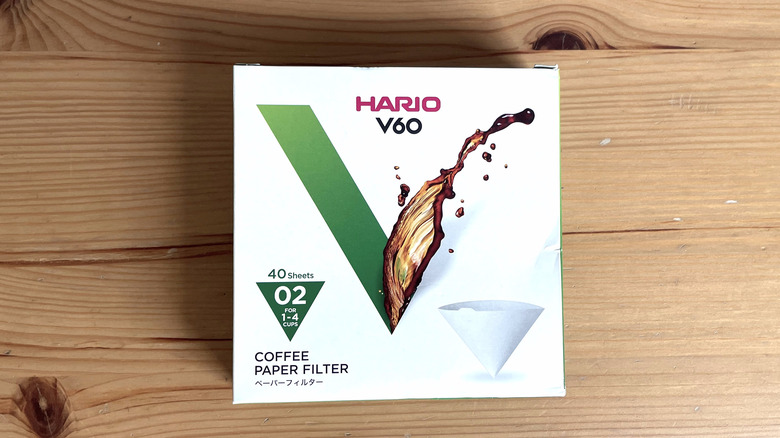
Coffee filters can be used for a myriad of jobs beyond filtering coffee, like as a strainer for homemade broth in place of cheesecloth, as ad hoc tea bags, or even as a hack to keep house plants mess-free. But most of us use them in the morning, as we look to jolt ourselves back into the Matrix with that first cup of coffee. My favorite filters to do so are these V60 filters from Hario. I've been using them for over a decade now, and I find they impart no off-flavors into my coffee and have a great flow rate. If you're not familiar with the term flow rate, it simply means how fast water can pass through the filter.
The slower the flow, the longer the coffee spends in contact with the water, and the stronger your brew will be. Think of it like leaving one tea bag in a mug of hot water for 10 seconds, and another one for 5 minutes; the former would obviously be much weaker than the latter. For my test, these had a flow rate of 24 seconds as I ran hot water through them. In turn, the hot water had a very mild paper smell — a good indicator that your coffee won't be tainted by any weird chemical flavors. A medium-paced flow rate combined with no perceivable paper taste at all is a recipe for great pour-overs. A 40-pack of the 02-sized filters only costs $5.20 on Amazon, and I always recommend white over natural brown.
2. AeroPress Micro-filters
The AeroPress brewer is legendary foodie Alton Brown's go-to brewer, and it's also mine. When I don't have time to fuss with a pour-over, I bust out my trusty plastic AeroPress, and nine times out of 10, I'm happy with the final result. And as I mentioned, it was the very coffee gadget that started me down the road of competing as a barista. And for a time, I was also the AeroPress quality control and recipe developer at a roaster-cafe, dialing in each coffee on the menu weekly — needless to say, I've probably pressed thousands of these brews.
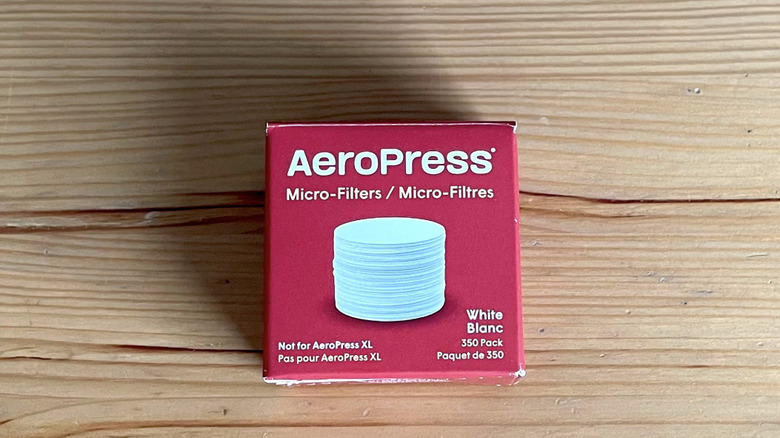
Here, with my testing, the flow rate was slower than with the other filters, coming in at 38 seconds, with the caveat being that, apart from all of the other brewing vessels I used, this has an airtight lock and perfect seal for the paper filter; thus the water is slowed down as it has fewer places to seep through. That said, unlike all pour-overs, AeroPress brews don't use gravity to pull the water through the bed of grounds, but rather, you have complete control pressing the plunger (it's essentially a giant syringe). The AeroPress filters have no chemical taste whatsoever, and might be the thinnest filters on the list, which means a stronger final cup — but you can double up on the filters for twice the filtration to make a smoother, cleaner cup of coffee. At $9.94 for a pack of 350 filters on Amazon, you're set for almost a year!
3. Melitta #4 Pure White Filters
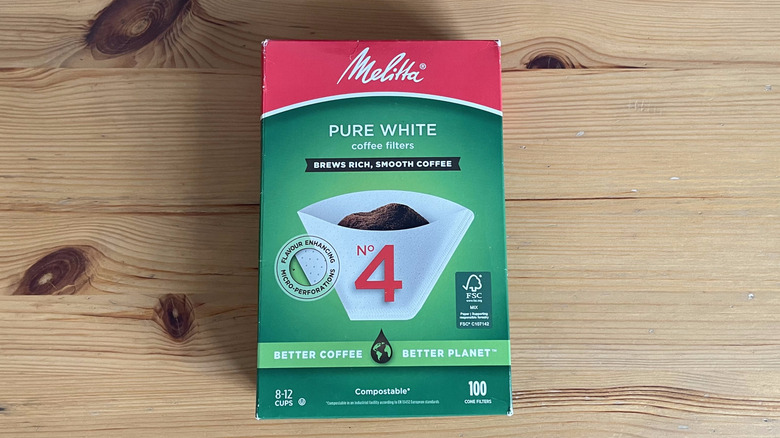
Unlike all of the other filters in this list, Melitta provides a unique style of proprietary perforated filters. This means that the filters are purposefully going to filter less coffee, while flowing faster, giving home brewers a fuller-bodied cup of coffee. These are the filters I like to use when I really want to taste my coffee, since I know they hold back less coffee in the bed of grounds. They're also the filters I reach for when I'm making a filter brew for people who simply prefer stronger-tasting coffee — like those whose daily driver is a French press. This style and shape of filter have been around for years, colloquially known as the #4 filter, and can be used in both pour-over brewers and automatic drip machines.
For my flow rate test, they were actually the fastest at 16 seconds total for all the water to pass through. No shock here, as those tiny, perforated holes help the process, allowing for water to escape more easily. To compensate for such a fast flow rate, home brewers should definitely grind their coffee a bit finer, otherwise you could have — ironically — a weaker cup of coffee with such a fast flow rate. With the right grind size, these ubiquitous filters make a unique, rich, and thick cup. Easily found in most grocery stores, they'll set you back $6.99 for a 100-pack or buy in bulk from Amazon.
4. Great Value #4 Cone Filters
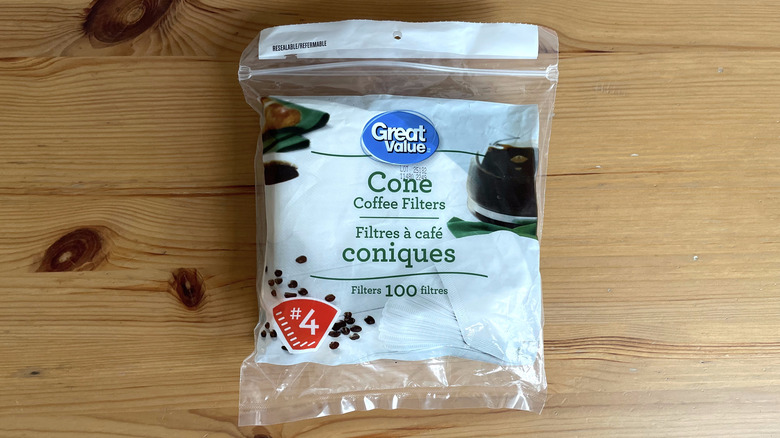
As Wal-Mart's house brand, Great Value has some great stuff, and some not-so-great stuff you might want to avoid. These filters are incredible value — as the name suggests — coming in at $2.92 for a pack of 100 and performing well. These are a great counterpoint to the Melitta perforated filters as they also fit any #4, wedge-style dripper or home machine, yet are traditional paper filters with no holes. However, they are on the thin side, so they will definitely allow for more coffee to pass through the paper, leading to a meatier cup of coffee.
The flow rate was on the faster side, with the second fastest drawdown of 17 seconds. This was due to that super-thin nature of the paper, as I mentioned, which means you'll need to grind your coffee on the finer side to get a well-balanced brew. I did notice a very vague bleach-like smell from the hot water after it passed through the filter, while the water itself was surprisingly pretty neutral, with only a small hint of paper flavor. The sheer value here is incredible, and if you like a strong brew with a #4 brewer, Great Value gets the job done easily.
5. Chemex
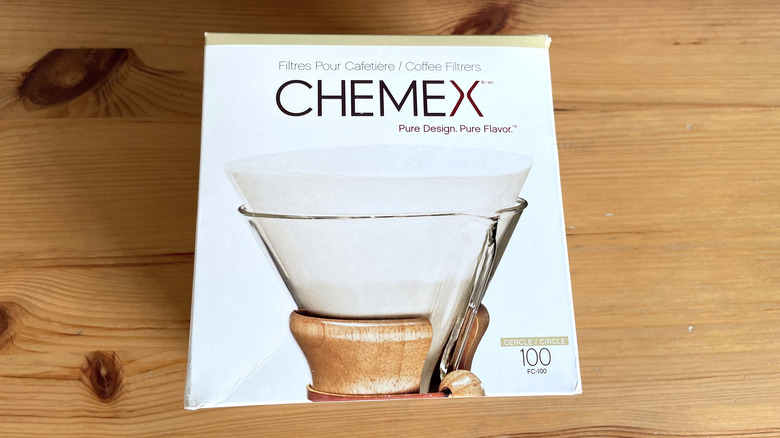
The Chemex filters are unique in that they consist of super-thick paper, folded into squares, which then opens into a cone-shaped paper structure that fits into the eponymous brewer. The filters are proprietary, and unlike some of the other filters in this list, they can't be used with different brewing vessels. That said, they are some of my all-time favorite filters because they always provide me with a constant and super-clean cup of coffee. Very little of the oils and insoluble coffee can pass through the thick paper, so if you like your coffee lighter on the palate, you'll get a more mellow and softer brew here. Fans of slap-in-the-face, super-strong, paint-dissolving coffee might not like the gentler profile of a Chemex brew. But I do, and I love to brew up a large pot for loved ones and guests.
These filters were surprisingly fast when it came to flow rate, with a total of 25 seconds for all the volume of water to drip through. The smell of the hot water had chemical notes of acetone and that distinct, new-clothes smell. It then had a residual paper-y flavor going on. While I love how these filters filter coffee, I highly recommend rinsing them — like all of these filters — with hot water, pre-brew, to get rid of that paper taste. For a box of the pre-folded filters, it costs $11 for a 100-pack, which means $0.11 per brew — not bad.
6. Kalita 155 Wave Filters
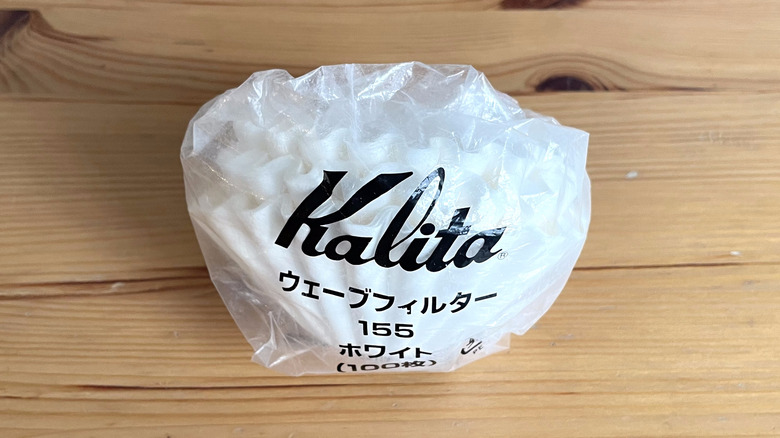
The Kalita Wave 185 and 155 brewers are fun pour-over vessels that came onto the scene over a decade ago. Unlike the Hario V60 or the Melitta drippers, Kalita brewers are flat-bottomed, with proprietary, ridged filters. The filters might resemble those larger flat-bottom ones used in large cafe and restaurant style drip machines, or home consumer kitchen drip coffee makers, but they are only meant to be used in a Kalita dripper. Fans of pour-over coffee might find that conical brewers like the V60 can be a bit finicky, and that flat-bottom brewers are a bit more forgiving, allowing for a more casual pouring technique. While this is mostly true, the coffee that these Japanese vessels produce is usually full-bodied and clean, with an emphasis on sweetness and balance.
The flow rate test here ended up at 23 seconds for the water to draw through the paper, which is at the average end. Notably, the hot water had a very strong smell of rubber, or like the smell that hits you when opening a box of new shoes. It tasted quite strongly of paper, which lingered on my palate. Once you rinse these filters significantly by pouring around 10 ounces of hot water through them, pre-brew, you will be rewarded with a great cup free of any chemical-y paper notes. These cost $12 for 100 filters ($9.65 on Amazon), which like the Chemex filters, is on the pricier end — but if factored into cups of coffee, you'll be set for months.
7. Cafec Abaca 02 Filters
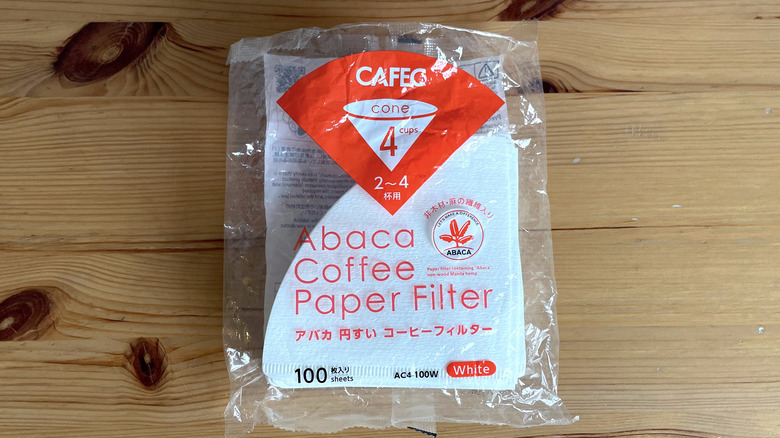
These filters are the weirdest ones in my list, you could say, given that they are made from a rather unique blend of a non-wood substrate called abaca (also known as Manila hemp) and wood pulp. Japanese coffee company Cafec makes this 02-sized filter, which is compatible with both its proprietary pour-over drippers and the Hario V60. These abaca paper filters, while unique in composition, perform similarly to a more standard paper filter, with a flow rate of 23 seconds total. The hot water I poured through then took on a slight chemical or bleach-type smell, with hints of menthol or Windex — not leaving me super confident in the taste test. Thankfully, this didn't leech into the water as much, with only a mild, dry paper flavor coming through, which did linger on my palate, without being overpowering.
These filters do a great job of making a cup of coffee that's clean as a whistle, but home brewers should be advised to thoroughly rinse them before brewing. What's more, they are a bit rare, but if you're a big V60 fan and see them in the wild, grab some! A 100-pack will set you back $10, and it's always fun to compare and contrast brews with different filters, which can lead coffee nerds like me to experiment with different filters for different coffees. The bottom line is to have fun with it while enjoying a hand-poured brew.
8. Kinto Cotton 02 Filters
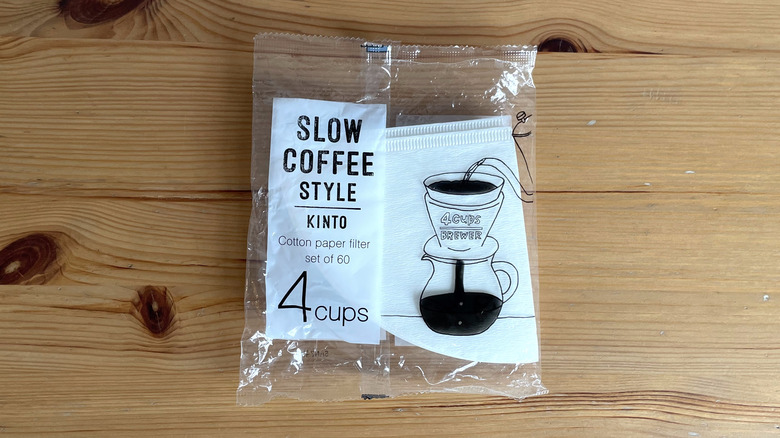
Finally, we have these 02-sized cotton filters from another Japanese coffee brand, Kinto. Cotton is rarely used in coffee filters, but for some reason, Kinto has leveraged this material to be the base, combined with standard wood pulp, aka paper. They fit conical pour-over brewers like the Hario V60, in addition to Kinto's own proprietary ceramic drippers. These are my backup filters that I rarely reach for, as I find they tend to over-extract coffee easily if you don't have the right grind. These filters had the slowest drawdown in my water test (if you don't count the AeroPress), with a total time of 28 seconds. I was actually shocked that they were slower than Chemex filters, which are known for facilitating slow brews.
Kinto cotton filters also imparted a chlorine-like smell into my testing water, which then had an incredibly strong paper taste that really coated my palate. This makes sense in a way, as they are thicker than the Hario 02 filters, and as such, will hold onto more of the coffee oils, leading to thinner-bodied brews. While these filters can create a smooth and clean cup, like the other filters in my list, I recommend thoroughly rinsing them with hot water before you brew. At $5.90 for a pack of 60 they're affordable, offering an alternative to standard, 100% pure wood pulp paper filters, but they were at the bottom of my list due to the slow flow rate and potential for persistent bleach-like aromas.
Methodology
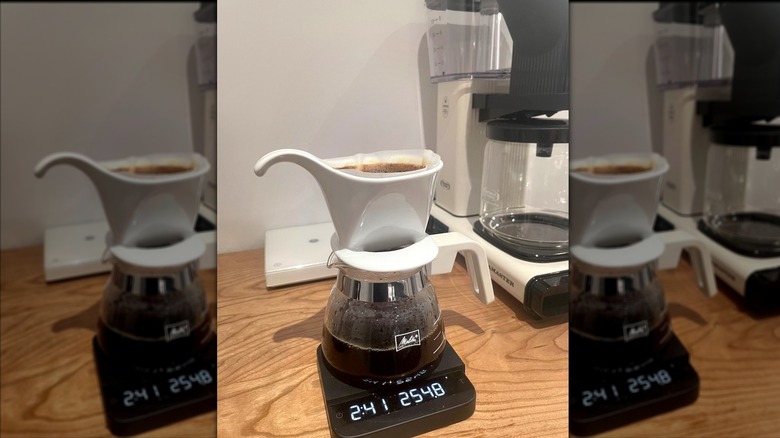
To test these filters, it would have been incredibly difficult to brew coffee for each one and objectively measure the final result. There are too many variables involved with making pour-overs — things like how high you pour the water from, pouring patterns, how slow or fast you pour, in addition to issues such as channeling, where unexpectedly, the water will bypass the coffee, causing uneven extractions. All of that leads to a real mess when it comes to testing. However, I know all of these filters very well, having brewed coffee with each of them previously. For objectivity I simplified the testing. I used 205-degree Fahrenheit water as this temperature is the recommended brewing range for most coffees. I poured 7 ounces of hot water into each brewer in 5 seconds, then timed how long it took to drain through. I used filtered water, and I recommend you do too — this allows you to mitigate any tap water chlorine taste that can hinder a good brew.
None of these filters were brown paper, as those tend to impart the most unwanted paper flavors into your coffee — think, that wet brown paper bag smell — not so appealing, right? Eco-conscious brewers can take comfort in knowing that most of these manufacturers source the paper responsibly, and many of the filters are oxygen-cleansed as opposed to bleached with harsh chemicals. Lastly, to get the best results when making filter coffee, always rinse your filter at the beginning, which helps to rid it of those pesky chemical smells and tastes.