

Why Diving Into Your Seafood Boil As Soon As It's Cooked Means Missing Out On Big Flavor
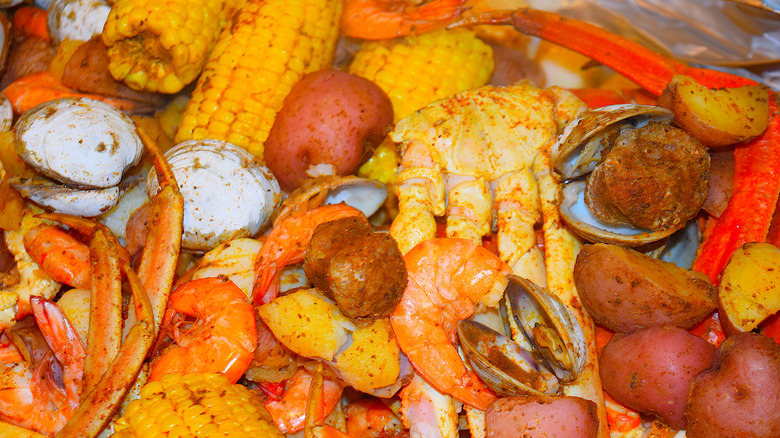
There's nothing quite like a good, satisfying meal shared over warm conversations. Take a look at different cultures all over the world and their communal meals; it's solid proof that folks, no matter their background, associate food with community. In Scandinavian regions, the smörgåsbord — a European dining tradition that might have inspired the American salad bar — comprises a variety of dishes served on small plates, typically during important holidays. The Philippines has its own, too. The boodle fight promises a diverse array of food meant for the whole table (served on banana leaves) which people just eat with their hands. Meanwhile, states like Louisiana and South Carolina have the hearty and comforting seafood boil.
To figure out how to make this dish a success, Chowhound had an exclusive conversation with Darren Chabert — the chef de cuisine at Saint John (@saintjohnnola on Instagram). He said seafood boils taste best when the ingredients have time to absorb all the juices and seasoning after boiling. "This critical step prevents overcooking while maximizing flavor infusion and producing tender, juicy seafood. The flavor and texture are significantly improved through this soaking process," Chabert said. However, make sure not to overdo it, as letting the food rest for too long might impact the seafood's texture. "For most boils, a window of 10 to 30 minutes is a safe and effective range," Chabert advised.
Other ways to guarantee a flavor-packed seafood boil
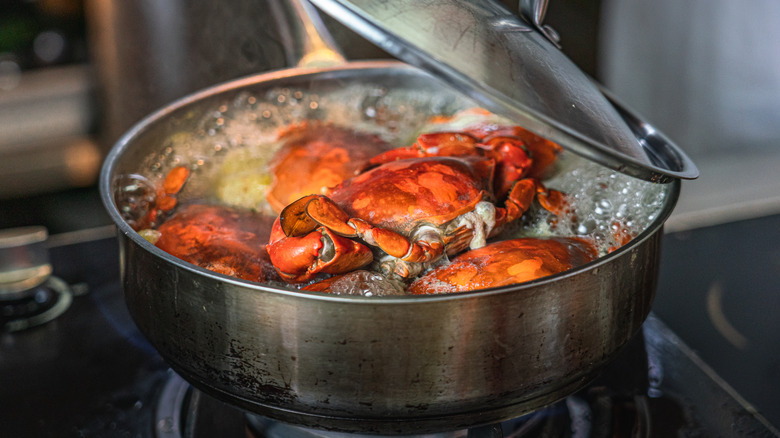
Soaking seafood in cooking liquid takes time, which not a lot of people have. To get a boil out fast without sacrificing flavors, Darren Chabert has a suggestion. "Instead of relying on the liquid bath alone, a finishing sauce acts as a flavor booster that is added right before serving," he said. This sauce could include anything from garlic butter to any kind of aioli.
You can also guarantee a seafood boil that wins every time (before you even begin cooking) by making sure all the ingredients are fresh. Aside from being the safest way to consume seafood, you're also assured that the taste and texture are at their fullest potential.
Another way to ensure your boil is at its best is to avoid the one mistake you're making when cooking a seafood boil — just using water. This might be an obvious no-no for some chefs, but beginners might be missing this crucial step. For the best results, it's best to cook your boil in a perfectly seasoned broth to really let the flavors cling to the seafood. Adding warm spices like paprika, cumin, and allspice will do the trick, along with fiery additions like crushed red pepper and cayenne to give the broth a more bodied flavor. Aromatic herbs like thyme and rosemary are also important to creating a classic seafood boil finish. What you use is up to you.