

Larder Vs Pantry: What's The Difference, And Which Do You Need?
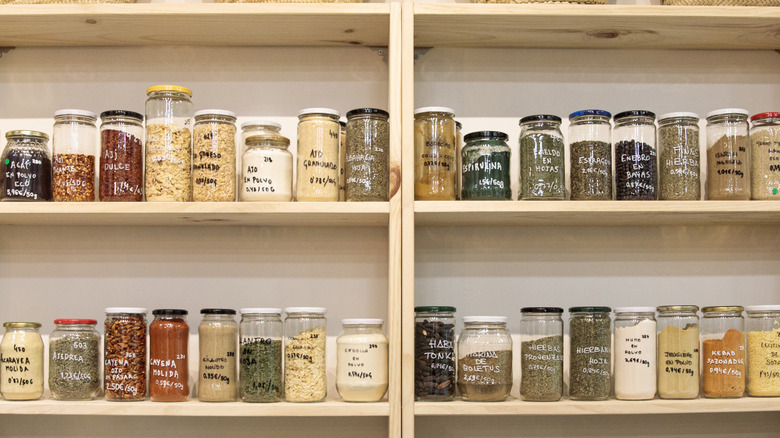
You're probably already conceptually familiar with the pantry. It's a cozy little room, maybe the size of a walk-in closet, where you can store all your bulk-bought tinned fish, tomato sauce or gravy ingredients, and maybe even keep a bowl of old Halloween candy collected over the ages to slake the sweet tooth. It's more likely to be found in relatively larger homes outside of metropolitan areas where space comes at less of a premium.
A larder, on the other hand, might seem more unfamiliar, and even distantly quaint. It is also used to store all those staples and novelties. But rather than a separate room, it's more like a tall, floor-to-ceiling cupboard. It either has a smaller footprint than a pantry would among your built-ins, or it can even be a piece of freestanding furniture that harks back to vintage kitchen designs. It's also fair to wonder what separates a larder from a simple kitchen cabinet. In the days before electric refrigeration when retro icebox cakes were the perfect summertime treats, a larder's location used to be carefully chosen for lower temperatures, making it the cool and dark place that many foodstuffs seek. But the storage solution you choose today will have more to do with size than any pesky pre-electricity considerations.
The ideal storage solution for your own home
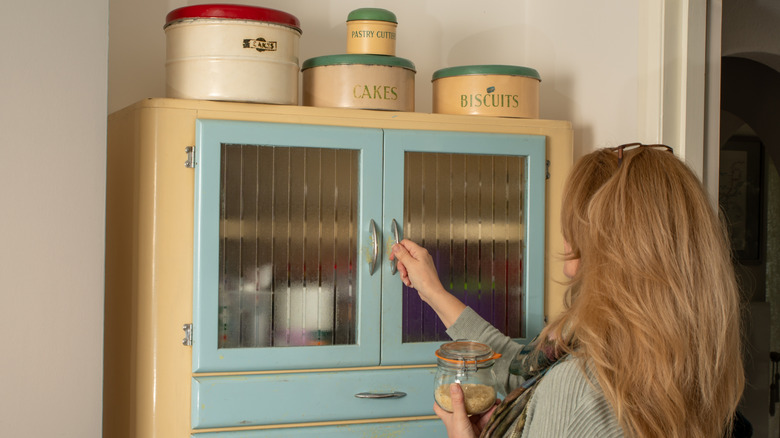
Bigger houses with inhabitants who cook frequently (or at least shop like they do) and even have some smaller appliances they'd prefer to stash out of view will benefit from adding a pantry. Unfortunately, for smaller dwellings without the square footage to allocate to such dedicated culinary luxuries, this can be an issue. You're just more likely to see pantries out in the country, beyond the attached garages in the suburbs, or gracing the occasional New York City penthouse than you are in smaller apartment-sized dwellings. And that's where the larder comes in.
Reconfiguring some of your cabinet space for a floor-to-ceiling larder would certainly be a more manageable project than a total renovation. However, bear in mind that built-in larders can still come with a fairly high cost depending on the style you get, and may involve some construction headache just to get your potatoes out of the way. A freestanding larder, instead, will typically be less permanent, easier to install, and less expensive, too, making it a great way to see whether you actually even need a storage solution like pantries and larders to keep everything put away, or if those alliums are actually fine on the counter. Almost any tall, thin hutch that fits your space is a good entry point to the tidy world of kitchen storage.