

Why You Shouldn't Leave Wine Sitting In A Decanter Too Long
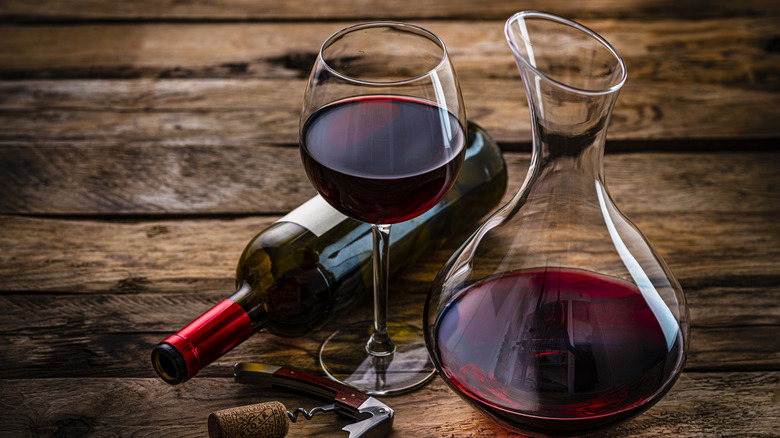
The best decanters look like pieces of art as they sit in places of pride at a bar. Their elegant look might make you wonder what a wine decanter is and who actually needs one. When poured into this vessel, a wine is exposed to more oxygen, which helps soften harsh flavors. Decanting also help remove excess sediment from old or unfiltered wines.
To answer our many other questions about decanters, Chowhound sat down for an exclusive chat with Helena Nicklin — a drinks writer, broadcaster, and founder of HelenaSips Wine Academy. With over twenty-five years of experience in the drinks industry, Nicklin knows a lot about decanting. She says leaving wine sitting in a decanter for too long can ruin the experience. "Oxygen is wine's savior but also its slayer. A little can open up aromas and flavors, which is why we decant in the first place. Left too long, however, and the wine will start to oxidize and start tasting like vinegar."
According to Nicklin, how long you're supposed to use a decanter for depends on the wine. "A young red will peak after an hour or two, then decline slowly. Heavier whites can last a little longer, but rarely will either color last until the next day. A very old red or white might even only last an hour in a decanter — like a delicate fresco fading when it sees light and air for the first time in years!"
When decanting, less is usually more
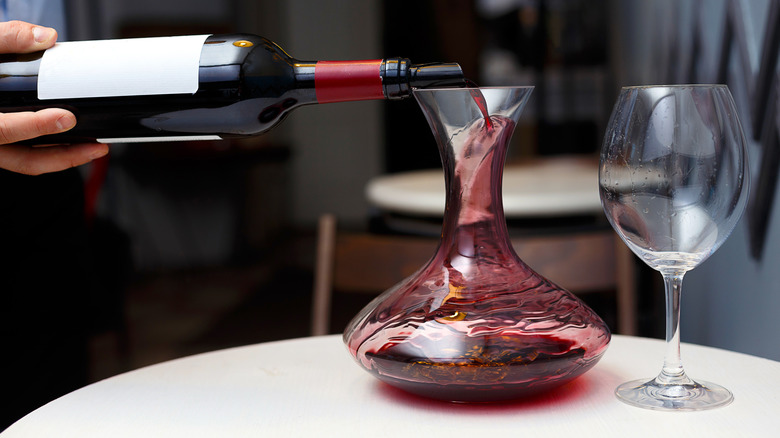
According to Helena Nicklin, not all wines need decanting. To know if you should decant your bottle of wine, you'll need to figure out if it's best for that variety. Delicate white wines, for example, don't do well in these vessels. Neither do most aged bottles. "As mentioned, very old vintages often have an incredibly short window in a decanter. Here, the blast of air will wake them up, but they may only last an hour or so before oxidizing quickly," she said.
Conversely, young, tannic red wines can soften up after a bit more contact with air. If you are truly decanting for the purposes of adding oxygen or aerating your wine, be sure to do so judiciously so that you don't ruin your wine with over-oxidation. It would also serve you well to skip decanting hacks that might ruin your wine, like using a blender to "hyper-decant." This can actually damage your wine by introducing too much oxygen too fast, breaking down the liquid itself and rendering the flavors flat.
Nicklin's best advice for decanting is to keep an eye on the clock. If you've decanted your wine too long, she says there's no way to save it. "You can't go back from too much oxidation, sadly. But the wine is still good to cook with!"