

Before You Make That Sandwich, Here's How To Choose The Right Bread
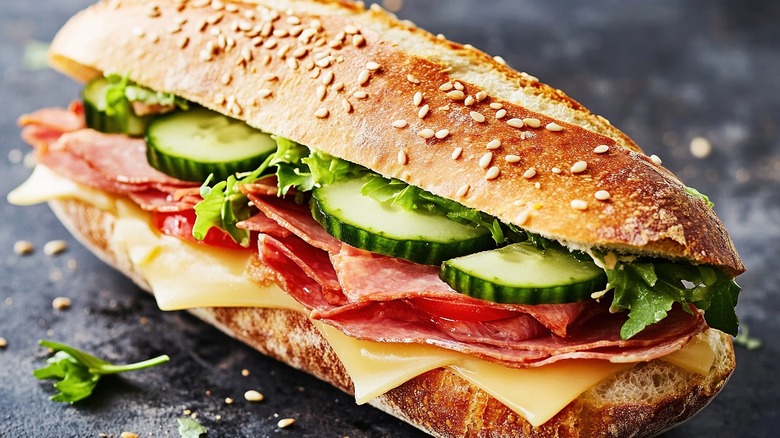
We've all been there: trying to enjoy a delicious sandwich, only to have the bread fall apart, creating a soggy mess and requiring you to grab a fork to finish the job. Perhaps you've experienced the opposite issue: You're trying to enjoy a delicately-filled sandwich, but finding that the super-tough bread is ruining the experience. Chef Reid Shilling, executive chef and partner at Michelin-starred Shilling Canning Company and Ampersandwich DC, spoke exclusively with Chowhound about the factors you should consider when choosing bread for your sandwich.
According to Shilling, you'll need to consider both personal preferences and sandwich non-negotiables when choosing your bread. "A Philly cheesesteak, for example, always comes on a hoagie roll," he says. "But then you have the question of a soft roll or a hard roll, and that's a matter of preference." You'll also need to consider the filling of your bread. "Delicate fillings — think tuna salad — usually allow for delicate bread," Shilling notes. A heartier sandwich, like one filled with grilled steak or chicken, will typically require a tougher, chewier bread. Shilling says that it's also important to consider whether you'll be dipping your sandwich into a sauce or condiment. "For a French dip, you'd want something that has enough structure and density that when you soak it, it won't just fall apart," he says.
Common sandwich bread mistakes
Being aware of common mistakes home chefs make when building sandwiches can be the difference between creating a masterpiece and creating a mess. While it can be tempting to use the stale loaf of bread that's sitting in the cabinet to make your sandwich, doing so can set you up for failure, says chef Reid Shilling. "A dry sandwich is a bad sandwich, so there's always going to be moisture involved. A freshly made bread will help to curtail this," he says. "When bread gets dried out, it gets brittle and unappealing, and makes it hard to eat." If you only have the option of stale bread, fear not — you can moisten the bread and toss it in the oven for a few minutes to bring some life back into your loaf.
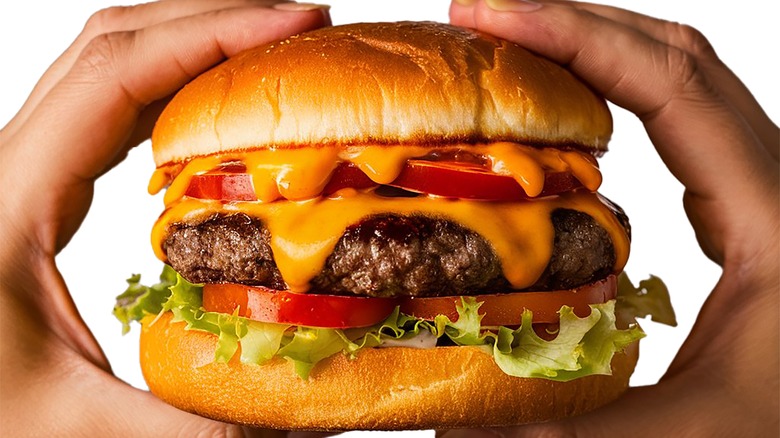
While moisture in a sandwich is important, you need to take steps to stop it from creating soggy bread. Shilling says that the way you layer your sandwich fillings can make all the difference. When making a burger, he slips some shredded cabbage underneath the beef to help the bottom bun stay intact as juices are released. He says that general construction matters too. "I always like to think of sandwiches as boxes that we are trying to fill evenly, top to bottom, side to side. I like to give every bit an equal opportunity to have all the ingredients and be as flavorful as possible." Shilling also says that it's important to sauce your sandwich evenly to avoid dryness, recommending going "coast to coast on the bread" with sauce.
Making the most of your sandwich bread: How Reid Shilling takes sandwiches to the next level
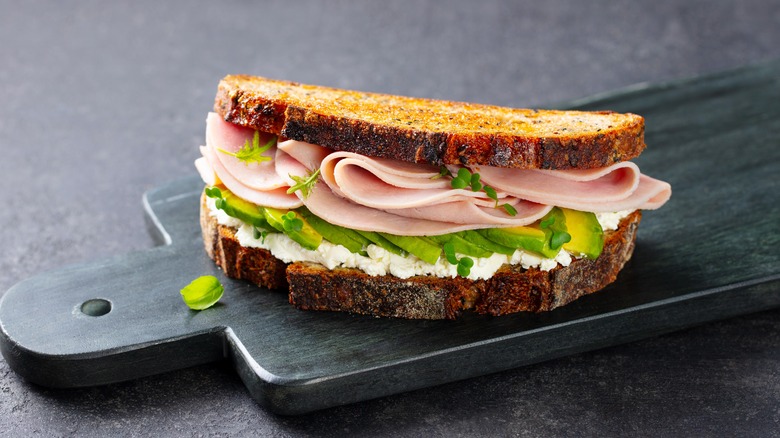
When it comes to elevating sandwiches, chef Reid Shilling says that buttering and toasting your bread can make all the difference — but it's not as simple as tossing your bread onto the griddle before you load up your sandwich. "The key with this is contact between the bread thats been crushed with fat and the griddle or cooking surface," Shilling says. In order to get a thorough toasting, you'll need to add a bit of weight to the top of your bread when it hits the cooking surface. "Anything from a small piece of food safe wood (or wrap it in plastic wrap) or pot lid to a chef's weight will do the trick here," Shilling says.
Be sure to be careful with the bread as you remove the weight, because it will become more pliable and fragile as it warms. Shilling says that even heating is key — you want to make sure every part of the bread's surface is evenly toasted to create a perfect canvas for your sandwich ingredients.