

The $57 Walmart Ribs That Prove You Should Always Double-Check Your Shopping Cart
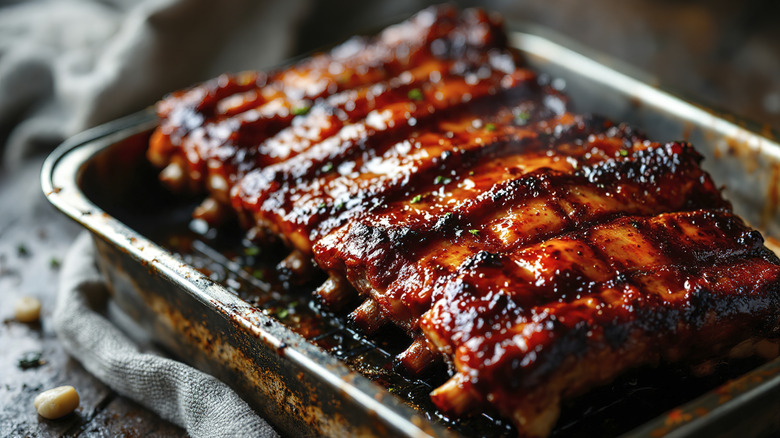
We've all looked at the grocery bill, surprised at just how much all those purchases add up to. Most of the time, one doesn't second-guess it, since it's easy to lose track of how much is going into the cart over the course of the shopping trip. However, if the amount seems significantly more than what you expect, it might be worth taking a closer look. As one shopper discovered in the meat section of Walmart, a minor error on the store's part can have you paying several times the actual cost of a product.
In a post on Facebook, a user shared the $57 Walmart rib incident wherein they picked up a rack of ribs, expecting it to cost between $10 and $15, and instead found it priced at a whopping $57! Closer inspection and a chat with a store employee revealed that this was not just a case of overpaying for a specific cut of meat. The label was actually for a New York strip steak, which had been mistakenly attached to the rack of ribs. Had the shopper not noticed, they could've ended up paying the approximate price of an expensive 5-pound steak for a pack of pork ribs. While this incident stands out for just how large a disparity there was in prices, mislabeling issues are relatively frequent in grocery store chains and, when the amounts involved aren't so large, easily go unnoticed by shoppers.
Mislabeling has been an issue at Walmart and other supermarket chains
While the odd mislabeling incident can occur at any store, the stakes are higher when it happens in the largest grocery store chain in the U.S. A particularly widespread case of mislabeling products led to a 2022 class-action lawsuit against Walmart, and was eventually ended with a $45 million settlement (via the New York Times). The products in question were largely those sold by weight, including meats, poultry, and fruit. Customers were allegedly overcharged since prices displayed on the shelf were lower than those on the labels of the individual products. Other instances included the label on a product specifying a certain price, which changed to a higher amount at the checkout register.
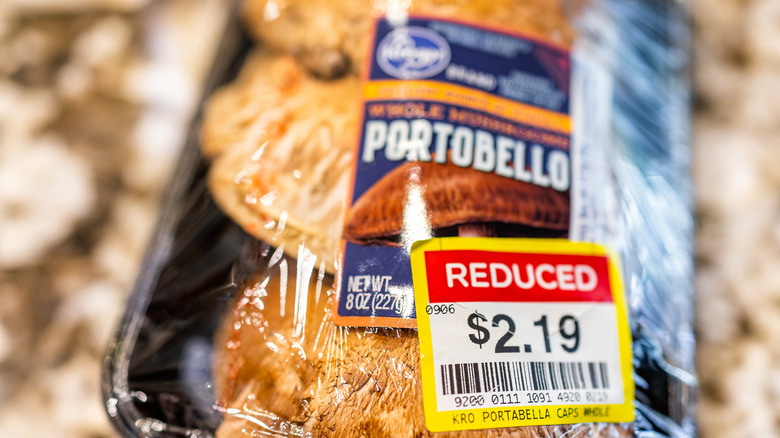
Another grocery chain behemoth where mislabeling seems to have extracted money from shoppers is Kroger. An investigation by The Guardian revealed that several outlets displayed discounted pricing on the shelves, but when rung up at the cash register, the product reverted to its original pricing. While the price changes here are generally of a few dollars, this can add up to significant amounts over time and over hundreds of thousands of shoppers across multiple outlets.
Avoid overpaying for mislabeled items with these simple checks
In a shelf with dozens of correctly labeled grocery items, a shopper is more likely to look at the condition and freshness of the product than the label, making it very easy to pick one up that may have been tagged with the wrong price. Where one needs to be especially careful is with common products, or those that one frequently buys, being mislabeled. These are usually never looked at too closely, and sometimes the discrepancy isn't as obvious as the $57 rib described above, but over time, shoppers can end up spending a pretty penny on such oversights.
The easiest way to guard yourself against mislabeling is to first ensure that the label of the item you've picked up matches the label on the shelf and other packages of the same item. Some Walmart items are not worth buying unless at a lowered price. Therefore, grab those discounts but keep a sharp eye on the checkout counter to ensure that any discounted products are billed accurately at their reduced prices. These simple checks can help keep most mislabeling issues at bay, and if the bill ever seems too high, it's worth giving it a once-over to ensure you haven't picked up a falsely tagged $57 rack of ribs by mistake.