

Yes, You Can Have Too Much Protein. Here's What Happens When You Do
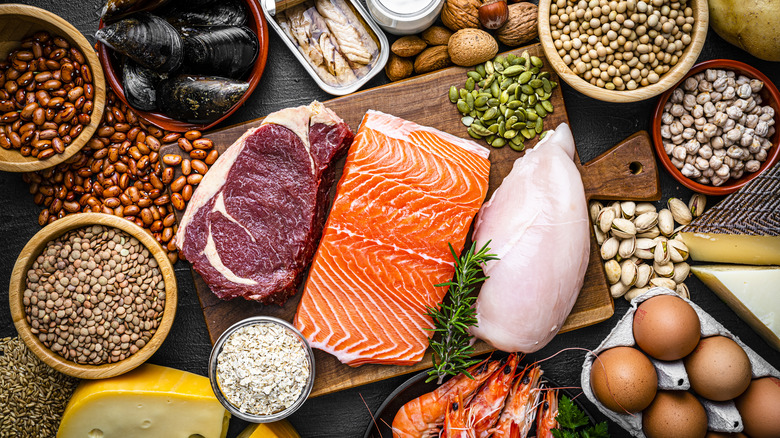
In today's health-conscious circles, protein-heavy diets are all the rage, and food companies are taking notice. Whether you're looking for the best high-protein yogurt at the grocery store or a proteinaceous fast food breakfast, you have an endless amount of options. Our obsession with protein makes a lot of sense; it makes us feel full for longer and helps increase muscle mass, among other benefits. But is it possible to have too much of a good thing?
According to registered dietitian Angel Luk, it is. Chowhound spoke exclusively with Luk about the risks of consuming too much of this essential macronutrient. Generally, scientists recommend that the average person's daily protein consumption comes out to roughly 0.8 grams per kilogram of body weight, or 10% of their daily calories. But some people, like bodybuilders, may consume much more than that on a regular basis. The problem is that our bodies can only process so much protein, and after that, it will adversely affect weight gain.
"When someone eats more protein than their body needs, the extra amount is used for energy or gets stored as fat," Luk said. "Ultimately, excessive protein, carbohydrates, and fat lead to an accumulation of fat, because it's the ultimate long-term energy storage option for humans." Beyond weight gain, there are increased risks when protein consumption is way out of balance with other macronutrients.
The difference between animal and plant-based protein

Overeating protein from any source may lead to issues, including weight gain and even rare cases of "protein poisoning," which can occur when you consume only lean proteins without sufficient fat or carbs for a sustained period of time. Even in those without underlying health conditions like gout, Angel Luk said, "consistently high protein intake [can form] kidney stones that trigger severe cramping pains in their back and sides."
But according to Luk, health risks are far more common in diets heavy in certain animal-based proteins. "If someone consistently consumes excessive amounts of processed or red meat that is high in saturated fat, then their risk for heart disease and colon cancer would also go up." In addition to clogging arteries, processed and red meats are considered carcinogenic and "probably carcinogenic" respectively, meaning they're capable of causing cancer, according to the World Health Organization. That's why meat-eaters are encouraged to limit their red meat consumption and seek out less-processed deli meats.
"A diet rich in plant-based proteins may not carry similar risks," Luk said. "Especially if they are prepared in heart healthy ways." Many of us tend to gravitate towards lean animal proteins, like salmon or chicken, but Luk encourages health-conscious eaters to integrate more plant proteins into their diets. "Put simply, having more plant-based proteins has been shown to have health benefits for people looking to reduce their cholesterol and high blood pressure, improve blood sugar management, and improve feelings of fullness after eating," she said.