

Not All Cottage Cheese Has Live Probiotics: What To Know Before You Buy
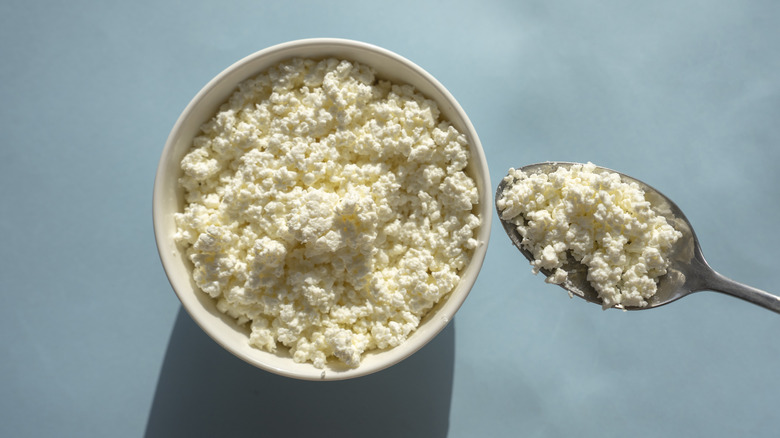
Cottage cheese has been having a comeback lately. Besides being a protein powerhouse, it is also often noted as one of the popular high-probiotic foods that isn't yogurt. But it's important to note that not all cottage cheese varieties are actually fermented, and some may not have any probiotics at all. To be certain that your cottage cheese has probiotics, check the label to make sure it contains probiotic or live and active cultures. You can also read the list of ingredients to look for the presence of beneficial bacteria like lactobacillus.
Why do only some cottage cheese varieties have probiotics? The answer lies in the process that companies use when making the cheese. An acid is needed to separate milk solids from whey when making cottage cheese curds, and this can be done either through fermentation (adding a bacterial culture that will convert into lactic acid) or by simply adding another kind of acid, such as lemon or vinegar. Some of the cottage cheese varieties seen in stores may be made using live bacterial cultures, but many are made by only using vinegar. This is because it's much faster than waiting for fermentation to take place. Cottage cheese that is not fermented needs to have live bacteria added to the cheese in order to carry the gut-boosting properties of a high-probiotic food.
What else to look for when buying cottage cheese
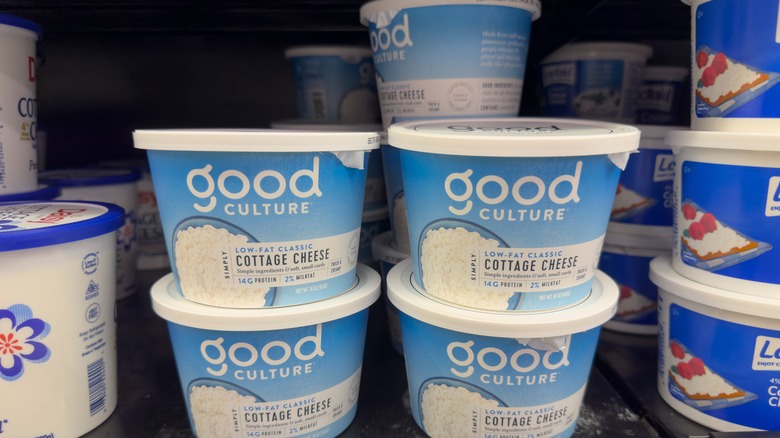
It's safe to say that everyone can benefit from probiotics in their cottage cheese. The research now clearly shows that gut and brain health are linked, and building a diverse gut microbiome is key to overall wellbeing, including reduced inflammation and better digestion. An added bonus is that cottage cheese with live cultures has a clean, creamy, and tangy flavor that can't be beat. So once you've checked the label and double-checked the ingredient list for probiotics, there are some other things to take into consideration when buying cottage cheese. A lot of these factors depend on personal preferences and what you plan to use it for.
Cottage cheese can be fat-free, low-fat, or full fat. If you are making a dish where the creamy texture should not be compromised — like scrambled eggs or cheesecake — you are going to want to go for the full fat variety. Low-fat cottage cheese has a little more protein, so those opting for cottage cheese strictly for health-related reasons should purchase a low-fat tub. Then comes the choice between small curd versus large curd. The larger curds generally have more moisture, giving them a smoother, creamier taste, making them perfect for things like extra fluffy scrambled eggs. Smaller curds tend to have a tangier taste and are better for blending into dips and spreads.