

10 Of The Most Annoying Things About Ordering Groceries On Instacart
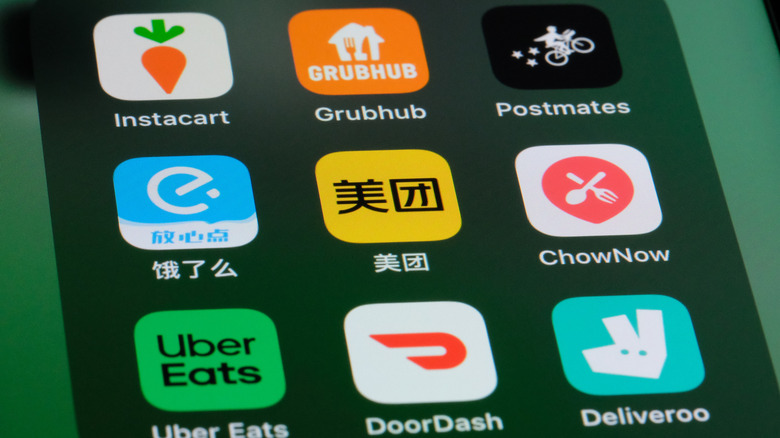
For the uninitiated, Instacart is a service that allows you to order groceries from local stores and delivers them to your door in a few hours. While it's probably the most well-known of these services, it's not alone; Shipt, DoorDash, and Uber Eats will also deliver groceries, and some stores have their own delivery services. These are great options for people who are unable to visit the store in person.
The first time I ordered from Instacart was in the throes of the pandemic; despite our best efforts, COVID eventually hit us. It didn't, however, remove our appetite completely, so we needed groceries. I've used grocery delivery services several times since then, and the more I use them, the more it becomes clear that while these services are highly convenient, they still have issues that make them far from perfect.
1. Groceries are more expensive
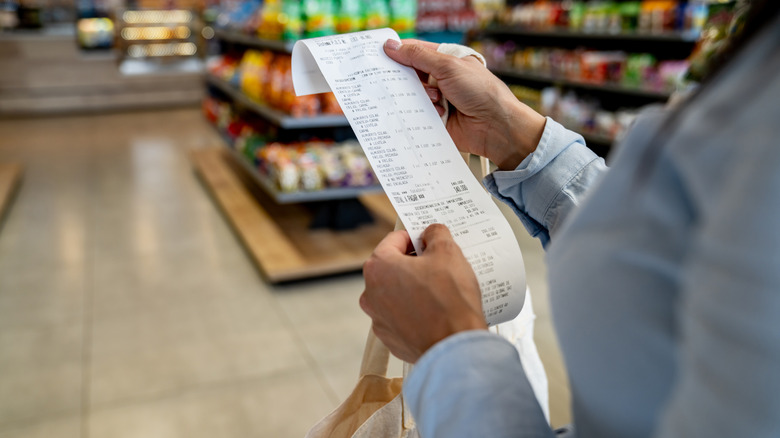
When I ordered food from Aldi through Instacart for the first time, I noticed that the prices seemed higher than what I usually paid in-store. But I shrugged it off, thinking that either my brain was so fevered I wasn't thinking straight or that maybe the pandemic had jacked up prices that week.
However, it turns out that online grocery shopping could be costing you more money in several ways. First, some stores upcharge items on Instacart, meaning you pay more to order them than you would in the store. This isn't true of all stores, but places like Aldi and Kroger charge about 10% on some items. When you choose a retailer in the app, it will tell you if they charge in-store prices, but that's not so helpful if you have specific stores you need items from. This means that at certain merchants, you're guaranteed to spend more on groceries to have them delivered — and that's before we've even mentioned things like fees and tips.
Instacart charges a 5% service fee on orders and a delivery fee that's typically around $7.99. That fee goes toward the app, not your driver; you still need to tip. The tip goes directly to your shopper and driver, and 15% to 20% is considered appropriate. In total, an order that might usually cost you $100 in-store could end up costing you an extra $45 to $50 when you order through a delivery service.
2. No control over who gets your order
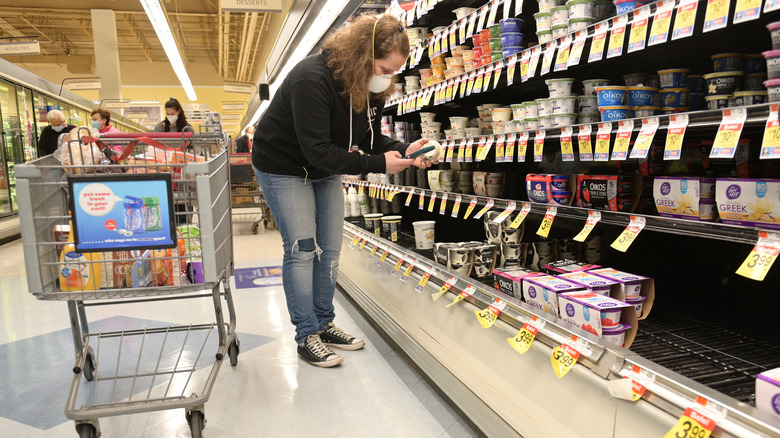
One complaint that I've seen people mention about Instacart and other delivery apps is that there's no way to request a specific shopper. This means that if you have a really good experience with one, there's no way to ensure you'll get them again. This is frustrating because there are some really great shoppers on the app, but your delivery is left up to chance.
Will your shopper be a 45-year-old who has been grocery shopping twice a week for the last 20 years, or a college kid who never set foot in a grocery store until their meal plan ran out? It's a surprise — stay tuned to find out!
When it comes to grocery shopping, I plan my trips out before I hit the stores. My list is organized not just by grocer, but also by where things are within the store to make my trip easier. Now, I get that not everyone memorizes their local store floorplan, but sometimes you end up with a shopper who's hopelessly incompetent. I've had more than one experience where I've had to guide a shopper to the item I'm looking for.
3. Wacky substitutions
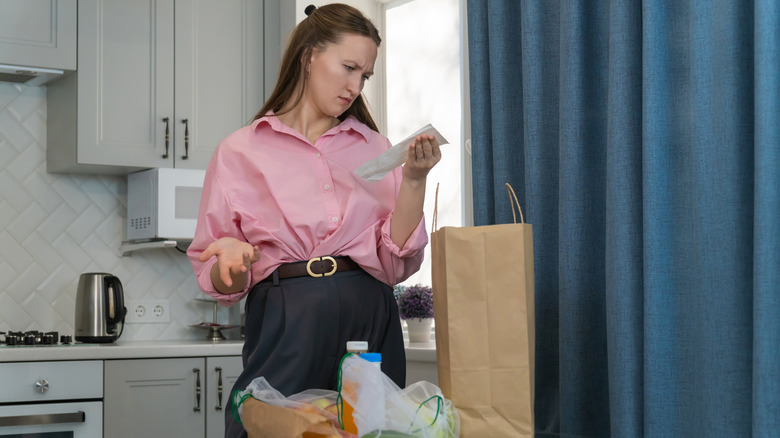
The internet is full of stories of people who have used Instacart or similar grocery shopping apps and ended up with ... well, not what they requested. One woman on TikTok vented about how she had ordered five things, and only one was correct. The comments are full of others sharing their stories — someone who ordered tampons and ended up with white mushrooms, someone who ordered adult diapers and got tampons, someone who needed cinnamon sugar and received fajita seasoning instead; the list goes on. A BuzzFeed staff member asked the community to share their most insane substitutions, and contributors didn't disappoint. One woman asked for gluten-free pasta and got, you guessed it, tampons (what is it with tampons?), another asked for plums and got red onions, and another ordered tortillas and received a head of iceberg lettuce.
Part of this problem harkens back to the fact that you can't request a shopper, and as a result, you have no idea what type of person will be picking up your order. You could get a grocery expert or a novice just looking to make a few dollars.
Now, to be fair, I can't verify these stories. I've never had this happen to me personally, because I had heard stories like this and am always very specific about substitutions when I order. But that leads to a whole different problem.
4. You have to stay glued to your phone
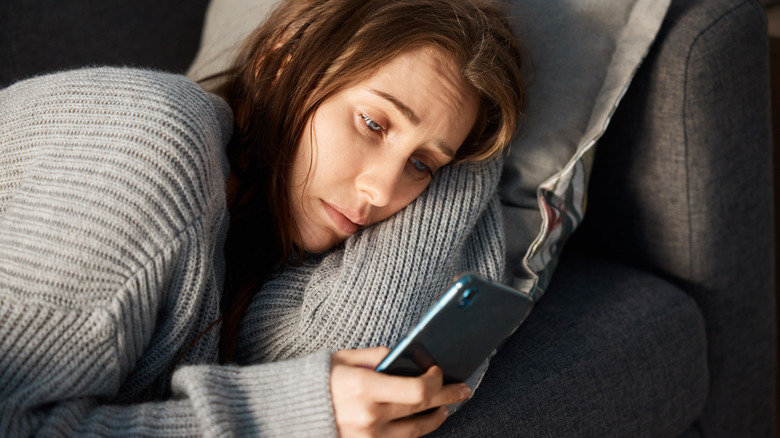
If you don't want shoppers to pick out substitutions, you have a couple of different options, depending on the app. You can request specific substitutions, like "If they're out of a gallon of 1% milk, please replace it with two half-gallons of 1% milk." You can also ask the shopper to message you before making a substitution.
The downside to requesting that shoppers text you for substitutions is that you have to be vigilant about checking for texts while they're shopping. This might mean you have to actually turn your cell phone off silent (sorry, millennials and Gen Z — and I'm including myself in that). However, this isn't always possible, such as when you're in a work meeting or trying to get the baby down for a nap. It's also not a guarantee that you'll see the message — there have been times when I've received a text while the text app was open and, as a result, didn't get a notification.
And of course, you don't want to leave your shopper hanging, so you end up checking your phone every two seconds. This can obviously be very distracting, as well as somewhat exhausting on your brain.
5. Pathetic produce
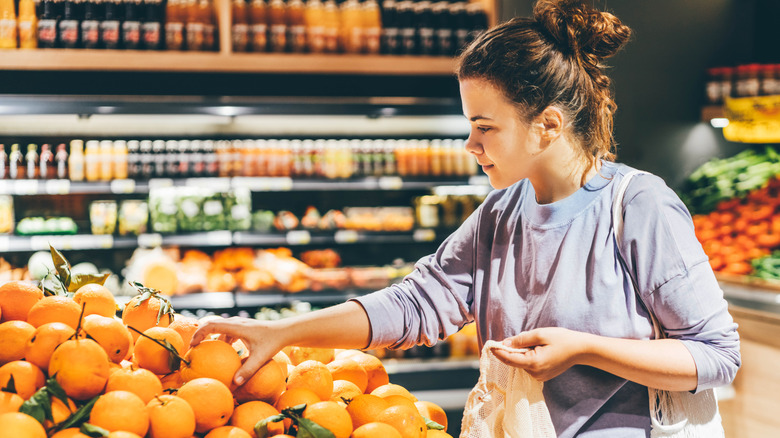
Even before creating a guide for buying produce at the store, I've always been somewhat picky about my fresh fruits and veggies. In general, I don't care if they're "ugly," so much as they're ripe and not damaged. See, my kids go through phases where they will either devour the produce I buy in a single day or completely forget it exists for a week or so. As a result, I need fruit that's ripe now but not in danger of rotting anytime soon. This means no heavily bruised apples or mushy raspberries.
But when you send a shopper in for you, they don't know what kind of produce you like. You can specify, but there's no guarantee that they'll get it right. I've had deliveries where it's pretty clear the shopper just grabbed the first bag of grapes or apples they saw. This could be due to the shopper simply not caring, or not knowing what to look for (although, in fairness, I've had curbside pickups where the employees chose some sub-par produce, so...). At this point, I'm just resigned to doing all my produce shopping in-store.
6. Where...where's my food?
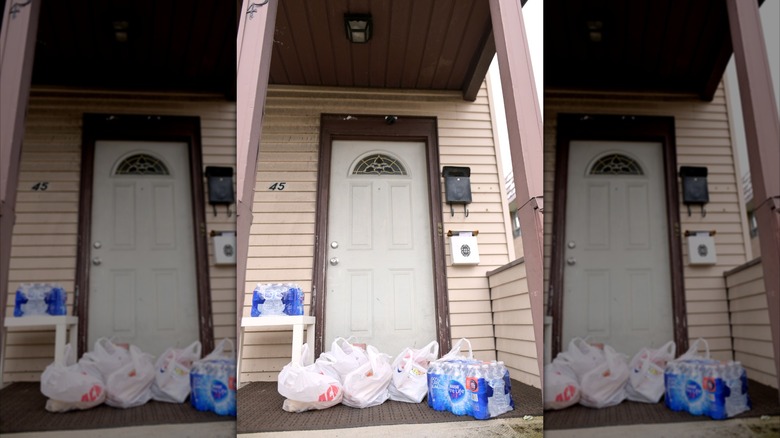
There are a few grocery delivery mistakes to avoid, and I learned one the hard way. The house I used to live in had a somewhat odd layout, and the door wasn't immediately visible. When I ordered Instacart for the first time, I wasn't thinking clearly (you know, due to COVID) and didn't include clear delivery instructions on my order. As a result, the shopper left several bags of groceries at my garage, which required me to haul everything up the basement stairs to my kitchen while my illness-riddled muscles screamed at me.
In fairness, a garage door isn't the worst place to leave a delivery, so I got lucky. Others, not so much. Even though it's supposed to be hard for Instacart drivers to leave your order at the wrong address, it happens ... a lot. Shoppers on Reddit blame the map apps, but regardless of who's at fault, it's frustrating to be unable to find your groceries. And to be fair, this isn't just an Instacart issue. People often experience this issue with DoorDash, Uber Eats, and other delivery services. Heck, I'm having this issue (again) with FedEx right now.
7. Tipping is awkward
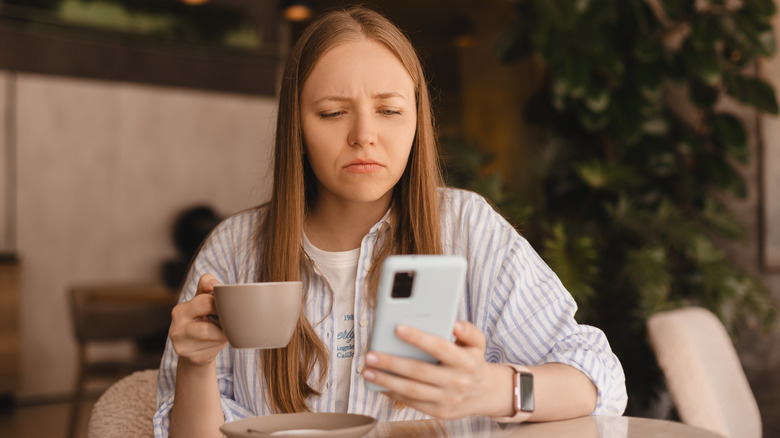
Let's be clear, tipping is always awkward. I don't want to put a monetary value on your effort; that's why I'm not in management. Unless the service I receive is really, really good or really, really bad, I'm a standard 20% tipper. But I'll admit, it gets a little confusing at fast food restaurants, when ordering pickup, and for non-traditional services like grocery delivery.
As we mentioned above, 15% to 20% is considered standard for services like Instacart. But for me, how much to tip isn't as frustrating as how tipping works on Instacart. You have two options: you can tip when you put the order in, or tip after the delivery. The idea is that if you include the tip at the same time as the order, it may give the shopper an extra incentive to pick your order first, as they can see how much they're being tipped.
But there aren't many other settings in which you tip before your order arrives. What if my shopper does an excellent job, or what if they're terrible? Now, Instacart does allow you to change the tip after, but I find that incredibly awkward. Unfortunately, there are people who feel differently, as "tip baiting" was a big issue for a while. Personally, I'd rather tip after my delivery shows up, but I also don't want my order to get less of a priority because of that.
8. Allergy risks

Instacart can be really good for people with allergies, as they can avoid going into spaces that might trigger them. However, there are also situations in which Instacart can cause allergy issues.
I'm not someone who has a severe allergy to anything that a shopper might keep in their car, but if I did, I'd be very careful about ordering groceries from a stranger. A person allergic to dogs, for example, may receive a delivery from someone who loves dogs and lets their pets ride in the car, resulting in pet hair that contaminates the delivery. The same issue can happen for someone who's allergic to cigarette smoke or heavy perfumes. Because you have no control over who your driver may be, you have no control over what allergens you may be exposed to.
On top of that, there can be issues within the delivery itself. Hopefully, someone with allergies isn't going to be ordering groceries containing their allergen. But you can't necessarily prevent a shopper from swapping out your intended item for a substitution with allergens, like swapping out soy milk for almond milk. While you can usually avoid this by leaving notes on the order or responding to your shopper if they text you, not all shoppers will check before swapping an item.
9. I don't want to get stalked (or robbed)

The world often isn't safe for women, so we get used to doing things like parking in well-lit areas, texting our ETA when we get in the rideshare, or, you know, avoiding handing out our addresses to random people. Unfortunately, when ordering from delivery services, you kind of have to provide your address, which can sometimes be unsafe for both men and women.
To be clear, this isn't solely an Instacart issue, although there have been issues with Instacart drivers behaving inappropriately. DoorDash, Uber Eats, and other delivery companies have had drivers accused of creepy, even violent behavior. You want to see the best in people, but there's always that lingering thought of, "Hope this random person doesn't decide to murder me."
This isn't just an issue for those ordering from the app; it's an issue for the independent contractors working for these companies as well. While most shoppers say it's pretty safe, there are stories of customers being creepy and gross as well, especially to female shoppers. It's one of the major issues of the gig economy, which notoriously doesn't provide the same protections for workers as more traditional jobs.
10. It's not available everywhere
So I've ranted about my annoyances with Instacart, but the truth is, despite all of these things, it can still be a great option for some people. Which brings me to my final point: it's not available everywhere.
Part of this is because some stores use alternative delivery services. For example, Target uses Shipt. This isn't the worst thing in the world, but having to create multiple accounts and keep track of who uses what can be annoying. And some stores, like Trader Joe's, don't do grocery delivery at all.
More frustrating is that while Instacart and other delivery services can be a great answer to food deserts, not everyone has access to a food delivery service. These services are concentrated in metropolitan areas. Midsized metro areas have much less coverage, while only about 37% of people in rural areas have any access to grocery delivery services. It's disappointing that a service that can be so helpful, especially to particularly vulnerable populations like the elderly or disabled, isn't available to areas that need it most.