

Stop Ruining Your Sausages — It's Time To Ditch This Controversial Cooking Method For Good
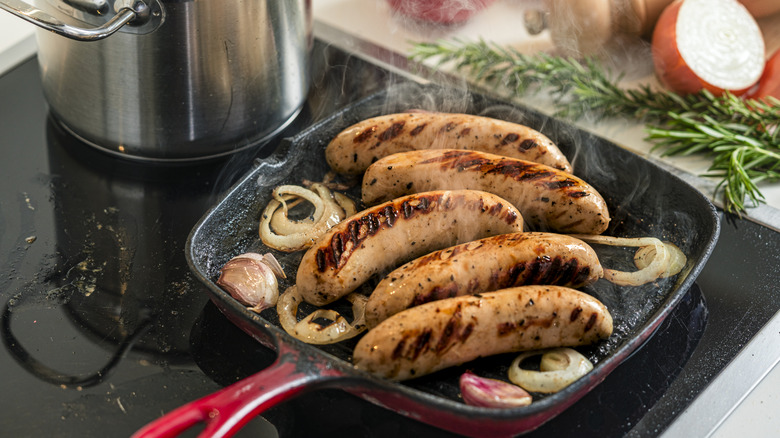
If you grew up eating sausages, chances are you must have come across — or still follow — the practice of pricking them before cooking. The reasons for doing so were always varied and plentiful: It stops the sausage from exploding, the oil released from the inside helps the sausage crisp up, and even that pricking reduces the fat content of the sausage itself. While all of these reasons may have held water at some point, that is often not the case now. For one, there are many good sausage brands that contain a measured amount of oil and liquid. Thus, even if you don't prick them while cooking, you don't get a splatter of juices when you bite into them. Second, pricking it before cooking can actually degrade the sausage in many ways.
"I personally do not recommend pricking [sausages], as it allows much of the fat and natural juices to escape during the cooking process," says Robbie Shoults, celebrity chef and third-generation owner of Bear Creek Smokehouse, Marshall Mercantile, and High Horse 1898. Pricking the skin of the sausage before cooking, he continues, also dries out the texture of the sausage. If you find yourself smothering your sausages with condiments to flavor them, perhaps it's time to look at how they are being cooked. Those pricked sausages may be leaving some of their best flavor behind in the pan or grill instead of bringing it to your plate.
The only time you should consider pricking a sausage
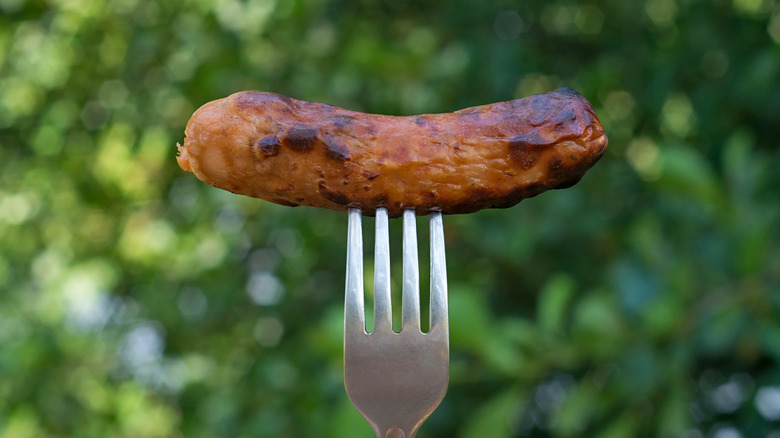
Sausages come in several varieties. However, the one ingredient that all tender and flavorful sausages contain is fat, and a good amount of it. Whether to prick or not depends on how much of the fat inside the sausage you want to retain, and how much you want to escape. "If you are cooking a sausage that is high and rich in fat content, such as chorizo, you might consider a small piercing to release some of the fat to allow the sausage to cook in its own juice," recommends Robbie Shoults. However, there is no reason to prick the sausage before it is cooked.
For the times you decide to prick them, consider doing it once the sausages have almost finished cooking in the pan, then prick the sausage and let the fat drain out so it can finish cooking in its juices. Even when you do pierce the sausage to let it cook in its juices, it should be done without perforating it too much — only a little bit of the released fat is needed to flavor the sausage's outside. You want the rest of the fat to remain inside. A sausage dry from the inside cannot be saved by a flavorful outer skin.
Follow these flavor-boosting alternatives instead of pricking sausages
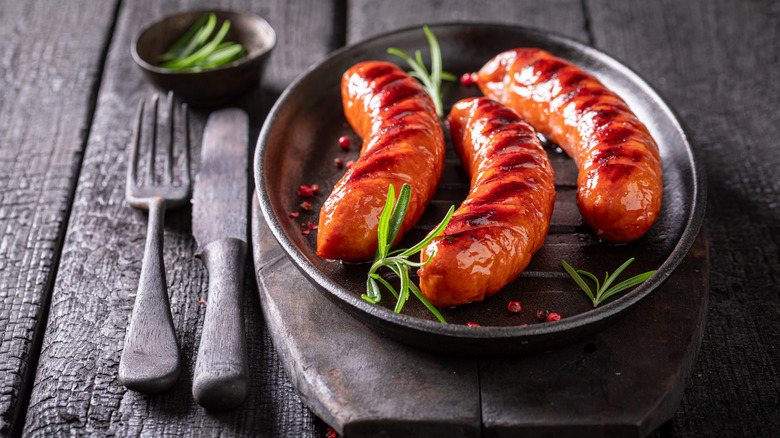
For the sausage to get a lightly crisped texture on the outside whilst remaining moist inside, Robbie Shoults recommends cooking it low and slow. "High heat is one of the main reasons that [sausages] burst during the cooking process," he says, reinforcing that cooking sausages on low heat can help one avoid having to prick them for fear of bursting. While you can do this on a cast iron skillet, Shoults offers an alternative for when you're using a grill: "Another idea for uncooked sausage is to place it in a foil pan in a small amount of water or beer and place it on the grill until it reaches an internal temperature of 145 [degrees Fahrenheit]. At that point, take it out of the pan and place it on the grill so it can finish cooking and to ensure the color and snap that you want to achieve." When finishing it off on the grill, Shoults points out that the internal temperature of the sausage should reach 165 degrees Fahrenheit.
It's worth noting that this method of cooking sausages in a flavorful liquid before grilling them (or, as is the case with grilling bratwurst, immersing them in a beer bath afterwards) works for most types of sausage. The slow cooking in liquid infuses flavor and helps ensure the sausage doesn't dry out. Even if you plan on making crispy, charred smoked sausages, following the two-step process of slow cooking for infusing flavor (in this case through smoke instead of liquid) followed by charring on the grill produces delicious results.