

9 Differences Between Cheap And Expensive Vodka
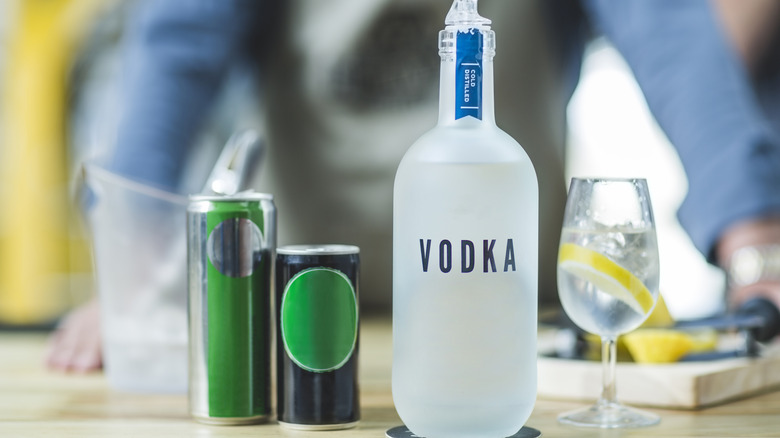
Whether you consider yourself to be a vodka connoisseur who knows all the best brands or you just enjoy the occasional tipple, different vodka-based recipes and needs call for different levels of quality. If you're planning to drink your vodka in a liquor-forward cocktail, for example, quality is paramount. On the other hand, a low price point is probably the top priority if you're aiming to whip up some penne alla vodka or homemade hand sanitizer.
But what separates a cheap vodka from a quality vodka? Can you ever tell from simply looking at the bottle? We decided to check in with two Las Vegas-based cocktail experts for their advice. With the help of Juyoung Kang, head of beverage and partner at Doberman Drawing Room, and Gedeon Tsegaye, head of mixology at The Cosmopolitan, we were able to answer these questions. Once and for all, here are the key differences between cheap and expensive vodka, and what to look for in the liquor aisle.
1. Packaging and price only tell part of the story

Cheap vodka is priced low for a reason, and often, cheap packaging is a reflection of what's inside the bottle. A plastic bottle, for example, is generally a key indicator of a lower quality product. While this particular combination of price and packaging will almost always signal what's inside the bottle, Juyoung Kang warns that expensive branding doesn't automatically guarantee high quality. In fact, shopping solely based on price can lead to a disappointing outcome.
"People who are only price hunting for the cheapest or most expensive, then it's my assumption that you're open to poor quality and gimmick," says Kang, who points specifically to unique bottle designs, labels featuring original artwork, or hand-blown glass bottles as tricks some brands might use. They can look great, but they're also driving up the price of the vodka — possibly more than the vodka itself.
Gedeson Tsegaye, who oversees all of the beverage and cocktail programs across The Cosmopolitan of Las Vegas, agrees. "Don't be fooled by the fancy bottle because you're paying for that," he says. "It will likely end up in the garbage unless you are a collector of empty bottles."
Basically, it's a good idea to let packaging and price guide you away from the cheapest bottles on the shelf — but don't let them be your only indicator of a quality product.
2. Expensive vodka takes time

The general process of making vodka is essentially the same no matter your price point, but as Gedeon Tsegaye points out, there are two key factors in luxury spirits that make a difference. The first is high-quality ingredients, and the second is the amount of time a brand spends on creating and processing the vodka itself.
"The longer it takes to get a product to the market, the more costly it becomes for the producer," he explains. "If a producer is [for example] resting their vodka for 90 days in stainless steel to off-gas ethanol vapors, this will ... cost much more than the producer who bottled their vodka straight off the line."
This price gets passed along to the consumer, which is why expensive vodka should, theoretically, taste better. Along with high-quality ingredients, vodka that spends more time resting, Tsgaye says, makes for a richer, creamier tasting experience. "Fermenting the best ingredients with precise timing yields a superior product," he explains.
3. Cheap vodka tastes less refined

While producing expensive, high-end vodka requires dedicated time, it's probably not a surprise to learn that making cheap vodka is not nearly as time-consuming. In fact, the process to make lower-quality vodka is often incredibly rushed from fermentation to distillation to filtration. The results of this process are then further exacerbated by the use of cheap ingredients, which Gedeon Tsegaye warns will yield an unfavorable result — that's often why it has a price tag to match.
So, if you're wondering why your cheaper bottle of vodka doesn't taste particularly refined, it's likely to be a combination of all of the above. "Some producers go through extensive lengths to procure the best ingredients while taking extensive amounts of time to properly distill, filter, and rest their products," Tsegaye says. But when they don't, you'll find a lower-quality product that costs less ... and the taste will reflect this, too.
4. Expensive vodka brands have transparent processes

If you're wondering whether a vodka brand has invested more in packaging than production, our experts both share that a high-quality vodka label tends to be transparent about their vodka-making ingredients, as well as their process. "You can find them on their website or videos made by the brands," says Juyoung Kang.
Gedeon Tsegaye agrees, and says this can be something worth noting when shopping for a new vodka. "Thanks to technology, you can always do a quick google search for the producer that's listed on a label," he says. "If they have a website that speaks to their production process and brand reasoning, and it fits your budget, you've found your vodka."
From there, you can then start to discern what you personally value in your vodka. Kang says to pay attention to base grain, as this might also help you form your preference. "You can choose from corn, grapes, rice, wheat, rye, potato..." she says. "That minutia of the difference also challenges the price of quality."
5. Expensive vodka is best for martinis

As with anything, selecting your vodka of choice comes down to personal taste preferences, no matter the price point. However, there are times when you'll want to spend more money as a guarantee of quality, and Gedeon Tsegaye says this is particularly true, depending on your drink recipe of choice. "In a martini or other spirit forward cocktail the highest available quality is non-negotiable" he says.
This is because in these drinks, the taste of the vodka is important for the balance of the overall flavor, and a cheaper vodka won't be as smooth as something more expensive. Juyoung Kang agrees, noting you should choose a finer vodka if your overall goal is to appear more elevated. "If you're gift giving or attending or hosting a nice dinner party, it's good etiquette to bring or host something nicer [and more expensive] than what the guests normally enjoy," she says.
6. Cheap vodka packs an 'ethanol punch'
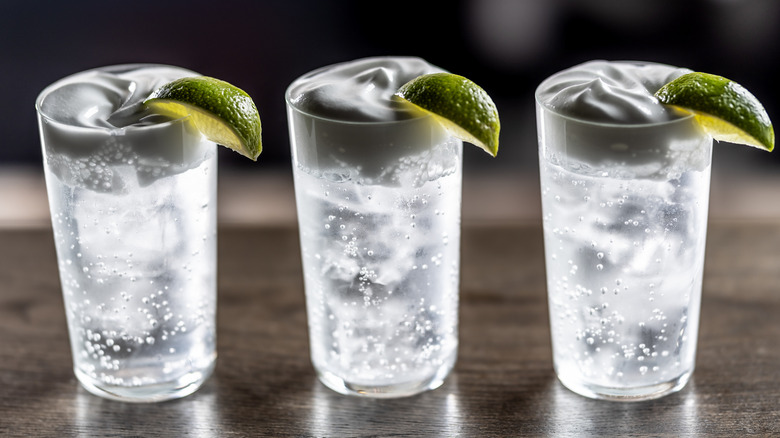
It makes sense that you'd want to use a great vodka in a cocktail where that's the primary flavor. On the other hand, there are times when your cocktail plans might call for what Gedeon Tsegaye calls an "ethanol punch." This is a flavor you're more likely to find in a cheaper-priced vodka, but Tsegaye is also careful to clarify that the word "cheap" can be misleading in this case.
"Some cocktails can improve with a little ethanol punch, so in this case a vodka with expedited production processing could enhance the experience," he says, before noting that "expedited production processing" is the key phrase here. "[It's] not to be confused with cheap. Cheap sounds like the product does not have integrity."
This is why it's important to consider the production process and ingredients involved. A low price point can indicate cheap quality, or it can point to an expedited production process. In some cases, this might just be the exact flavor profile you need.
7. Cheap vodka might worsen your hangover

It's important to note that this is purely anecdotal, but many have found — Juyoung Kang included — that cheap vodka often makes for a worse hangover. "If you want to have a good martini or not nurse a hangover the next day, maybe splurging for the finer vodka is the way to go," she says. In reality, drinking too much of any alcohol — no matter the price — leads to dehydration, and this is what causes a hangover. Anecdotally, however, people do seem to feel that the cheaper the vodka, the worse they feel. So, what gives?
There are a few theories here. One is that because your drink costs less, you have the budget to drink more — hence driving up your risk of hangover. The other thought is that the distillation process of expensive vodka filters out impurities that might not technically make your hangover worse, but could be affecting how you feel in the aftermath. This, in turn, leaves people assuming their hangover is to blame.
Whatever the actual reason, it's still very much worth considering. Expensive, well-made vodka is likely easier to savor, which makes it easier to pace yourself.
8. Cheap vodka is great for cooking
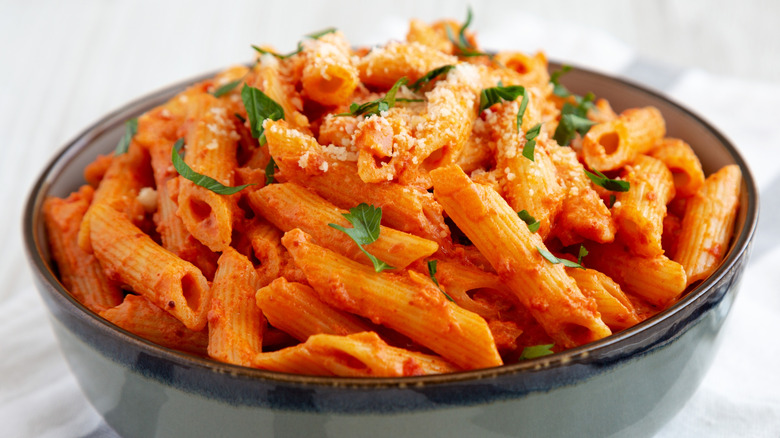
There aren't a ton of cooking uses for vodka, but that doesn't make its most popular dish any less beloved. Of course, we're talking about vodka sauce — a classic, creamy, tomato-based sauce that's often paired with penne. As Gedeon Tsegaye points out, though, you really shouldn't splurge on a high-end vodka if you're going to use it to cook. In this case, a cheaper option will work just fine. "After reducing the ethanol in vodka there isn't much flavor left," he says.
Juyoung Kang concurs, and says you can also use cheap vodka for DIY food-grade hand sanitizers and cleaning solutions, as well as infusions — where different flavors or herbs are used to create homemade flavored vodkas. However, Kang also shared a word of warning. If you're cooking down your vodka, burning off ethanol can be hazardous. "Make sure ventilation is on high and maybe wear a mask and/or goggles," she says.
9. Cheap vodka tastes better after filtering through charcoal
As our experts each noted, high-quality vodka reaches that point through a careful and prolonged process of fermentation and distillation. This means running expensive vodka through any additional filtration at home is unlikely to make a difference in flavor, but Juyoung Kang says that's not true of cheaper, low-quality vodka.
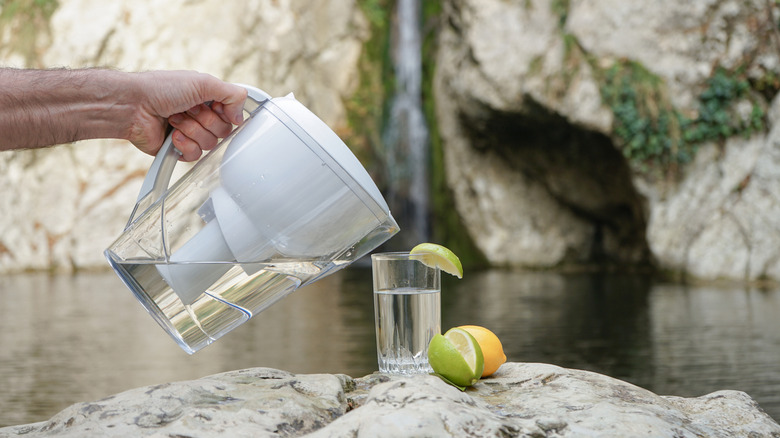
In fact, she says that the old hack of pouring your vodka through a charcoal filter to improve its flavor actually has some merit. "It was my college trick when I had no money to filter my $10 plastic handle of vodka through my water filter system," she says. If you find yourself with lower grade vodka or even a vodka you're not sure you like, this might be one way to salvage the bottle. Otherwise, it's probably time to bust out the penne, tomato paste, and cream and get cooking instead.