

The Easiest Way To Make Lasagna Isn't In A Baking Dish According To Rachael Ray
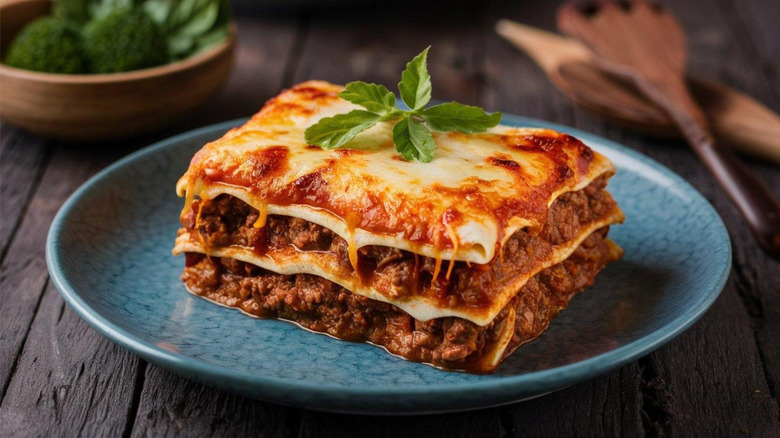
Lasagna has a reputation for being a bit of an all-day project between making the sauce, nicely layering all the ingredients, and then waiting for it to bake in the oven. But Rachael Ray has a different take on cooking lasagna that simplifies the whole process, and if it's good enough for Rachael Ray, it's good enough for us. Her method ditches fussing around with a bulky baking pan and instead involves cooking lasagna in a cast iron skillet, which is faster, cooks more evenly, and means you don't have to wrestle with oversized portions when all you want is a quick, comforting weeknight dinner.
Cast iron skillets in particular work really well for lasagna as the cast iron heats slowly and then holds onto the heat beautifully, which means a nice and even bake with gorgeous crispy bits where the edges meet the noodles around the exposed sides. And because it's smaller than a traditional baking dish, it's also easier to manage the layers without them slipping around or collapsing into a saucy mess, particularly helpful if you've ever been victim to some of the mistakes everyone makes when making lasagna, such as too much sauce between layers making the dish too moist.
Tips for the best skillet pan lasagna
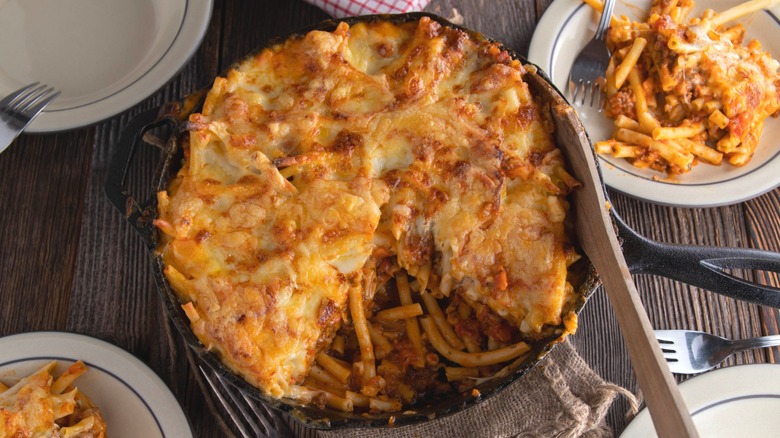
With a quick skillet pan lasagna, there's more room to experiment. You can try swapping ricotta for cottage cheese for a bit of a lighter dish or load the whole thing with roasted vegetables and lentils for a vegetarian version. The smaller skillet size means it is easy to play around without committing to a giant pan of leftovers, which makes experimenting with the dish feel less intimidating and way more enjoyable.
But, of course, even a cast iron pan won't fix a lasagna that is going to fall apart the second you cut into it, so that's where another method comes in to help lasagna hold its shape. The trick here isn't piling on as much cheese and sauce as you can into every layer, but alternating them — pasta, then sauce, pasta, then cheese — so that each layer stands out with its own unique flavor instead of blending all together into a gooey tomato and cheese puddle.
And another overlooked tip for perfect lasagna that extends to skillet-pan lasagna too: Let it rest. If you pull lasagna straight from the oven and serve it immediately it is almost guaranteed to slip and slide, instead, give it time to cool slightly, which lets the cheese set and the pasta absorb some extra moisture. While this part is a test of patience when cooking lasagna in a baking tray, you've saved yourself some time cooking it in a pan in the first place so lean in — the reward is a perfect skillet of lasagna that holds together beautifully.