

The Absolute Tastiest Glaze For Vegetables Is A Common Korean Pantry Staple
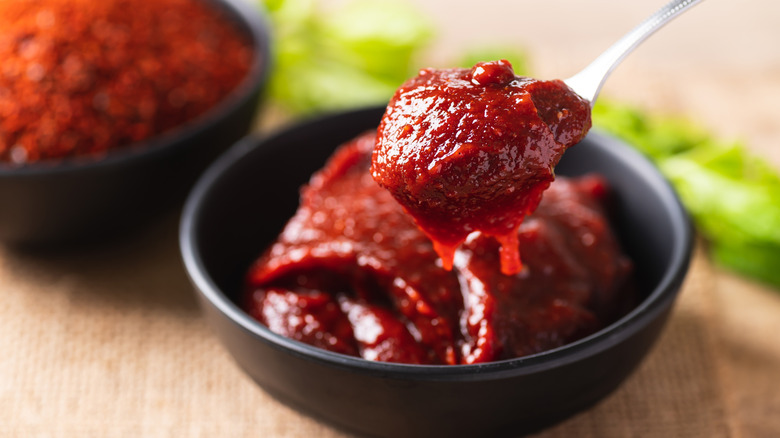
Life is simply too short for bland steamed veggies or dishes dressed with the same old tired spices. Next time you're looking for big flavor achievable with just one ingredient, step aside from the usual marinades and reach for gochujang. Gochujang is a simple but potent paste made from fermented soybeans, rice, and peppers. It packs a sweet, savory, umami punch and is commonly used in Korean cooking. Use the paste to dress up anything from root veggies to greens; just about anything you can imagine is improved by a dollop or two of the paste's pungent, zesty spice and tang.
Chowhound caught up with someone who knows the sauce, its flavors, and how to use it as well as anyone: Sungchul Shim, executive chef of Gui Steakhouse in New York City. This Times Square restaurant expertly serves up Korean dishes alongside American steakhouse classics, and the Michelin-starred chef makes his own gochujang from scratch. "Gochujang is special because it has so many flavors happening at once," he explains. "It's a little sweet, a little spicy, full of umami, and it has this deep, almost earthy richness that comes from fermentation." Whatever you put it on, expect it to add "layers of flavor you can't get any other way," says Shim.
The paste adds transformative flavor to just about anything
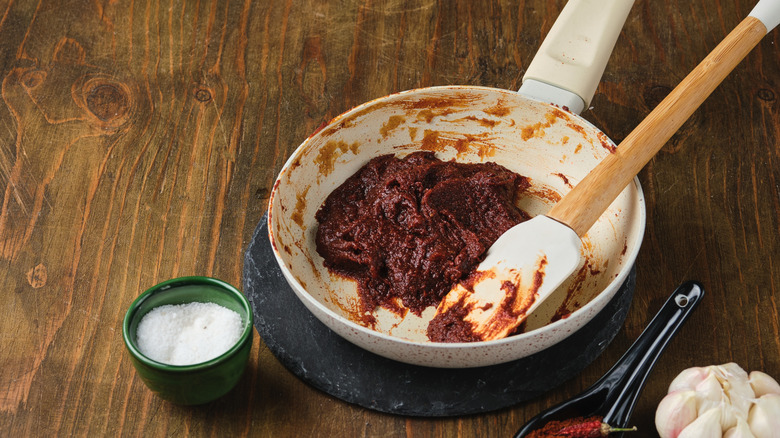
Much like other multipurpose MVPs that can dress up just about anything — think chili crisp or soy sauce — gochujang's usages are virtually endless. Eggs, veggies, and noodle and pastas dishes all get kicked up a notch or five. In Korean cuisine, Sungchul Shim says gochujang is used to "transform" the flavor of a dish, acting as a marinade for traditional meat dishes. It can also be used to liven up salmon or be a dip for raw veggies (in addition to a glaze for cooked veggies). Because of the sugar content of the sauce, which caramelizes beautifully, it makes the perfect base for a glaze.
The layered, balanced flavors of the sauce are complex, but the paste itself is easy enough to incorporate into your home cooking, even for the novice chef. Shim advises whisking together some gochujang paste with soy sauce, honey, sesame oil, and garlic, and glazing root veggies, eggplant, or Brussels sprouts. If you're someone who shies away from overly spicy, zesty flavors, a gochujang glaze can still have a place in your cooking. Though the flavors are bold, Shim says it's less about heat and more about providing depth and complexity; you can adjust the ingredients of your glaze for more or less sweetness or a bit of acidity. However you use it, Shim promises it "transforms simple vegetables into something really bold."