

The Mistake You're Making When Cooking A Seafood Boil
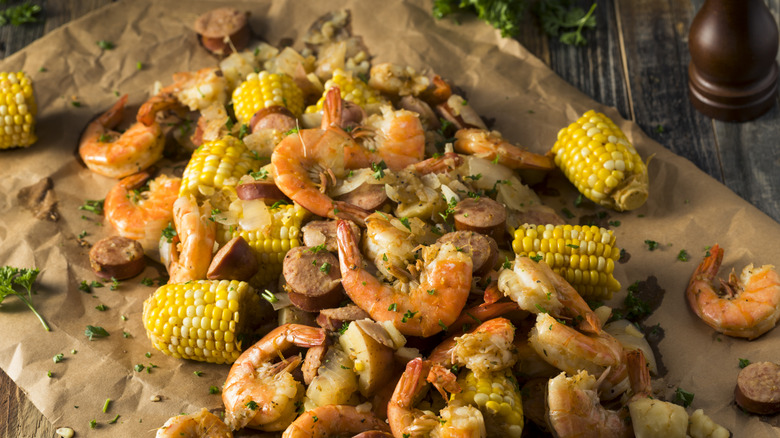
Seafood boils have always had a way of bringing people together. Popular in coastal regions and with multiple cultural influences, including Native American, African American, and Cajun roots, seafood boils continue to be a fun, communal way to feed a large group of people at a celebration or casual get-together. These tasty one-pot meals typically consist of seafood, vegetables, and sausage that are boiled together in a broth with Cajun spices, then traditionally dumped on a cloth- or newspaper-covered table for family and friends to enjoy, utensil-free (yes, it's a messy experience). While it might be tempting to add everything to the boil at one time, this is an easy-to-make mistake that's ruining your seafood boil.
Darren Chabert, the chef de cuisine at Saint John (@saintjohnnola on Instagram), a haute Creole restaurant in New Orleans, spoke exclusively with Chowhound to address the best way to cook your seafood boil ingredients. According to the head chef, "one of the most frequent mistakes is throwing all the ingredients into the pot at once. Different ingredients have varied cooking times, and adding them simultaneously leads to undercooked potatoes and tough, rubbery seafood." Indeed, seafood boils include a large number of ingredients, such as crawfish, jumbo shrimp, crab legs, lobster tails, mussels, clams, corn on the cob, baby red and Yukon Gold potatoes, and andouille sausage. As Chabert points out, it's important to follow a specific order for cooking your various ingredients to guarantee a seafood boil that wins every time.
The correct order for adding ingredients
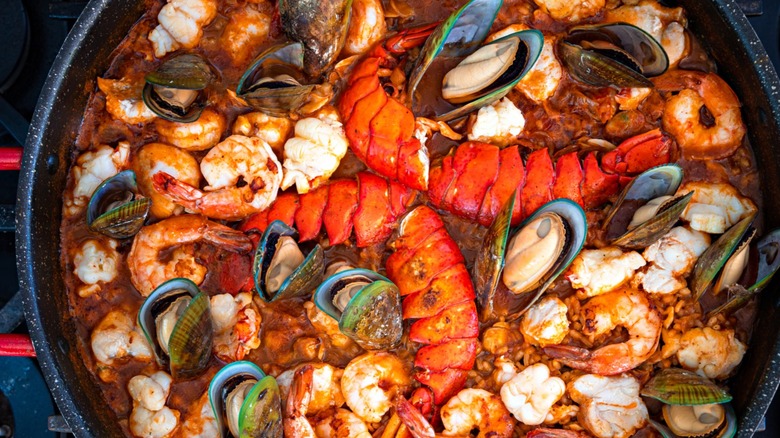
The first thing to note when determining the cooking order for your seafood boil is that the potatoes have the longest cooking time. For this reason, Darren Chabert says that "while seafood is the star of a boil, the potatoes are often the toughest ingredient to get right." Seafood, particularly shellfish, cooks fast compared to denser items. Therefore, it's best to add the potatoes to the pot first, cooking baby or small potatoes for about 15 to 20 minutes. Corn and andouille sausage have similar cooking times, roughly 10 to 15 minutes, so they can be added slightly after the potatoes.
Next comes the seafood. Lobster generally takes longer to cook than other shellfish (eight to 12 minutes) so it can be added first. Clams and mussels can be added next since they take about five to 10 minutes to cook. They should be cooked until the shells open and any unopened shells should be discarded since they did not cook properly. Crab legs, which are typically sold pre-cooked, take about five minutes while shrimp only takes around three minutes (and should be added last). Bear in mind that cooking live, whole lobster or crab takes longer to cook than pre-cooked tails and legs. Moreover, cooking frozen seafood takes a few minutes longer than fresh or thawed seafood. However, it's always best to safely defrost your seafood before cooking it to avoid a mushy texture and uneven cooking.