

The Lemon Trick That Keeps Seeds Out Of Your Food And Drinks
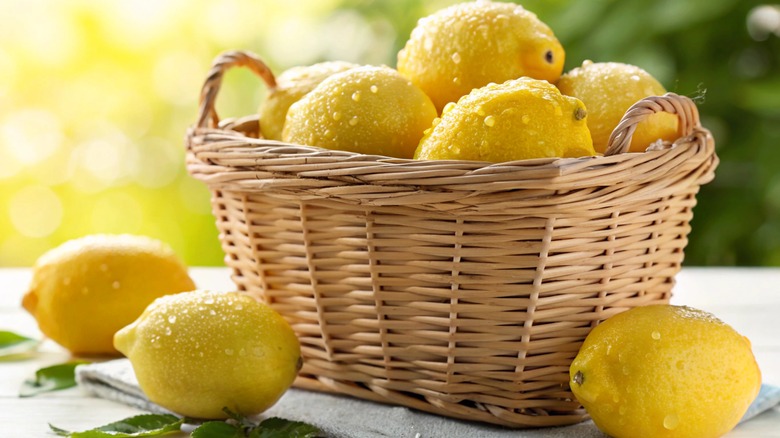
Lemons have an uncanny ability to brighten. They can brighten your mood with their smell and their pleasing visual pop. Who doesn't soften a bit when seeing a bowl of lemons on a sparkling countertop? They are an effective natural cleaner and they can even brighten your clothes with their Amalfi Coast lemoncore vibes. But, most importantly in the food realm, they can brighten your dishes with their hit of eye-opening acidity that just levels everything they touch up a notch or two.
Lemons can be integrated into your food in many ways, from their zest to getting the most abundant juice, and in many stages, from incorporating into a sauce or baking into your favorite blueberry muffins. But some dishes, like a fresh seafood pasta or a classic fried chicken sandwich, call for the perfect squeeze of lemon juice tableside as a finishing touch. How to cut lemons for that final flourish in a way that won't rain lemon seeds over your beautifully prepared food and drinks? The answer is lemon cheeks.
What, pray, are lemon cheeks? They are simply the outer curves of a lemon that can be harvested by slicing down along the length of the fruit. This leaves the inner structure, with most of the pulps and all the seeds, intact.
Lemon cheeks equals smile emoji

The cheeks of lemons are indeed smile-inducing, as they brilliantly showcase clear, unmarred fruit with no seeds in sight. You will often see restaurants prep their lemons this way, particularly for raw bar items, and we're convinced that one try will make you a convert. There's just something about the blemish-free juicy flesh that screams attention to detail, precision, and ultimately, pleasure.
To achieve the perfect lemon cheeks, choose fruit that has thin, shiny and smooth skin, and don't be afraid to use your nose. Lemons that smell fragrant will always keep you on the right track. Thin skin and a bit of heft usually yield more flesh as opposed to lighter pieces with a tougher, thicker rind. Once you've cut off both sides of the lemon to produce the cheeks, there's still plenty more lemon to use. You can zest a bit of the remaining core, slice into smaller wedges, or simply juice the remaining body of the lemon (just watch out for the seeds). If you find a lemon with an abundant number of seeds, you may spot one or two in your cheeks. If so, just use a fork to flick them off the surface of the flesh and you will be ready to go with photo-worthy lemon cheeks.