

Here's How To Figure Out The Water Content Of Ham

Choosing the best type of ham to buy at the grocery store often depends on what type of meal you're making. Whether you're heating up pre-cooked ham for sliced sandwich meat, making a quick ham dinner, or preparing a holiday feast, the type of ham you buy will often contain varying amounts of water, affecting the overall quality of the meat. All varieties of ham can have their place at the table as long as you know how you'll serve them.
You might ask what difference the water content makes, and how you can determine the percentage of water that is in your ham. First, the water content in ham affects its texture and taste. Ham that contains more water usually has less "ham" flavor, a looser texture, and additional water weight that makes it less expensive.
You might use a cheaper ham with higher water content to make sandwiches that will feature other ingredients such as cheese, mustard, and other toppings. For a special occasion, a higher quality ham with less water, which can be baked to perfection using some of the best tips for cooking ham, will satisfy even the Epicureans among your guests. Knowing the meaning of the terminology describing water content found on the label will allow you to unmask the actual percentage of water and protein in each variety of ham, and thus know the best way to cook and serve it.
Terms that reveal the water content of ham
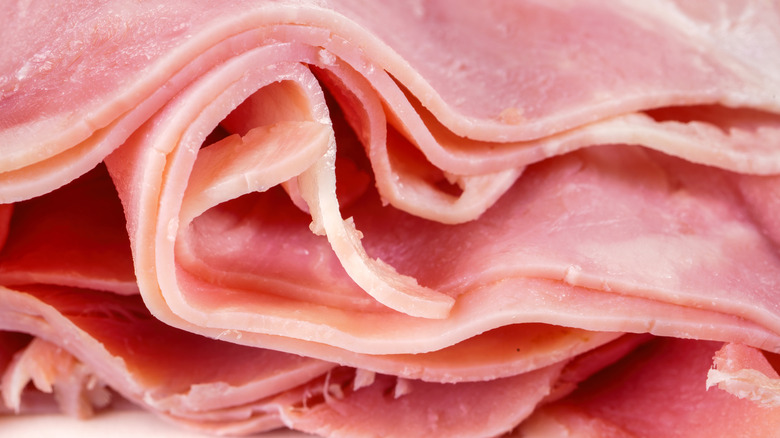
A ham labeled simply as "ham" has no added water and at least 20.5% protein. This is typically the best quality ham, a variety you'd reserve for a family get-together. A product labeled as "ham with natural juices" contains 7% to 8% added water and 18.5% protein. If a ham is labelled as "ham, water added," it contains at most 10% added water by weight and has 18.5% protein. Finally, a ham listed as "ham and water product" can contain any amount of added water.
As not all types of ham have the same water content, there are additional factors to consider when buying a ham. Choosing the best ham to feed your guests will often depend on knowing the difference between a country ham or a city ham. A country ham is dry-cured with salt and is often smoked and spiced. It is a favorite within the Ham Belt of the American South. A city ham, which is a common variety found in grocery stores, is cured in a brine of sugar, salt, and spices and is usually pre-cooked. City hams take on water when brined, but can also be injected with water. So, knowing the meaning of the terminology behind water content will help you decide which ham is best for you.