

Nutella From Italy Tastes Different From The Nutella Made In America, Here's Why
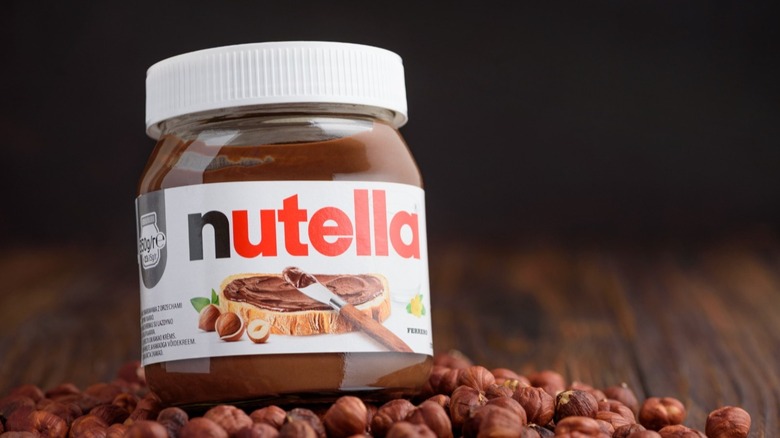
Nutella is a pantry staple in households around the world. Whether spread on toast and bananas, mixed in hot chocolate, or used as a crepe filling, this Italian-born chocolate-hazelnut spread adds decadence to any dish. Nutella gives grilled cheese a dessert twist and is also the irresistible ingredient Martha Stewart adds to monkey bread. Interestingly, while made by the same company, many report that Nutella from Italy has a slightly different taste than Nutella purchased in the United States.
Italian Nutella is generally described as less sweet with more pronounced hazelnut flavor, while American Nutella is more chocolatey and sugary. Some people who have tasted both versions note that Italian Nutella has a creamier texture compared to the oilier American version. Italian Nutella also typically comes in a glass jar, while American Nutella is sold in plastic jars. It's possible that the packaging has some influence on taste perception, since glass is non-porous and preserves flavor better than plastic.
Some also report that Italian Nutella lists the percentages of hazelnuts and cocoa on their packaging while American Nutella does not, leading people to jump to the conclusion that American Nutella must be a different formula. However, after visiting the American and Italian Nutella official websites, it's evident that the ingredients and percentages are in fact identical: sugar, palm oil, hazelnuts (13%), skimmed milk powder (8.7%), low-fat cocoa (7.4%), emulsifiers: lecithin (soya), and vanillin. Thus, if the spreads truly do taste different, there must be other reasons besides varying ingredient amounts — perhaps, say, the type of hazelnut used in each version of Nutella.
Hazelnut varieties have different tastes
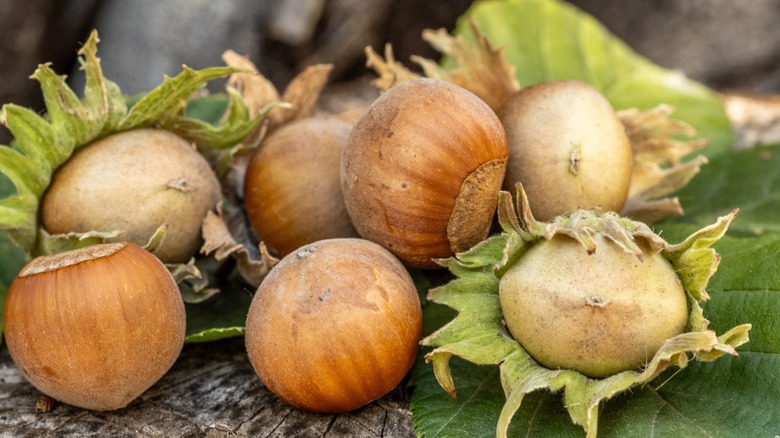
Like many food crops, hazelnuts can taste different depending on the region they are grown in. Hazelnuts grown in Piedmont, northern Italy, are considered among the highest quality and best-tasting hazelnuts. This also happens to be the place of origin of the predecessor to the famous chocolate-hazelnut spread Nutella. In 1946, due to a shortage of chocolate as a result of World War II, confectioner Pietro Ferrero of Piedmont created a spread with hazelnuts, sugar, and a small amount of cocoa. It was named Giandujot, after the Italian carnival character, Gianduia (or Gianduja). Fast forward to 1964, the recipe was improved, the packaging changed, and the Nutella as we now know it was born, quickly becoming a staple in Italian households.
Today, Nutella is sold around the world and sources its hazelnuts from multiple countries including Italy, the United States, Turkey, and Chile. While the company doesn't reveal which hazelnuts supply which region's Nutella, one might conjecture that slight variations in taste could have to do with regional variations in the flavor of hazelnuts. There are hundreds of varieties of hazelnuts, each with a unique taste, aroma, and shape depending on the genetic type, region they are grown in, and how they are processed. Regions with rich soil, well-draining landscapes, and mild Mediterranean climates — all of which are characteristics of Piedmont, Italy — are the most conducive to growing high-quality hazelnuts. Ultimately, subtle flavor differences aside, whether using the American or Italian version, there are lots of creative things you should be doing with Nutella.