

Should You Be Eating Kiwi With The Skin On?
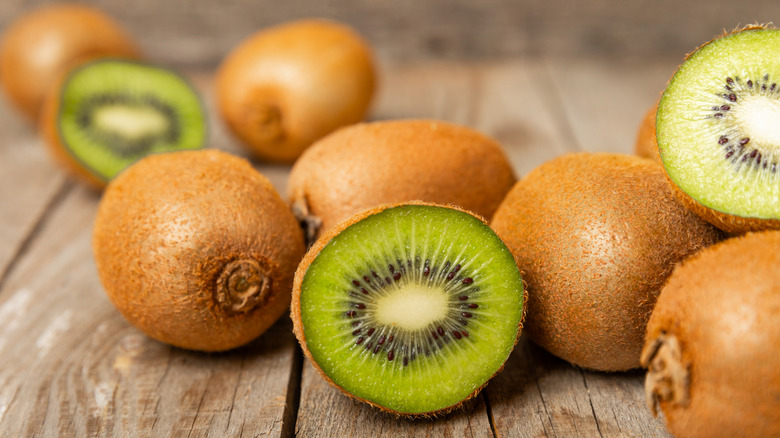
While many people don't think twice about eating the skin of a fuzzy peach, the longer, coarser hairs covering a kiwi may give them pause. But, as with other fruits and veggies like potatoes, apples, and even bananas, you miss out on a lot of potential nutrients if you discard the kiwi's skin. Author Rachel Gargano, MS, RD, CSSD, CBS, who is Live it Up's Chief Registered Dietitian, told Chowhound exclusively, "For most people, it's absolutely safe (and nutritious!) to eat the skin of a kiwifruit." However, some people may experience oral irritation after eating it. "This is because the skin "contains actinidin, an enzyme that works to break down proteins, or because of the calcium oxalate crystals, both of which may cause irritation or a stinging sensation in the mouth," Gargano explained. If you're skeptical about trying one with skin on, gold kiwis have a thinner, smoother peel with less fuzz which makes them a good entry point.
Going deeper into the health benefits of kiwi skin, Gargano points out that, even without the skin, kiwis are nutritional powerhouses. They contain a good dose of vitamin C, plus antioxidants and fiber — and some studies have even shown them to help improve sleep. But with the skin? You can get even more nutritional value. "If you're choosing a SunGold kiwifruit, eating the skin gives you 50% more fiber, 34% more folate, and 32% more vitamin E than eating the tender, fleshy inside alone," said Gargano. It also packs in more antioxidants as well as other beneficial bioactive compounds.
Introducing kiwi skin into your diet
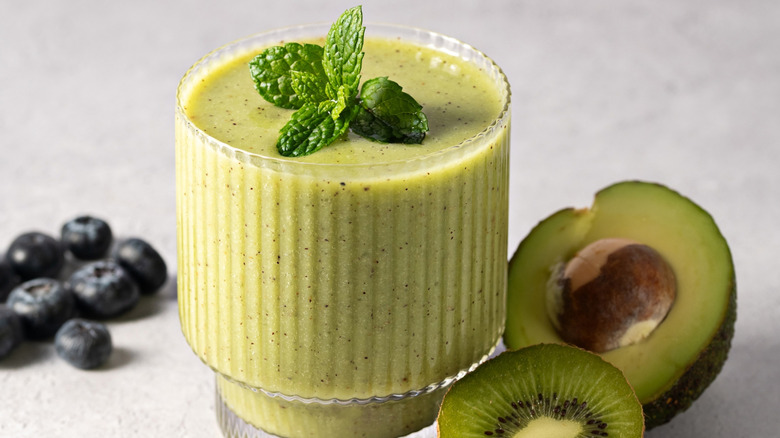
If you're not among the people who experience irritation after eating kiwi skin, there's no real reason not to eat it, other than what Rachel Gargano refers to as the "ick factor" which comes from biting into that fuzzy peel. But if you're someone who needs to metaphorically dip their toe in the water rather than dive right in, here are a few suggestions to make the transition easier.
Start by choosing the best kiwis, of course. You'll know your kiwi is ripe if there's just a slight give when you press into it. Store your ripe kiwis properly to extend their shelf life if you're not ready to eat them right away, but if you are, try slicing or dicing the unpeeled kiwi rather than just taking a bite out of the whole fruit, which may be a bit too intimidating. You can even turn the diced, unpeeled kiwi into a salad with cucumber, feta, and red onion, finishing it off with a sweet, nutty, and tangy honey-tahini-lemon juice dressing. Incorporating your unpeeled kiwi into a robust salad such as this may be a good way to lessen that ick factor of the hairy skin. Or, you could always just make a simple fruit salad with the kiwi as well.
Smoothies are another great option. Blend the unpeeled kiwi along with ingredients like yogurt, banana, spinach, frozen mango, or pineapple ... whatever sounds best to you. Add a squeeze of lime juice for a nice tangy contrast, some nut butter for a thicker smoothie, or maybe even a scoop of vanilla ice cream to balance out all those vitamins!