

Rick Steves' Unexpected Advice On Ordering Off The Tourist Menu While Traveling Europe

When you're about to embark on a trip to one of the food capitals of the world, there's no doubt you've been told, "Eat where the locals eat." This is logical — locals know the best spots, the most authentic dishes, and the places that aren't marked with tourist prices. But travel writer and guide Rick Steves has a slightly surprising take. Instead of always hunting down the local favorite spots, he stated on his travel blog, Rick Steves' Europe, that a tourist menu can actually have a few benefits worth considering.
For starters, there's the matter of accessibility. Tourist menus are usually translated into English and several other languages. This removes one of the biggest barriers to eating out when abroad, ordering without fear of making a mistake. This is ironically one of the "red flags" travel foodies say to look out for when choosing a restaurant — those big menus with four different languages and a flag next to each of them. But hey, not all of us speak French or Italian.
Yes, restaurants geared towards tourists can be more expensive, but the price can sometimes work to your advantage. Many countries in Europe offer fixed-price tourist menus that include multiple courses, as well as bread and dessert, and sometimes even wine or beer, all for a reasonable set amount. So, if you want a large meal to try a variety of dishes, this can be a convenient option. Plus, since the tourist-friendly restaurant will likely speak English, you can confirm the set price to make sure you're not spending more than what you intended.
When to order from a tourist menu while traveling
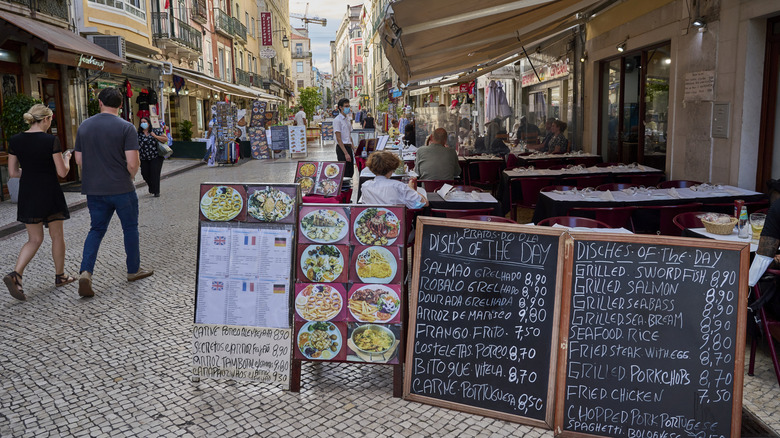
Trying to understand the menu and ordering in another language can be a fun challenge for some. For others who may have dietary restrictions, allergies, or are traveling with picky children, it can be a nightmare. If you need to make sure a meal doesn't contain certain ingredients, a tourist restaurant can sometimes be most helpful for this and ensure that mistranslations don't occur.
Plus, not everyone wants the added stress when they're suffering from jet lag and hungry after sightseeing. Tourist menus are typically found close to attractions and historical sites, so it can often be the easiest option if you don't want to walk blocks away to find a local favorite or hidden gem. If you have a tour or museum slot at a specific time, a restaurant featuring a tourist menu can be conveniently located right where you need to be. It doesn't always have to be a tourist trap — you can still avoid places with flashy marketing and gimmicks.
While a tourist menu may not feature the most adventurous dishes, it often showcases the more typical dishes of the region. If you're feeling overwhelmed by the sheer number of restaurants when visiting Paris, and want to try a selection of French dishes, a tourist menu could be an approachable way to start. At a tourist-geared, brasserie, you might find coq au vin or cassoulet. Sure, sometimes you might find places with globalized menus that have pizza and hamburgers, but you can typically opt for other dishes. And sometimes, you or the kids might want a break from new foods and would rather chow down on something more familiar. A fed traveler is the best traveler, after all.