

Jasmine Or Basmati Rice: Which Is Cheaper?
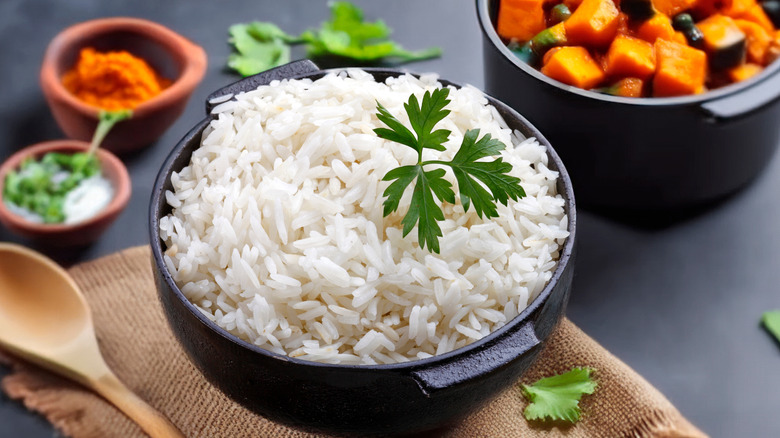
Certain meals seem incomplete without a serving of fresh rice to accompany the spread. In the category of long-grain rice, two aromatic varieties in particular — basmati rice and jasmine rice — are frequently celebrated, not only for their pleasant scent, but also for their incredible flavor. You can't really go wrong with either choice, but if you're looking to save a few bucks on your next grocery bill, jasmine rice might be the way to go.
Jasmine rice is not only cheaper than basmati, but its floral and sweet aroma, reminiscent of pandan leaves — the same leaves that give sticky green rice its vibrant hue — makes it a great choice for any rice-based dish. Basmati rice's higher price point can be attributed to the specific growing and harvesting conditions it requires. But if you want to score a deal on basmati rice, South Asian grocery stores are your best bet. There, you can buy basmati rice (and sometimes even jasmine rice) in bulk, which will last you for months.
Choosing the best rice for your meal

As a culinary staple and key source of agricultural revenue in many countries, every type of regional rice variety offers something unique to be savored. When cooking a type of rice from a specific region, consider serving it in a regional dish. For instance, basmati rice is commonly grown in the rice fields of India, Nepal, and Pakistan and is hence deeply ingrained in those culinary cultures. Use it to make biriyani or pulao, or serve it alongside a deliciously spiced entree colloquially referred to as "curry" in the West. It's not only South Asian cuisine where the nutty notes of basmati rice are a go-to favorite. Middle Eastern and Mediterranean restaurants rely on basmati rice for some of the cuisine's signature dishes, like the iconic Persian dish called tahdig, which boasts a satisfying layer of crispy rice.
Jasmine rice, on the other hand, is popular in Southeast Asian cuisine, in countries like Thailand, Vietnam, and Indonesia. Jasmine rice also has a higher starch content than basmati rice, thereby retaining some of its stickiness when cooked. For a fluffier result, make sure to rinse the uncooked grains thoroughly under cold water till the water runs clear, denoting that the excess starch has been removed. At the end of the day, we're not here to tell you how to enjoy your rice, so if you want to switch things up with your rice pairing for Thai or Indian-style curries, have at it.