

Whatever Happened To Sizzler Buffet Chains?
How many places, once institutions of American culture, have become merely objects of nostalgia? Or, worse, how many have been forgotten entirely, left to the detritus heap of trivia? The wheel of time doesn't stop, and it will mash even the most beloved, seemingly immovable institution into nothing. Take, for example, Sizzler. The very name of the famous buffet style restaurant evokes memories both fond and peculiar.
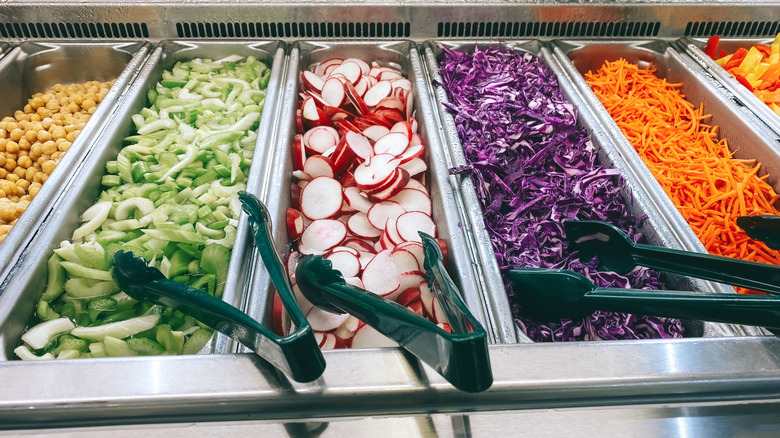
To the contemporary diner, the concept of a Sizzler might seem like a fever dream. The restaurant was both a sit down joint and a buffet, offering a smorgasbord of various genres of dining to budget-conscious customers. Throughout the 1970s and 1980s, Sizzler was one of America's most iconic dining chains, offering steak and seafood dinners (along with an ample salad bar and buffet) to diners. It was a staple for many families looking for a nice dinner at a low price. And, for what it's worth, Anthony Bourdain himself had a soft spot for the buffet chain.
What is not so clear is what happened to Sizzler in the last few decades. Since the 1990s, it seems Sizzler has fizzled out. So what happened? In short, Sizzler was squeezed out of the market by burgeoning fast food chains, which could offer meals at a lower price point, and by the emergence of other mid-level restaurants which offered better quality food for a small increase in price. This, along with the decline in buffet-style restaurants during the 1990s, led to a series of bankruptcy filings and location closings that have reduced Sizzler to a shadow of its former self.
All that sizzles then folds
To fully understand the current state of Sizzler, we must first turn to its origins. Founded in 1958, in Culver City, California, Sizzler was originally a steakhouse above all else. From the beginning, the restaurant focused on being an intermediary between the emerging fast food restaurant and the sit down diner. The chain endeavored to create an affordable dining option that sat somewhere between the two, a place where one could order at a counter but still enjoy their meal at a table.
According to Christopher Perkins, the current CEO of Sizzler, the restaurant was fast-casual before it was even a solidified thing (take that, fast-casual icon, Chipotle). This, along with the addition of the salad bar at some point in the 1970s, made it an appealing restaurant for diners looking for variety. In the 1990s, the iconic buffet was added to the chain, replacing the humble salad bar. However, by 1996, Sizzler had started to slump due to crowding out at both ends of the market. Not just this, but the addition of buffets to the chains actually hindered business, as upkeep for the buffet was costly and it crowded out dining space in the restaurant. Even so, Sizzler has endured. The chain has filed bankruptcy twice, in 1996 and again in 2020. And now the chain is down to only 74 locations, down from over 700 at its peak. Most Sizzlers can be found in California.
Is Sizzler catching fire again?
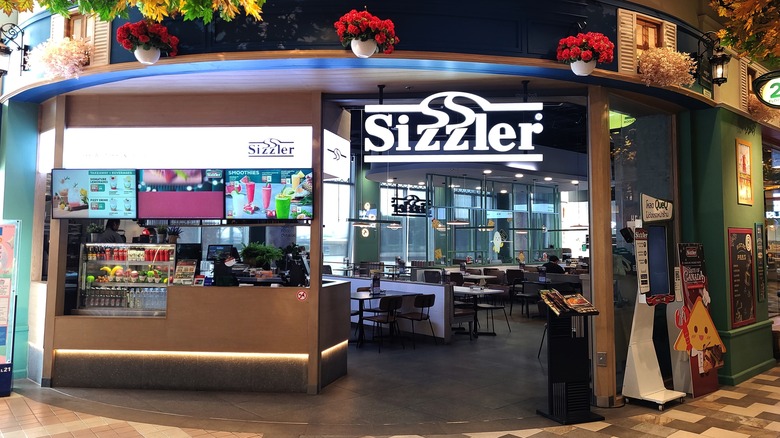
After Sizzler filed for bankruptcy in 2020, many assumed that the steak restaurant would soon fade into obscurity. However, the chain's CEO has other plans. Christopher Perkins took on the role of Sizzler CEO in 2019, shortly before its second bankruptcy filing. And, since then, Perkins has devoted himself to revamping the seemingly outdated chain. Perkins started by restructuring the company from the inside out, and led the company through a bankruptcy filing in 2020. Since then, Sizzler has worked hard to revamp the chain's public image. But rather than trying to strip Sizzler of its vintage reputation, Perkins decided instead to commit to the chain's nostalgic appeal.
Sizzler, and the branding firms it hired, began delving into old brand merchandise that was now on resale websites such as eBay. Research was done on all aspects of the brand's history, and old mascots such as Ribby, a cartoon bull dressed up as a chef, were brought back into use, along with new vintage-style characters that were added. Sizzler's label was also given a vintage tweak to appeal to customers in search of a time and restaurant experience long forgotten. This isn't an unheard of strategy, in fact, bringing back past brand aesthetics has become quite popular (just look at the new McDonaldland-inspired Happy Meal). Plus, plenty of other chains are pivoting to the past as well; nostalgia-fueled rereleases are having a moment, especially in the world of fast food. Ultimately, we'll have to see what time has in store for Sizzler. But you shouldn't count it out just yet.