

7 Worst Fruits To Use For Pie Filling, According To A Professional Baker
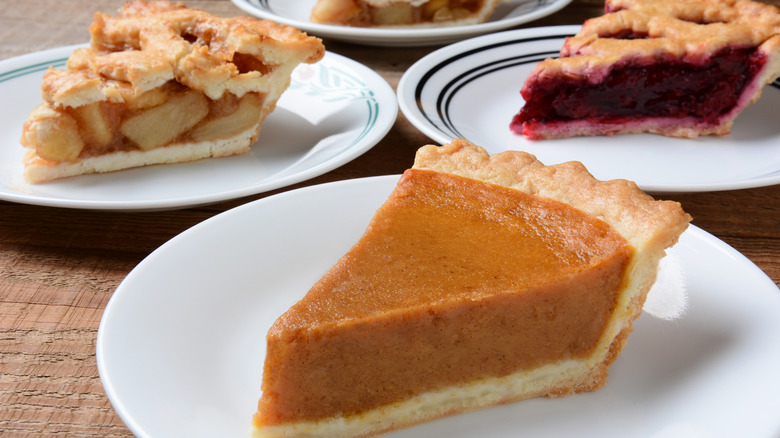
Not all fruits are created equal when it comes to pie-making or baking. While the produce aisles in grocery stores and farmers' markets are overflowing with colorful, delicious options, choosing the wrong fruit for your pie's filling can turn your homemade masterpiece into a soggy, flavorless disaster — leaving both you and whoever you wanted to share it with disappointed.
Being a professional pastry chef for nearly a decade, I've learned the perfect pie filling needs to strike a balance: it needs fruits that hold their shape well during baking, release just enough natural juices and moisture to create a luscious consistency without turning watery, and possess flavors that intensify and complement traditional pie spices rather than compete with them. There's a reason why berries, apples, pears, and stone fruits are so commonly used as pie fillings: it's because they have the structure and stability to hold up well during the baking process. If you're looking to bake a pie and wonder which fruits you should avoid, use this list as your guide. Here are 7 of the worst fruits you can use for a pie filling, plus some that are probably better left out of baked goods to begin with!
1. Papaya
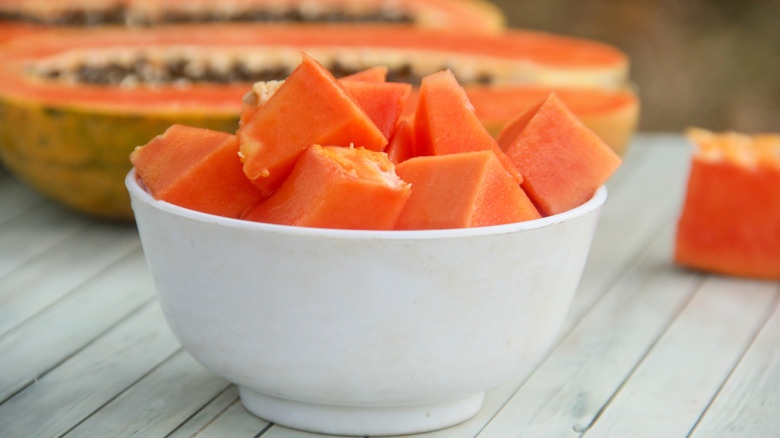
While a papaya is delicious with its sweet, creamy, floral flavor profile, it's not the first fruit you should be reaching for when whipping up a pie. There are a few different reasons; however, the biggest issue is that papayas are extremely soft and watery when ripe, and when they're cooked, they become somewhat paste-like. Even with thickeners like cornstarch or potato starch, incorporating a papaya in pie filling would most likely result in a soggy, watery filling. Any avid pie-maker knows that a runny filling will make the bottom crust mushy and could possibly crumble when sliced. If you're thinking that you could use gelatin, don't even try! Papaya contains a powerful enzyme called papain that is excellent at breaking down proteins, which will prevent the gelatin (a protein derived from collagen) from solidifying properly.
Not only will it have a mushy filling and a soggy bottom, but the color of the filling could be distorted since its beautiful yellow-orange color often becomes brown and greyish when exposed to prolonged heat. Also, if it's cooked for too long, papaya tends to lose its delightful tropical sweetness. While the background notes of natural sweetness will still be lingering, its floral and tropical flavor can become muted. The last thing someone wants when eating a papaya-based dessert is a flattened taste that's lost its vibrancy and fresh flavor.
2. Watermelon
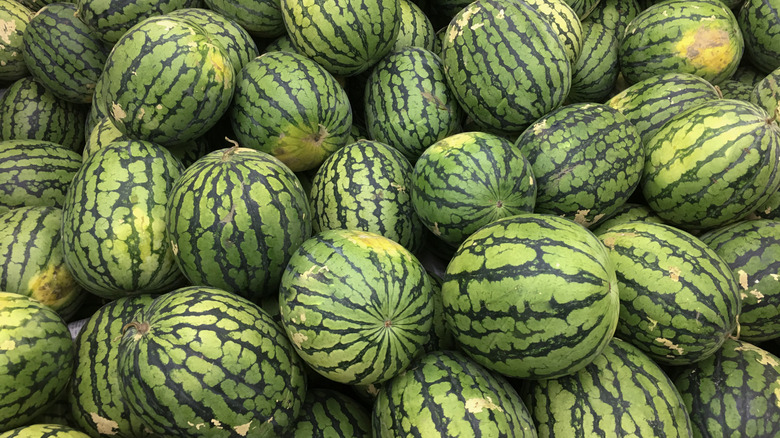
One of the most obvious fruits you should avoid when making a pie is a watermelon. For those of you who don't know, watermelons contain over 90% water content, which will make it nearly impossible to achieve a firm and set filling. An unset filling means the crust will become soggy, and you'll most likely end up with a liquid mess rather than a perfect pie slice.
Unlike fruits commonly used in pies, such as apples, berries, or cherries, watermelon contains very little pectin, the natural substance that helps pie fillings thicken and set during baking. While you can try adding cornstarch or xanthan gum to thicken the filling, the watermelon's high water content will create a gummy, unpleasant texture.
Beyond the consistency, watermelon's delicate, light flavor works against it when exposed to prolonged heat. Its refreshing, sweet taste will be lost and become bland and simply disappointing. Furthermore, its crisp texture will be broken, resulting in a mushy, pulpy consistency. The fruit structure doesn't pair well with sustained heat. Sturdy fruits like apples and pears will soften, whereas watermelon will basically disintegrate. However, if you really want a watermelon-based dessert, you can totally incorporate it into plenty of no-bake desserts such as fresh fruit tarts, homemade granita, and chiffon pies.
3. Persimmon
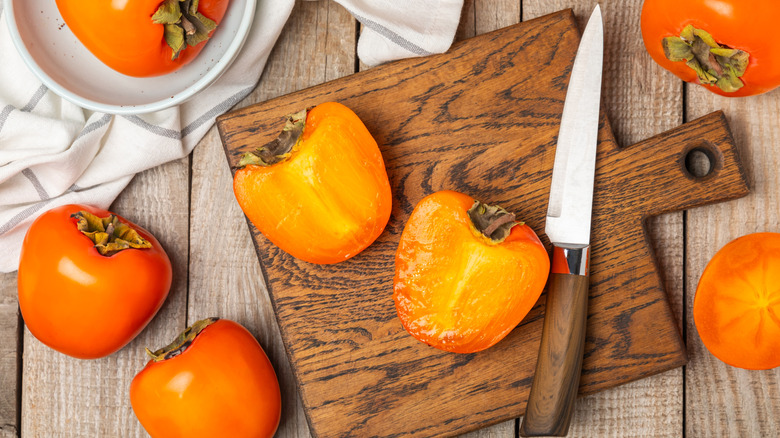
While persimmons are amazing in baked goods such as cakes, cookies, and tarts, their naturally tender texture makes them unsuitable for traditional pie fillings that require structural integrity. However, the main concern of persimmons is their astringent taste due to their high levels of tannins when they're unripe. These tannins create an intensely dry, puckering sensation definitely not what you want to be tasting in your pie filling. Even if you cook the fruit down with a mixture of sugar and spices won't remove the lingering astringent flavor.
Like many fruits, timing is critical since persimmons must be completely soft and ripe to be palatable. However, once they're ripe and ready to eat, they can be a bit too mushy and difficult to work with. Its texture becomes almost pudding-like, so if you're looking for chunky filling, steer clear! The fruit also has a relatively mild flavor profile that lacks the bright and tart flavors typically used for traditional fruit pie fillings.
4. Durian
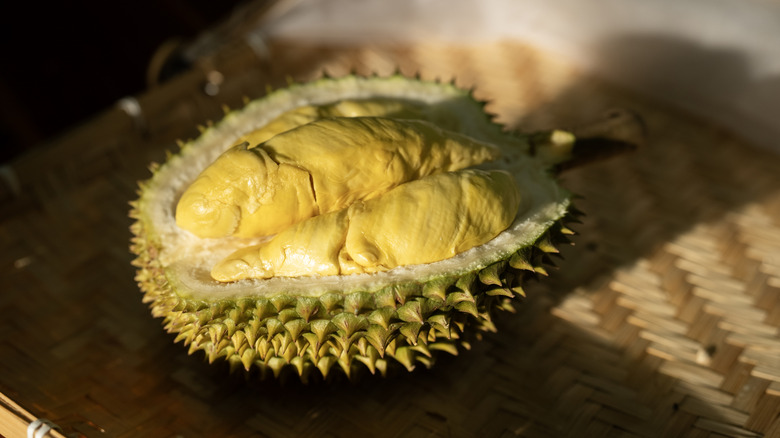
Oh, durian. This tropical fruit always seems to spark an intense debate wherever it's mentioned. While some people praise its complex flavor profile as creamy, sweet, and subtly savory, others described it as having a garlic, onion, and even gasoline taste. It has an overwhelming amount of challenges that would make it completely unsuitable for pie filling, the first being its infamous aroma. It's widely known for its notoriously pungent and stinky fruit that's banned on public transportation and in hotels across Asia. Its intense smell of rotting onions would penetrate your entire kitchen and definitely linger after baking. Additionally, its strong flavor will dominate the dessert, masking the taste of your perfectly buttery pie crust.
Besides the smell and taste, durian's custard-like texture isn't the best for the structure of a pie filling. Its flesh has a super creamy and soft consistency, which is almost paste-like when ripe. When exposed to prolonged heat, its structure would break down completely during baking rather than maintaining the delightful chunky texture that people crave in pie fillings. Similar to persimmons, it would result in a pudding-like pie filling that lacks any texture or bite.
5. Jackfruit
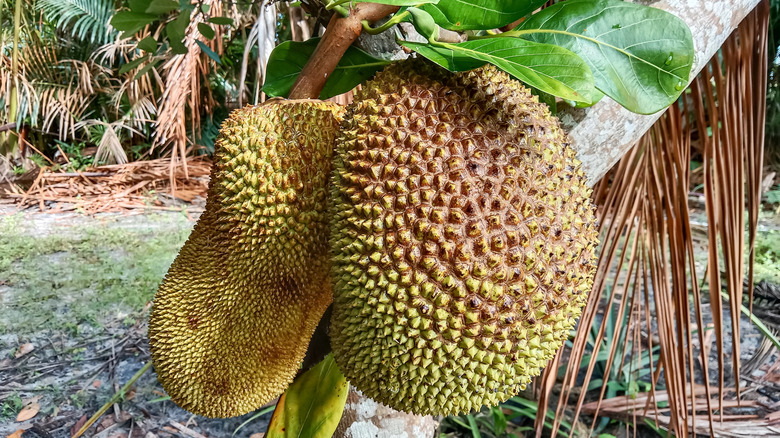
Another fruit that wouldn't be great as a pie filling is jackfruit. For those who haven't tasted it before, it has a sweet flavor that some describe as reminiscent of bubblegum. It's grown throughout Asia, Africa, and South America and is from the same plant family as the fig.
While it might be delicious eaten fresh, jackfruit's tough, stringy fibers make it poorly suited for the smooth, cohesive texture needed for pie fillings. Furthermore, when jackfruit is cooked, its stringy texture becomes even more pronounced, which, oddly enough, makes it the perfect meat substitute for a BBQ. Instead of tender fruit pieces, you end up with what feels like eating pulled pork or brisket in a dessert. The fruit's massive size also makes it quite hard to tackle. Individual jackfruits can weigh up to 40 pounds, and their sharp, spiky exterior makes it difficult to deconstruct without the proper kitchen tools. The flesh surrounds large black seeds that need to be carefully removed, and its sticky sap can coat your hands and tools, making it even messier.
6. Cantaloupe
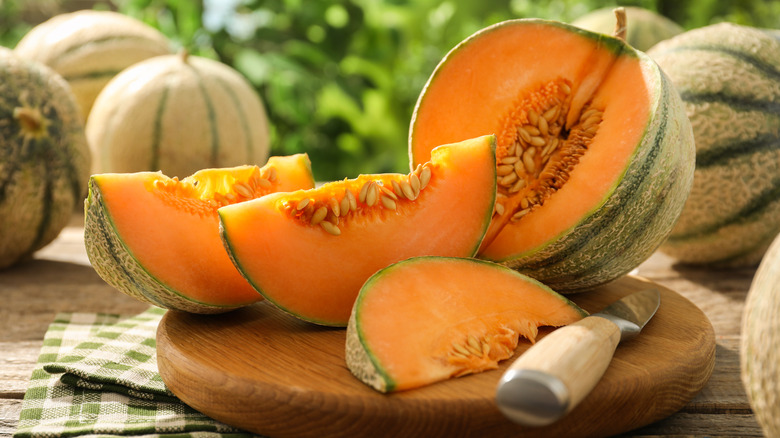
Similar to watermelon and many other melons, cantaloupe is about 90% water, making it unsuitable for a pie filling. Unless, of course, you want a pie with a watery and soggy filling. The fruit's soft texture will break down completely when exposed to prolonged heat, creating an unappetizing, liquid-like filling that lacks any structure. Unlike heartier fruits that maintain some texture when cooked, cantaloupe simply dissolves, leaving you with what amounts to orange-tinted water rather than a substantial filling with appealing mouthfeel. The excess water and moisture will overwhelm any thickening agents, plus it can ruin your carefully crafted pie crust.
Cantaloupe's mild floral flavor and subtle sweetness aren't best when incorporated into baked goods. The gentle sweetness that makes it so refreshing and tasty when eaten fresh will completely vanish during cooking, failing to provide the bold, concentrated fruit flavor that delicious pies require. If you want to make a cantaloupe-flavored dessert, you can try incorporating the fruit into homemade ice cream, fruit salads, or use it as a topping for a pavlova.
7. Kiwi
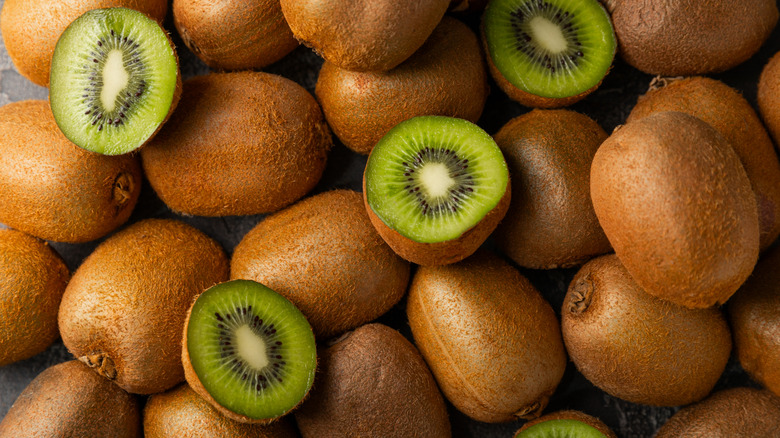
While kiwi is definitely an underrated fruit you should try tenderizing meat with, it's just not the best choice when it comes to pie fillings and sweet desserts. Similar to other high-moisture fruits on this list, kiwi contains significant amounts of water that prevent it from forming a stable, cohesive pie filling.
Beyond the watery consistency, kiwi contains a powerful enzyme called actinidin, which breaks down proteins and chemical bonds, preventing them from setting properly. This enzyme is so strong that it can completely prevent gelatin from firming up and interfere with thickening agents like cornstarch and tapioca starch. The fruit has an extremely tart taste that becomes intensified and unpleasant when exposed to extended heat, resulting in an undesirable flavor. Additionally, the fruit's beautiful green color will most likely fade and turn an unappealing brownish-green when exposed to high temperatures. Plus, the small black seeds, while edible, can create an odd, crunchy texture in a smooth pie filling. Besides pie fillings, there are plenty of ways to incorporate kiwis into your next baking projects. You can place them as a fresh topping on fruit tarts, or purée them and mix them into frostings, mousses, or cream fillings.