

The Mistake That's Causing Your Chow Mein To Come Out Soggy
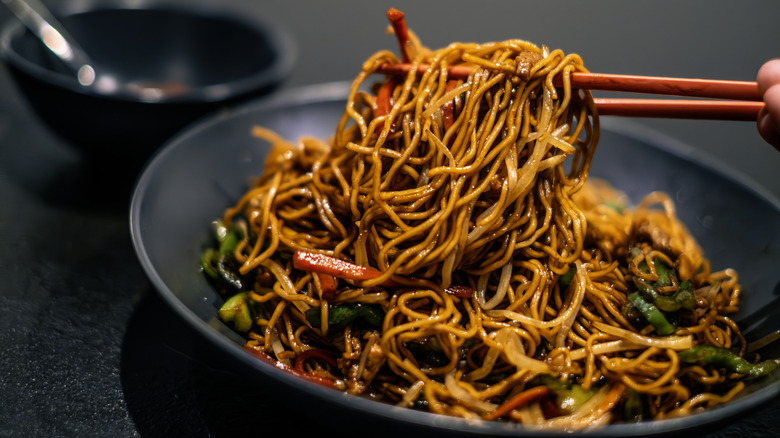
Chow mein may be a staple of Asian cuisine, but it is much loved around the world. The combination of savory sauce, stir-fried meats and veggies, and those firm-yet-tender noodles is irresistible. Unless, of course, your noodles come out soggy. Then all your hard work goes down the drain, and you've got a mushy mess that no one wants to eat. Luckily, Shirley Chung (@chfshirleychung on Instagram), a Chinese-American chef and alum of Bravo TVs "Top Chef," comes to the rescue with some exclusive insight on how to avoid this food fail. From pointing out potential flaws to storage tips for saving those leftovers for later, she shares great advice to keep your next chow mein dish from becoming a culinary disaster.
To begin with, Chung has some ideas about what might be making your chow mein noodles soggy in the first place. "If homemade chow mein comes out soggy," she says, "most likely you are adding too much liquid into the noodles." Too much liquid in the pan is a common mistake in cooking, and Chung says the issue is often exacerbated by another common mistake: not turning the heat up high enough. Together, these mistakes will leave you with soggy noodles, especially when you are including a lot of vegetables in your dish. "If you are not cooking at a high [enough] heat," she explains, "you are steaming and stewing the vegetables instead of searing them." This causes their water to leak out into the noodles; not only will they be soggy, but the vegetables will be missing the crunch that helps make a good chow mein so irresistible.
Perfecting the noodles is just the beginning
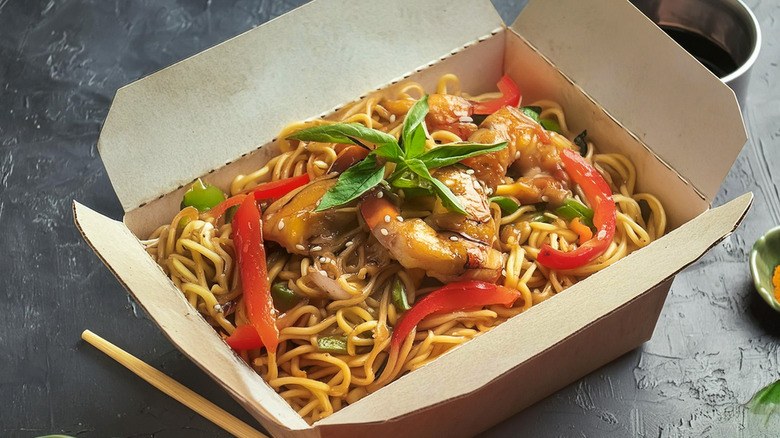
Perfect chow mein noodles are actually something of an art form. While there are many dishes that involve delicious noodles (like lo mein, which is prepared a bit differently), mastering the noodles is just one step toward perfection. Once you know what is turning your noodles soggy, you can work on perfecting the rest of the dish, like the sauce. As a key component of chow mein, this is a big deal, and Shirley Chung has some tips for getting it right. " ... [Mix] the sauce, following the recipe, [and] get it ready before you turn on the heat to cook," she says. And if your sauce recipe doesn't call for corn starch, Chung advises ignoring that directive and mixing in ½ teaspoon anyway. The corn starch, she says, will add a little thickness to the sauce that helps it coat your noodles even better.
Once you've perfected your noodles (and the sauce that makes them so flavorful), you can use them in all sorts of creative ways, from customizing your stir-fry to making a Massachusetts favorite, the chow mein sandwich. The best way to store leftover chow mein, recommends Chung, is to put it in an airtight food container in the refrigerator — not leave it in the to-go box — and eat it as soon as possible. "I wouldn't eat it after more than three days in the fridge," she says. And with perfectly textured, sog-free chow mein, eating up all those leftovers in that time frame shouldn't be difficult.