

The Beer Foam Myth You've Probably Heard That Simply Isn't True At All
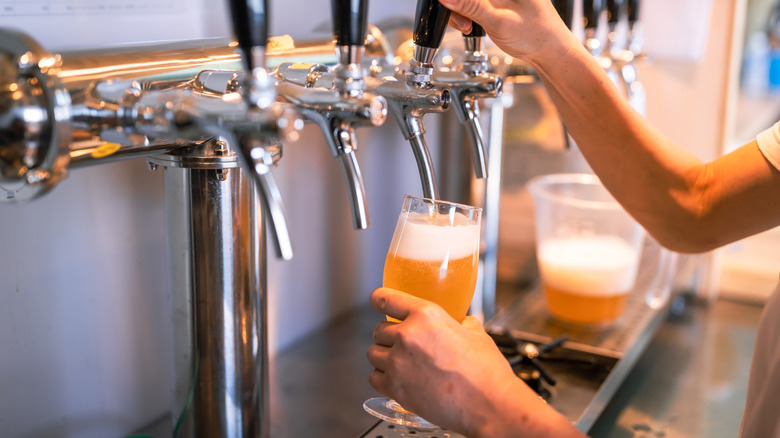
Different types of beer must be served at specific temperatures. There's a proper style of glassware for every type of beer. It seems like there are a lot of rules when it comes to drinking beer, and sometimes it's nice to just sip on a cold one without thinking about it too much. Many of these pieces of advice are accurate and come from a place of simply wanting to improve the drinking experience, but some are just straight up not true. One of the most popular beer myths is that beer foam is always a bad thing.
Of course, most of us don't want a pint filled with half foam, but the foam does serve a purpose. When beer is poured, whether from the tap or a bottle, the carbonation releases bubbles of carbon dioxide. These rise and create a foamy layer on top, which acts almost like a lid that traps aromas. Smelling beer is a part of the tasting process, so the foam helps concentrate the scent without dissipating quickly.
Foam also improves mouthfeel and drinking experience. Dense and creamy foam can soften dark, strong beers and also balance bitter IPAs. It is also part of the visual appeal of beer. A flat beer with weak foam signals that we may not have such a pleasant drinking experience, but a nice layer on top informs us that we'll be sipping on something cold, fresh, and carbonated.
What is the correct amount of foam for beer?
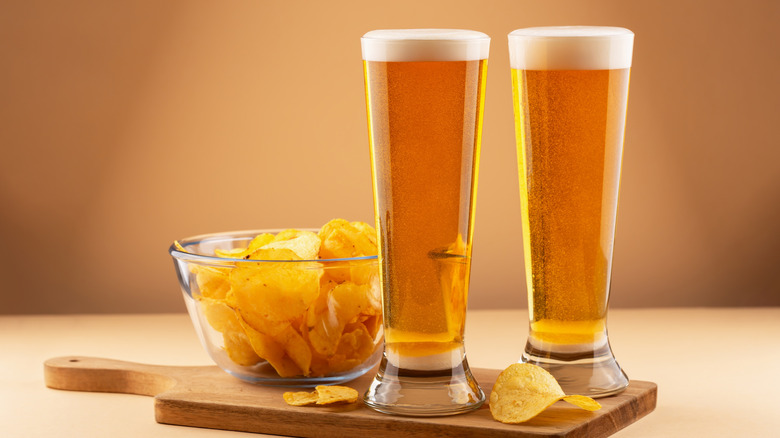
Imagine receiving a beer freshly poured from the tap that had absolutely no foam. You would probably assume that there was something wrong with the beer; the right amount of foam is often a sign of a well-made beer. There are, of course, exceptions to this rule; some beers, that have a higher alcohol content naturally don't have a lot of foam. If you're visiting Prague, you can get a beer with mostly foam, appropriately called milko for its creamy texture.
While the ideal amount of foam can vary by beer style, aim for about one to two fingers' width of foam at the top of the glass, or about 1 to 1 ½ inches. This is enough to capture aroma, improve mouthfeel, and give a visually appealing pour without feeling like you're getting skimped on liquid.
If you're not getting the correct amount of foam, it could be because you're not pouring the beer right. Start at a 45 degree angle and continue to hold the glass at a slant. Aim to pour the beer down the side to minimize heavy turbulence at first. Once the glass is about halfway through, tilt it upright, and let the beer fall directly into the center. This more direct contact is what helps create that creamy head. Pouring this way gives you control, so you can adjust for different types of beer. Know that draft beer will always have a silkier, more even foam, while beer from a can or bottle will have a head with larger bubbles that dissipate more quickly.