

Peanuts Aren't Actually Nuts: They're Related To This Savory Food
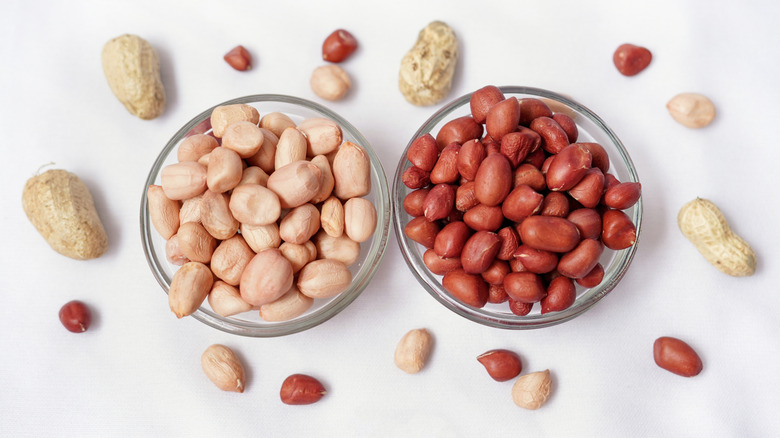
If you've ever read the ingredient label on a pack of peanuts, you may have noticed that they are not classified as tree nuts like almonds, cashews, or pecans. This is because, despite the misleading name, peanuts are actually not nuts. Rather, they belong to the legume family.
By botanical definition, nuts are dry fruits with a hard shell that enclose a single seed. Legumes, on the other hand, are edible seeds that grow out of pods. (And no, legumes are not the same thing as beans.) This means peanuts are a better fit for the diverse category of legumes, and are more similar to lentils and chickpeas than walnuts, chestnuts, or hazelnuts.
Despite not being actual nuts, peanuts are often included in this overarching category because they're used in similar ways, such as snacks or toppings. They're not the only non-nut to be classified as "nuts" for this reason. Almonds, cashews, pecans, and pistachios, for instance, are not true nuts either. They're actually seeds from stone fruits that fall under the category of drupes.
What does this mean for those with nut allergies?
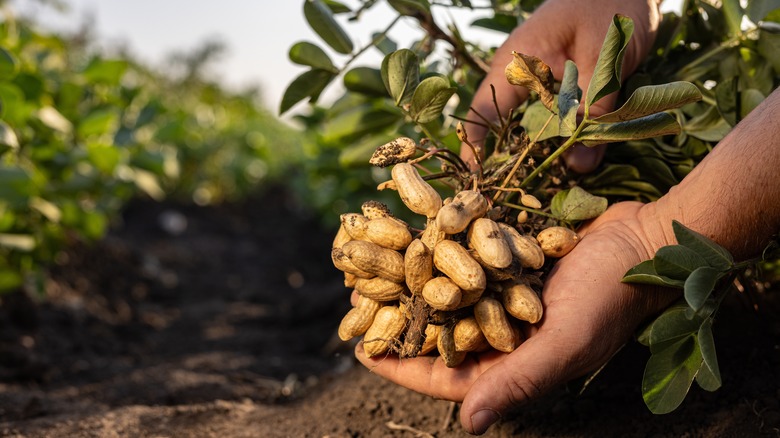
Since peanuts are actually legumes and not nuts, the compounds that spark allergic reactions in peanuts differ from those in tree nuts. Peanuts contain their own set of allergenic proteins, and the severity of an allergic reaction can depend on the allergen and your immune system. To be safe, consult your allergist before getting groovy in the kitchen with these groundnuts, be it bulking up your breakfast with this protein-packed legume, or whipping up a vegetarian take on a tuna salad.
If you are allergic to peanuts or have peanut-sensitive friends and family, you don't necessarily need to avoid all legumes. While it was once believed that peanut allergies extended to other legumes, research now shows that this is usually not the case. Legumes come in many varieties, each with its own proteins, and only certain ones have the potential to provoke an allergic reaction.