

Why David Chang Recommends This Uncommon Japanese Pot For Every Kitchen

If you care about cooking, you've probably spent a fair bit of time umming and erring over your cookware. Decking out your kitchen with the right equipment can be something of an obsession for the cuisine conscious among us, and striking the right balance between versatility, affordability, and quality takes time and careful consideration. Then there are those pans that seem to have it all: Stainless steel skillets, for example, or the classic enameled Dutch oven. And one underrated pan that should be on that list is a favorite of chef David Chang — the legendary Japanese donabe. The culinary mind behind the Michelin-starred Momofuku, Chang knows more than most about how to get the best out cookware (and has never minced words when it comes to his recommendations) and he swears by the donabe for its versatility and hardiness.
In an interview with GQ, Chang called this pot "the epitome of what I like" — and his go-to for flexible, one-pot cooking. So what is it? The donabe is a traditional clay pot, which traces its origins back to eighth century Japan. It's porous, retains heat, and remarkably durable. It's the ultimate one-pot pan: ideal for low and slow cooking like braises, rice dishes, roasting or even steaming fish, it's a powerful tool for any cook to have in their arsenal — there's a reason it's been a staple of the Japanese kitchen for generations, even if they aren't seen very often in Western homes!
What makes the donabe so unique, and why you should have one
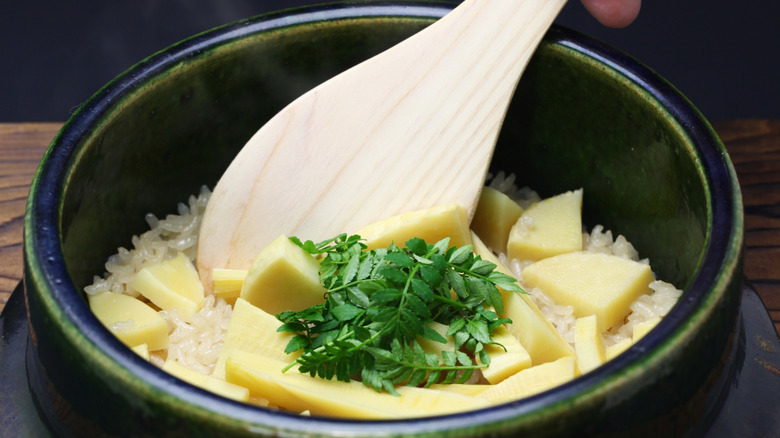
The donabe is made from earthenware — a more traditional way of making cooking pots that's seen more commonly in oven dishes than it is on the stovetop (especially in Western cooking.) But this unique way of crafting cookware has an equally unique set of benefits that, if you can get over the effort it takes to care for them properly, can make for a kitchen staple that'll change the way you cook. The clay that donabe pots are made from is porous, meaning that it builds heat gradually — taking slightly longer to heat up than steel, for example — but retains it superbly once it gets up to temperature, essentially acting as a natural slow cooker.
This means that the donabe is uniquely suited to communal cooking; since its inception it has been a presence in Japanese homes, especially at big family meals. It's perfect for dishes like shabu-shabu (an iconic Japanese hot pot dish similar to the Chinese version) for this reason, but is also adept at roasting, acting more like a casserole dish that can easily go from stovetop to table in one fell swoop. It also functions as the ultimate one-pot rice cooker. Making rice dishes (and even whole meals) in the donabe is easy — just layer up your ingredients, and get ready to experience some incredible textural and flavor combinations that pay homage to Japan's rich culinary heritage.
How to choose (and care for) the perfect donabe
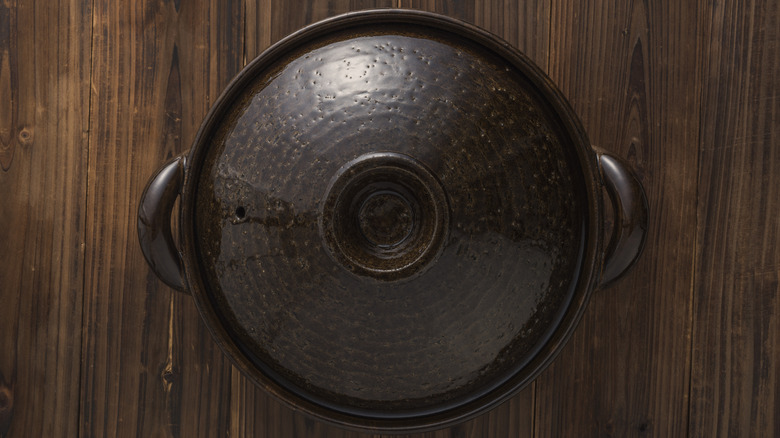
Once you've made the decision to take the plunge on a donabe the question becomes which one you should buy. Donabe come in all shapes and sizes, so choosing a pot that works for you is crucial. If you're buying your first donabe, you'll want a versatile, one-size-fits-all solution; the classic 2 ½ to 3-quart pot is a safe bet. This will be versatile enough to make everything from soups, rice, and stews to Japanese-style steamed fish or simple everyday one-pot wonders.
Donabe are hardy things, built to last — with the right care they can last for years, even decades. More of an heirloom than a disposable tool, they require careful heating over a longer period of time — make sure you don't heat one empty, either, as earthenware is uniquely sensitive to thermal shock, and adding cold liquid midway through cooking, for example, can lead to your pot shattering. Make sure you take care of it after use, as well. Hand washing in warm water and careful drying are essential. The extra effort, though, is worth it, as you'll gradually learn the ins and outs of your pot, making cooking with it feel practically effortless. They're rather beautiful, too, at least as far as cookware goes, and make for a charming addition to your stove or tabletop in a traditional melding of function and style.