

Is Your Garden Growing Teeny Tiny Brussels Sprouts? Here's What To Do ASAP
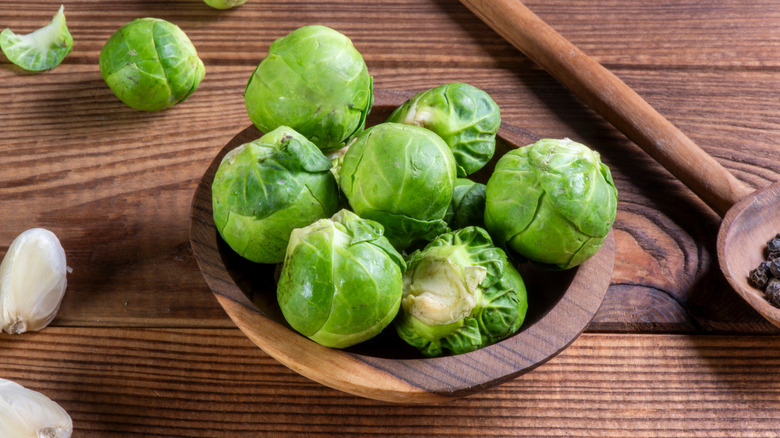
Whether you have a big back yard or live in a tiny apartment, gardening can get tough. If you don't have any garden space, there are veggies that can be grown in a pot for the apartment dwellers. And even for the seasoned gardener, it's good to look back on some solid vegetable gardening tips. Keep it relatively simple, don't overcommit, and remember that not all vegetables are easy to grow. One example of these is the Brussels sprout. The little Mediterranean native, related to cabbage, that grows on a stalk can be a bit confounding.
Sure, you may already know how to choose the best Brussels sprouts at the grocery, but what can you do if they're turning out way too small in your garden? Well, the first thing you need to do is trim the leaves. And we're not talking about the leaves growing on each tiny cabbage, but the huge leaves of the plant. Once your plant has grown to mature height, usually between 2 and 3 feet, depending on the variety, it's probably time to start pruning the leaves. And this doesn't even require any special tools; just your bare hands will work fine.
How to prune your Brussels sprouts leaves and other tips
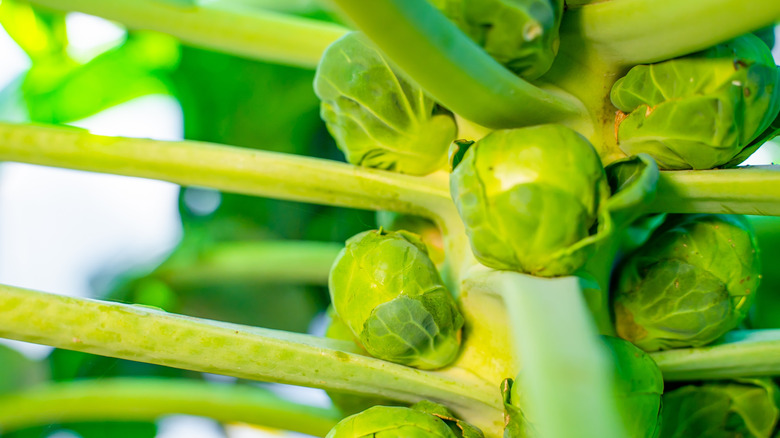
Once they've reached mature height, you'll notice tiny sprouts starting to grow on the stalk. Ideally, you'll remove about half of the leaves, moving from the bottom upward. The leaves should snap off pretty easily, but if you give a little pull, and they still don't break, you can just leave them attached. While the larger leaves produce a lot of energy for the plant (via photosynthesis), they also require a lot of energy to maintain, so once they're removed, the sprouts themselves will grow larger. Also, if leaves have started to yellow, meaning they aren't producing new energy for the plant, it's time to pull them off — usually the bottom six to eight leaves of the plant.
Another tip for growing Brussels sprouts is to avoid planting them too close together. Because of their height and wide leaves, they require a good amount of space, usually about 2 feet apart. They also grow best in full sunlight and love water, but make sure it's not too wet, which could bring rot. Brussels sprouts require about 80 to 100 days to mature, so, depending on your climate, you might seed them indoors or ensure they have enough time to mature outdoors. And, as a cool-season crop, you should time the planting to allow them to mature as cooler weather approaches.
Once you've grown those big, beautiful Brussels, there are some best practices for cleaning your Brussels sprouts. Give them a good rinse, then dry them off for best performance in the skillet or oven.