

Why You Shouldn't Can Meatballs
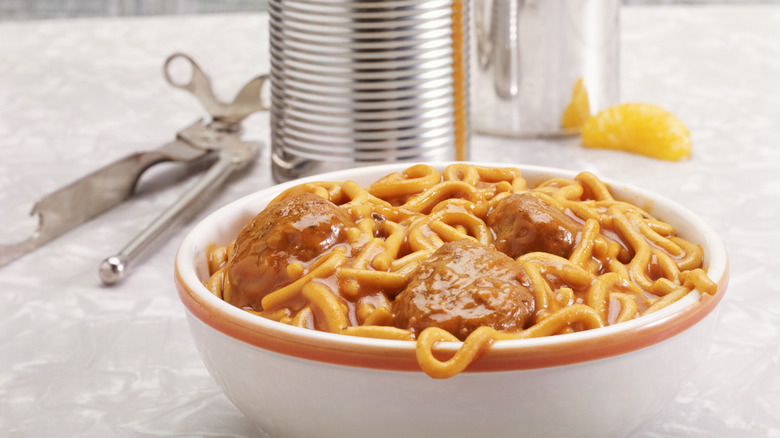
On nights when you're craving old-fashioned spaghetti and meatballs — just like mom used to make — having homemade meatballs already canned and ready to eat sounds like a dream. Unfortunately, it's not a dream you should try to make a reality; sadly, meatballs are one of the top foods you should avoid canning at home.
Chowhound spoke to traditional cooking expert Mary Bryant Shrader, creator of the Mary's Nest YouTube channel and author of "The Modern Pioneer Pantry," and she said that this is due to guidelines from the National Center for Home Food Preservation (NCHFP), which is considered the gold standard for home canning instruction. "The NCHFP does not provide a tested or approved recipe specifically for canning meatballs as a standalone item," Shrader said. This might confuse you, especially since the NCHFP does provide recipes for canning other meat products, and you can easily find blogs offering instructions for pressure canning meatballs.
However, the key reason that you shouldn't can your own meatballs is because of their non-meat ingredients. Sauces and filler ingredients like breadcrumbs, milk, cheese, and eggs play an important role in the taste and texture of meatballs as we know them. They also introduce too many unknown variables that can adversely affect heat penetration when canning. "Without specific, tested guidelines from the NCHFP, we cannot safely know the time and pressure needed to reach the correct internal temperature for the destruction of pathogens," Shrader said.
The safety risks of canning traditional meatballs
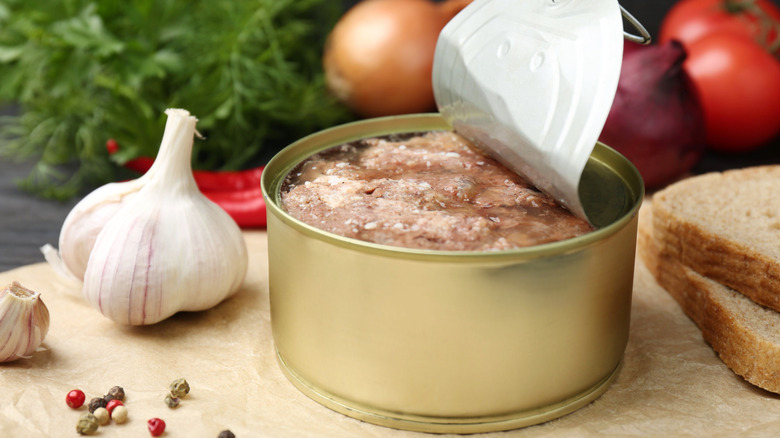
The NCHFP's lack of guidance on canning meatballs seems extra unclear when you consider that its official rules for canning meat mention shaping chopped meat into patties or balls. However, Mary Bryant Shrader clarifies that these guidelines do not refer to the kind of meatballs we actually eat, which contain numerous additional ingredients besides just ground meat. "The NCHFP's directions ... are formulated for plain ground meat — with only salt and cayenne pepper," she explained. But "most home cooks (especially from traditional food backgrounds) season meatballs more richly with those very ingredients that affect pH, density, and heat penetration." In other words, the NCHFP's definition of ground meatballs are "far from the cozy homemade meatballs most of us are thinking of," she said.
Proper heat penetration is crucial to safe canning techniques, because the heat from boiling water, along with pressure, is what kills off unsafe bacteria. Using filler ingredients in meatballs changes their texture and density, making them less permeable to heat, and the excess fat in some of these ingredients "can interfere with the canning lid sealing properly" and increase the risk of spoilage, Shrader explained. Some of these fillers are not approved for pressure canning at all, and may "create ideal conditions for the development of bad bacteria," which cause botulism. Therefore, if you want to enjoy meatballs with all the good filler ingredients (and we suspect you do), Shrader recommends freezing fully cooked meatballs instead, and pressure canning sauce separately.