

The Whipped Espresso Shortcut That Creates A Frothy Top Without Using Milk

One of the signature features of an excellent espresso is crema, the tan-colored foam that sits on top. Coffee aficionados all over the world agree that the perfect crema comes down to using fresh beans and a quality espresso machine. Sadly, not all coffee lovers have access to the best coffee bean brands or a coffee maker. (But if you are in the market, stick with the best espresso machines money can buy.) Luckily, there's a way to replicate that much-coveted crema using nothing more than water, ground coffee, sugar, and a moka pot, and it's called a cremina. Creminas have a sweet flavor due to the added sugar, and bring a nice caffeinated buzz that will keep you awake during those dreaded afternoon slumps.
Espresso creminas are made by mixing the first little bit of thick espresso drops that bubble up from a moka with granulated sugar. The sugar-coffee mixture is whipped up in a small bowl with a spoon as quickly as possible until it becomes a light brown paste. When the rest of the coffee from the moka pot is done brewing and has been poured into an espresso cup, a spoonful of the sugar-coffee paste is added to the top, creating the desired layer of cremina on your espresso.
Is espresso cremina like a Dalgona?
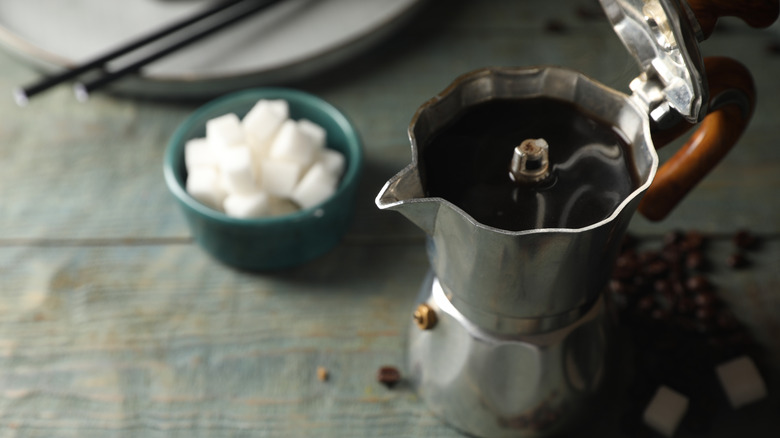
Though crema resembles frothed milk, unlike the Korean Dalgona and many other whipped coffee drinks, there's actually no milk involved. The creamy layer on the cremina is a result of espresso extraction, when air bubbles combine with the oils in ground coffee to create a frothy top. It's what gives espresso its rich flavor and long-lasting aftertaste, and is often why espresso from a coffee shop tastes different from homemade. Espresso creminas are made at home by those who want to replicate the crema that comes with an espresso made with a machine in a café.
The Dalgona, on the other hand, uses instant coffee, sugar, and hot water to create a whipped topping. The topping is then added to a glass of cold milk for a sweet iced coffee similar to a frappe. A hand mixer or electric whisk can be used to really froth up the sugar coffee mixture until it forms into peaks. The espresso cremina goes old school with just a coffee spoon and your hand doing the work of whipping, if you're making it the traditional way (you can, however, use the aforementioned machines to speed up the process). Dalgonas work well with milk, whereas the espresso cremina is consumed black to appreciate the subtle sweetness against the strong espresso flavor — a flavor you won't be getting from the instant coffee used in Dalgonas.