

This Iconic Vintage Candy Was Originally Made With Machinery From WWI
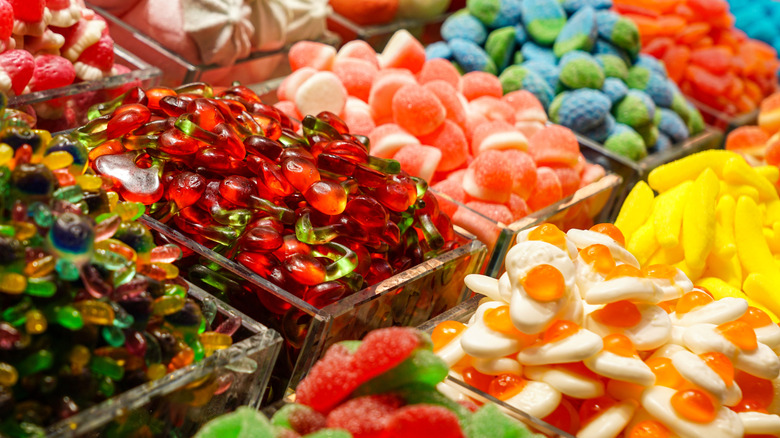
If you've ever gone trick-or-treating or just really enjoy a good bulk candy bag, it's safe to say you're familiar with Smarties (or "Rockets," to avoid confusion with the British candies of the same name). And it doesn't hurt that these candies are gluten-free, peanut-free, and vegan. But how familiar are you with their origins?
Smarties as we know them today got their start back in the 1940s, when British engineer and bona fide candy connoisseur Edward Dee moved to New Jersey with his family and set up Ce De Candy. The company would eventually adopt the name of its most popular product and become the Smarties Candy Company. This all sounds like a fairly unsurprising origin story, save for one thing — the original candies were made using old wartime pellet machines designed to compress gunpowder into ammunition. That's right! Instead of making bullets, Dee made candy.
While sources differ on whether the machinery came from the First or Second World War, a CBC interview with Dee's granddaughter, Liz, stated that not only did the pellet machines come from World War I, but the first prototypes of the candy were made in England. Either way, Dee didn't use the machinery until after WWII to make the sugary tablets known as Smarties. In another interview with Inc., Liz said that her grandfather first began selling the candies out of his New Jersey garage after having grown up in England in a family of candy makers. He eventually set up his own factory in Bloomfield, New Jersey, followed by another in Toronto, Canada, paving the way for Smarties to become a staple of Halloween bags and kids' parties for decades to come.
How are Smarties candies made today?
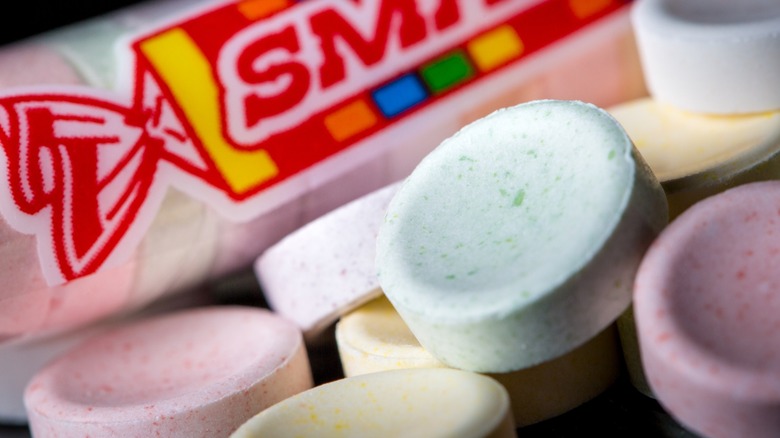
There are a lot of classic candies we wish we could have back, but the good news is that Smarties are still going strong. The Smarties Candy Company is still run today by Dee's descendants and still operates out of two locations (though they've since moved to Union, New Jersey and Newmarket, Ontario, Canada). Naturally, however, it wouldn't be very practical if Smarties were still made on the same old war equipment. So, how are Smarties made today? At its core, the Smarties-making process remains the same by compressing the powdered ingredients into individual candy tablets. But just as the candy's ingredients and flavors have seen some tweaks, the machinery used to put it all together has changed over the years.
The candy itself may be vintage, but the steps to make it have become thoroughly modernized. No longer requiring human hands every step of the way, the process starts with the ingredients — dextrose, citric acid, calcium stearate, and flavoring — being dumped into massive tablet-pressing machines lined up on the factory floor. After the candies are pressed into hard tablets, the flavors are randomly sorted and then wrapped up into individual rolls. Most of the process is automated, with conveyor belts connecting the tablet presses and wrapping machines. And, because they are automated, the machines are kept on most of the time, making Smarties 24 hours a day, five days a week. Together, the two factories produce over 2 billion rolls of Smarties in a single year!