

The Secret Behind Stracciatella Cheese's Smooth, Dreamy Texture
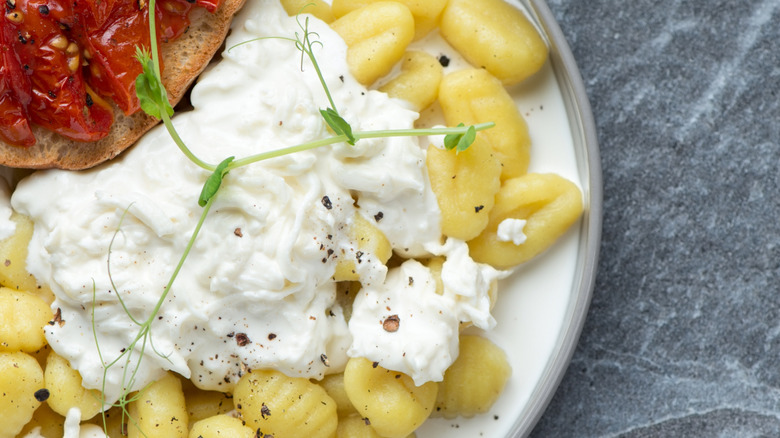
If you've ever opened up a piece of burrata and wondered about that creamy, milky interior, you're looking at stracciatella, a soft cheese from the Puglia region of Italy. Spread over crusty bruschetta or spooned over ripe summer tomatoes, stracciatella's smooth, dreamy texture is guaranteed to induce cravings for more. The cheese's name comes from the Italian word straccia, meaning "shreds" or "rags." You can also find the word "stracciatella" used to describe a Roman soup and a flecked chocolate gelato, three wildly different foods, all united by the idea of delicate shreds. This rustic yet delicate cheese has been wowing consumers with its creamy, smooth texture since its invention in the early 20th century. The secret behind that gorgeous consistency is the fact that those shredded mozzarella curds have been combined with fresh, rich cream from cows or buffalo.
The art of crafting stracciatella begins with warm mozzarella curds being pulled and stretched into long, thin strands by hand (or machine, for commercial production). They are then soaked in heavy cream. During this step, the curds slightly thicken the liquid as their bacteria from culturing consumes the lactose in the cream. This process creates the gentle, milky flavors of stracciatella and leads to its velvety, melt-in-your-mouth texture.
Traditional stracciatella is unbeatable
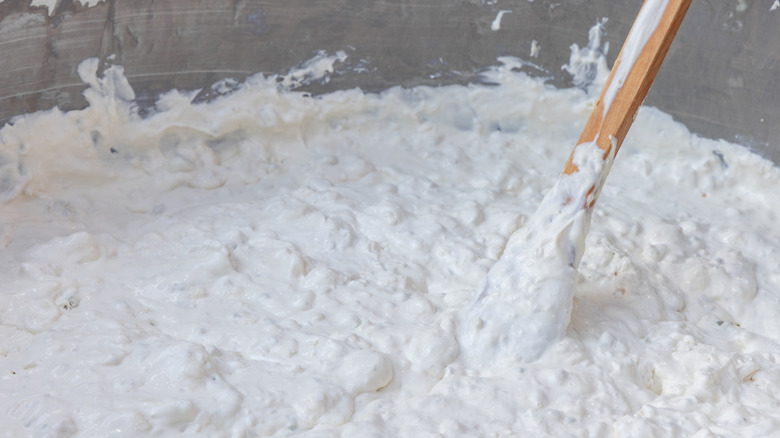
Though stracciatella can add finesse to any dish or table spread, it has rustic roots. In the early 1900s, amid economic turmoil in the Puglia region, local farmers were making do with what little they had. Mozzarella production left behind scraps of stretched curd that were too good to throw away, and too small to sell. Waste wasn't an option. So they gathered the leftover curds, soaked them in fresh cream, and created something entirely new.
While you can technically transform mozzarella into burrata at home with bagged, shredded cheese, you won't get exactly the same product as those innovative Italian cheesemakers or even their modern counterparts. Bagged mozzarella has a much lower moisture content and a higher amount of salt than fresh. It's also covered in anti-caking agents (which is why pre-shredded cheese doesn't melt well). Fresh mozzarella is best for stracciatella, but know that the Italian version is fermented, while this pricier and more time-consuming step is often absent in American mozzarella. You can still make stracciatella with it, but it won't have quite the flavor and creamy texture of the traditional version.
Once you've opened or made stracciatella, try to use it within three days, as high-moisture cheeses such as stracciatella or burrata have a short shelf life. Pair it with fruit preserves, whiskey-soaked dates, slices of mortadella, or simply drizzled with olive oil and topped with fresh basil. It's sure to be a crowd-pleaser.