

How To Pick A Watermelon Using One Simple Clue Based On Its Skin
We may receive a commission on purchases made from links.
In the season of fresh summer fruit, you want to make sure that you're choosing a tasty watermelon — after all, once you've got one, you're committed to quite a hefty amount of juicy, red-pink goodness. And while you can use little tests to determine how juicy your watermelon will be, you can also simply take a look at the watermelon's skin to see if it's worth picking up or not. At least, that's what Lisa Steele would tell you.
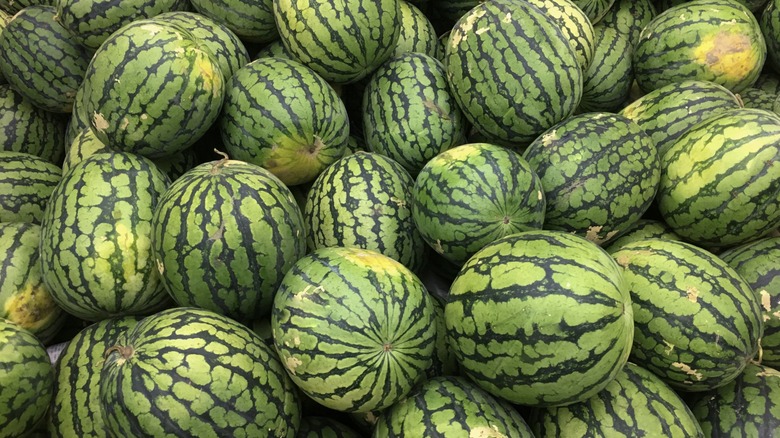
Steele, the author of the Fresh Eggs Daily blog, featuring coop-to-kitchen recipes, and "The Fresh Eggs Daily Cookbook," spoke exclusively with Chowhound, to divulgee that the condition of a watermelon's skin can tell you a lot about the fruit contained inside. "The outer rind should be a dull, matte, dark green color, not shiny and pale green," she says. "And the underside of a ripe watermelon will be yellow, not white or light green." These signs, Steele explains — shininess and pale spots — indicate underripe watermelons. Another sign of a good watermelon is that its green strips are spaced at least an inch or so apart. With that in mind, look for that matte color and wide-spaced strips, and enjoy the produce of summer while it's still at its best.
Don't try it 'til you knock it
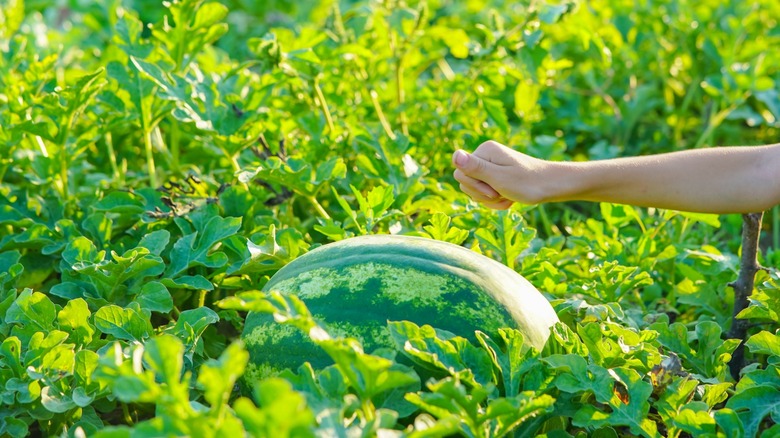
While Lisa Steele seems certain that the look of a watermelon's skin is a reliable indication of its ripeness, she still gives you another sense to use when you're shopping for one. Specifically, your ears can help you determine if a watermelon is ripe enough for purchase. "Rap the side of a watermelon with your knuckles to determine if it's ripe," she states, adding, "It should make a deep hollow sound, and should also feel heavy for its size." Meanwhile, a dull thud and a soft stem end indicate the melon is overripe and hiding mushy fruit inside.
All of these tests also ring true if you're growing watermelons at home. Per Steele, "Watermelons don't continue to ripen after they're picked, and the sugars develop late in the ripening process, so to get a nice, crisp, sweet watermelon, you need to use the same tests that you would use for a store-bought melon before you cut a homegrown melon from the vine." So grab a good watermelon and make sure you store it well to give it longer life. And if you happen to pick a watermelon at the wrong time, don't worry. As Steele explains, "Both underripe or overripe melons can still be made into smoothies or cocktails. The levels of sweetness will just vary."