

The Fix For Watery Mashed Potatoes Is Easier Than You Think
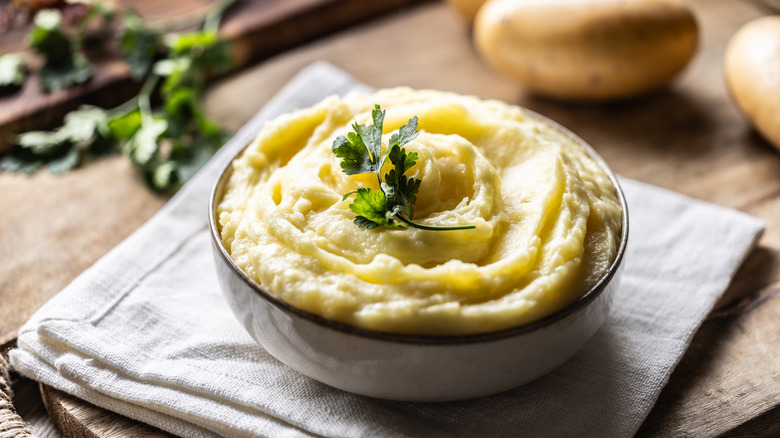
Whether you're cooking Thanksgiving dinner or just putting the finishing touches on a Sunday roast supper, it can be super frustrating to find that your mashed potatoes are just a bit too thin for your liking. There are many reasons why this issue can happen, from failing to fully strain the water (or half-and-half, if you opt for a simple swap) from the potatoes after they've boiled, to adding too much liquid (like milk, broth, or cream) during the mashing process. Thankfully, there's an easy fix to get your mashed potatoes back to their ideal consistency.
Adding a few tablespoons of instant mashed potato flakes can help to restore your mashed potatoes to the thick, fluffy texture that you're looking for. If you don't have any mashed potato flakes on hand, no worries! You can also shred a fresh potato (with a box grater), boil it quickly, and add it to your mashed potatoes to increase thickness. Within just a few minutes, your mashed potatoes should be back to their thick, gravy-holding glory. If you don't have any potato flakes and you've already used up your last potato, you've still got a few options. Adding a thickening agent like cornstarch to the mix can help bring your potatoes back to life from a thin, watery mess.
More ways to make even better mashed potatoes
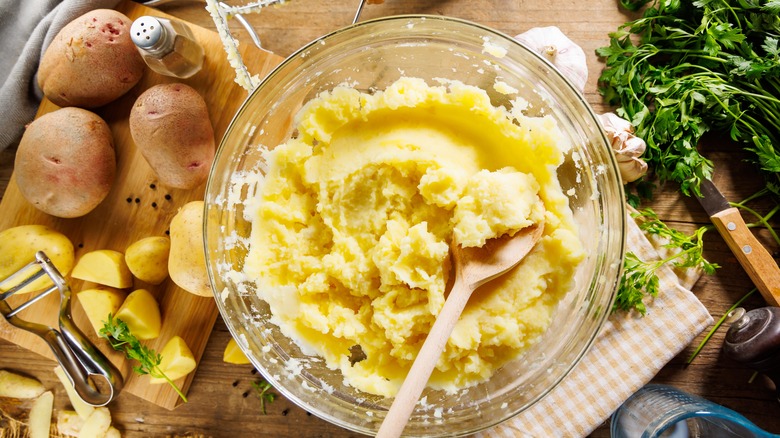
Mashed potatoes seem like a pretty straightforward side dish, but it's all too easy to run into bumps in the road. Understanding some basic mashed potato tips can help you create the right flavor and consistency, one step at a time. One way to set yourself up for success from the start is to be sure that you're choosing potatoes that are going to create the results you're looking for. Yukon Gold, russet, and La Ratte potatoes are all a good fit. No matter what type of potato you choose, be sure to start them in cold water, then bring the water to a boil.
After you've boiled and drained your potatoes, you're ready to add butter, liquid, and seasonings. Start by adding butter (and maybe a bit of sour cream), because adding fat before liquid components allows provides a richer flavor. No matter what type of dairy (or broth) you decide to add to your mashed potatoes, you'll want to heat it up first. This can help your potatoes hold their temperature, as can placing them in a slow cooker to prevent them from cooling down until they're ready to serve.