

Picking The Best Watermelon: 6 Rind Patterns To Look Out For
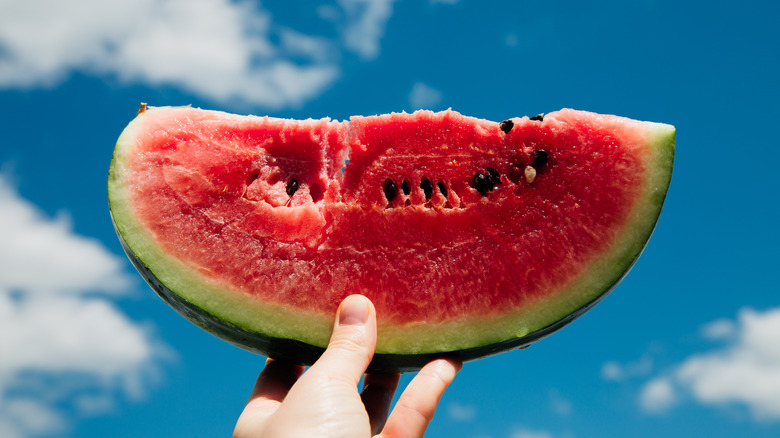
"I knew the way you know about a good melon," so says one half of a fictional elderly couple in the rom-com classic "When Harry Met Sally." The quote is about knowing when someone is your other half. But it does lead to the non-romantic question — how do you know about a good melon? And, in particular, how do you know about a good watermelon? While it may be tempting to take the moral lesson of looking beyond the surface, which many rom-coms espouse, into mind when sorting through the bin of watermelons, sometimes it is best to judge a book by its cover and a melon by its rind.
When it comes to watermelons, the highs are high and the lows are very low. A good watermelon is sweet, juicy, and crisp. It has refreshing flavor enough to belong in many dishes, from feta and watermelon salad (or cottage cheese and watermelon salad if you want a punch of protein), carving one into a festive drink vessel, to cutting them into a refreshing version of dessert "fries." However, if your melon is unripe, it isn't worth much of anything. The watery taste and styrofoam texture are sure to put a damper on any picnic or barbecue. So, you'll want to be extra vigilant when looking for a watermelon. While the large fruit is always a bit of a mystery (the meat of it sits well below a thick rind that makes estimating ripeness more difficult than with other fruits), there are a few clues that you can find on the surface level which can clue you in to the ripeness of your melon.
Look for the yellow field spot
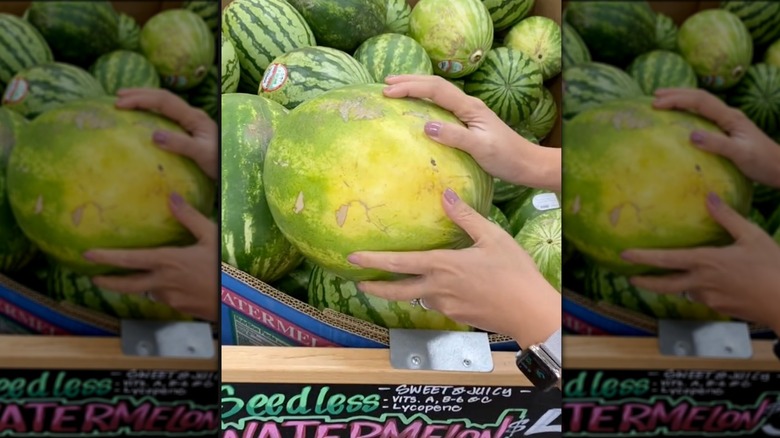
Let's start with one of the most obvious visual indicators of watermelon ripeness: the field spot. Simply put, field spots are the portion of the melon that against the ground as they grew. You can spot it by its lack of stripes. The color of a field spot varies and can give you a lot of insight in to how tasty your melon actually is. A yellow or orange field spot tends to indicate that your watermelon is fully grown and ripened, while a pale, cream or white field patch tends to indicate an immature, not fully ripened melon. Watermelons with yellow and orange spots tend to be sweeter and have a more developed flavor, while melons with white field spots might taste watery and bland. So make sure to reach for the yellow spotted melon.
Go for strong stripes
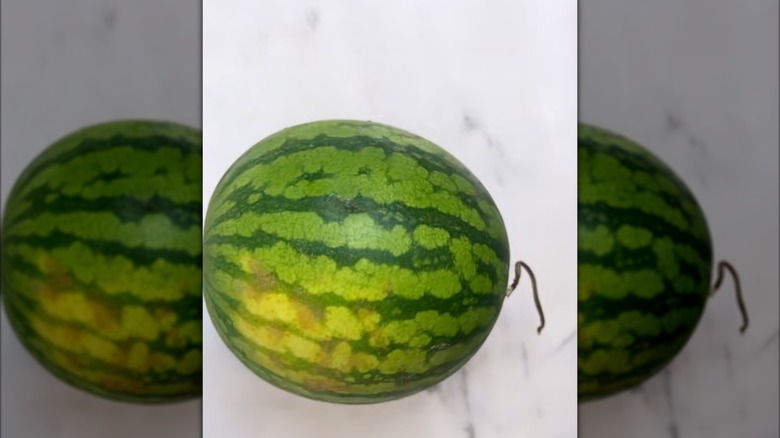
Like tigers, watermelons are known for their intense, squiggly stripes. And those stripes are more than just an aesthetically pleasing feature, they can also help you to determine if your melon will be delicious or disappointing. As with field spots, stripes (or the lack thereof) can be a great indication of melon ripeness. Ripe watermelons will have distinct, dark stripes that contrast with a lighter, sometimes yellow, background. These well-defined stripes are a sign that the fruit has fully matured and is ready to carve up. Some melon enthusiasts also swear by the "two-finger rule", which posits that you can check a melon's ripeness by comparing the stripe to the width of two fingers. If the dark stripes of your melon are about the same width as two fingers, it's good to go. However, this method is far from a guarantee, and many fruit fanatics believe the two-finger rule is nothing but blather. So, use with caution.
Grab a round melon rather than a long, oval one
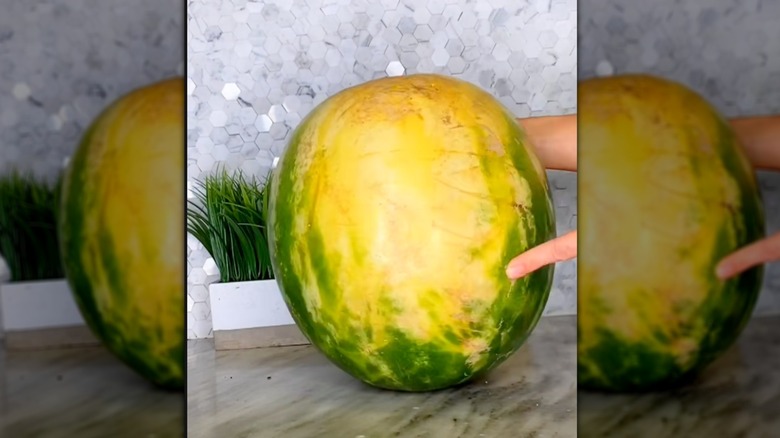
Now let's look at the shape of your melon. If you want to dig into the sweetest melon possible, you'll want to go round over long. A rounder melon indicates that the melon was properly pollinated, and also well-ripened. Round melons are more likely to have a concentrated flavor, while longer, oval-shaped melons tend to be a bit bland. You'll also want to make sure your melon isn't lumpy or misshapen in any way, as this can indicate that the fruit was not grown properly and may have an inconsistent taste or coloring. Also look out for any soft spots or abrasions to the rind. This may mean that your melon has gone bad (or is more vulnerable to spoilage).
Keep an eye out for brown webbing and spots
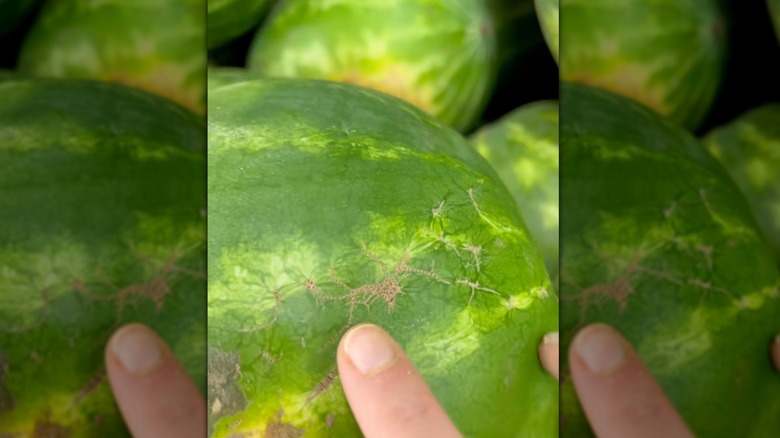
Oh, the webs we do weave. Often associated with spiders, webs aren't just the makings of eight-legged critters, they're also a key feature to look out for when sorting through watermelons. Webbing on watermelons tends to look like small, hatched "webs" that appear on the surface of the melon. Typically, they are often brown in color. These spots may appear, to the untrained eye, to be a sign of spoilage, but it's actually quite the opposite. The brown webbing on melons are portions of the fruit in which sugar has come through the surface of the fruit. This is a great indication that your melon is perfectly sweet and ripe for eating.
Sometimes dull is better
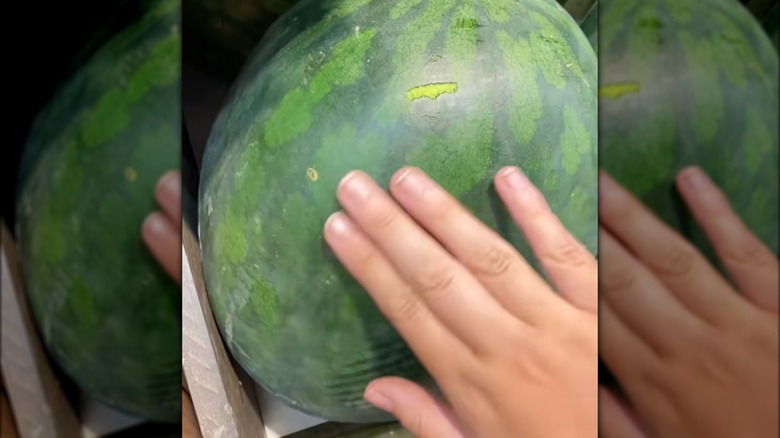
While shiny fruit is certainly appealing, it isn't always a surefire indicator that your fruit is ready for snacking. This is particularly true of watermelons, which actually become less shiny as they ripen. Shiny watermelons are most likely to be immature, since melons lose their shiny outer layer as they ripen on the vine, while dull melons indicate a fully mature and tasty fruit. So, make sure you pick a melon with a matte, flat finish.
The best have brown belly buttons
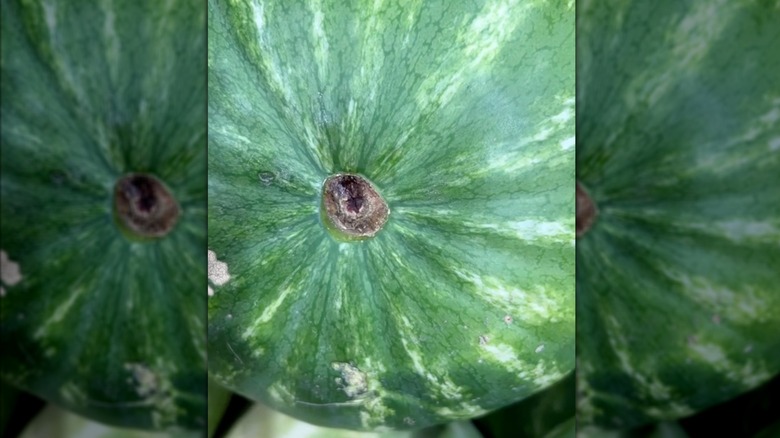
We've covered the stripes, the rind, and even the webs. But now it's time to press the button, the belly button that is. Also known as the stem stump, this is the point at which your watermelon was once attached to its vine. Ripe watermelons will have an inverted stem stump that is brown and sort of looks like, well, a belly button. An inverted stem stump is a sign that your melon was able to fully ripen, and separated from its stem on its own, rather than being pulled from the vine prematurely. If your melon still as a bit of green stem attached, similar to, stay, a pumpkin, but thinner, it is a sign that your fruit wasn't able to fully mature and will therefore not have a bright, ripe flavor that is so signature to watermelons. Make sure the stem stump is brown and indented before you put it in your cart.