

The Food Movie Scene That Made Anthony Bourdain Wince

Anthony Bourdain had controversial takes on lots of things in the culinary arts. And with his wildly successful foray into writing and showbiz, he wasn't limited to just talking about his favorite food dishes. He also opened up on how food was portrayed in pop culture and, in a particularly colorful Entertainment Weekly piece, spoke about his favorite culinary movies. As with all things Bourdain, these movies, or sometimes scenes from them, were not focused on feel-good foodie moments. Instead, he liked them for their realism — for how accurately they depicted what goes on in a chef's world.
One particular scene from the 1996 romantic comedy "Big Night" had Bourdain, along with the theater full of chefs watching the film, wince in unison. The scene (via YouTube) portrayed, as the late chef put it, "the pain of the chef whose food is correct but unappreciated." Placed near the start of the film, the clip is set in an Italian restaurant in New Jersey circa the 1950s, where an obnoxious diner complains about a seafood risotto that's been painstakingly prepared by the chef. To add insult to injury, the diner then orders a plate of spaghetti as a side to the risotto. The chef (played by Tony Shalhoub) refuses to honor her request and announces, "She's a criminal. I want to talk to her."
Most viewers will see what appears to be a mildly neurotic chef struggling against a "customer is always right" situation where the customer is most definitely wrong. And for most chefs, this is a frequent reality. It's this pain of serving a nuanced dish to someone who knows significantly less about food that "Big Night" gets so well, and it had Anthony Bourdain wincing when he watched it.
The Big Night seafood risotto scene is full of hilarious culinary faux pas
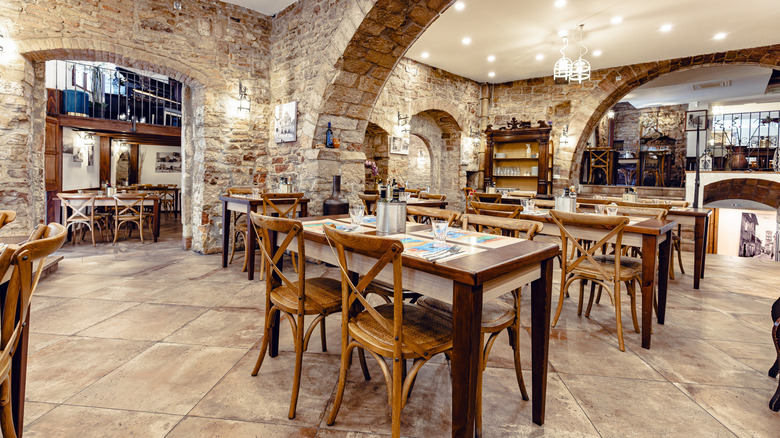
While the scene's premise is universally funny, it also cleverly layers in a host of jokes for those with varying degrees of food knowledge. It starts with the customers, a couple, being served, and the basil garnish is promptly discarded after one of them refers to it as "leaves." Their never-ending requests for cheese, the assumption that all main courses come with a side of spaghetti, and the shock that a spaghetti dish can be made without meatballs are all hilarious. The chef's horror at being asked to supply a side of starch (spaghetti) to someone already eating a starchy risotto (rice is starch too) leads him to question if he should also add a side of mashed potatoes (another starch).
The scene also shows the eccentricities of the chef very well, right from the start when the maître d (played by Stanley Tucci, who also co-directed and co-wrote the film) rolls their eyes as the chef carefully garnishes the central risotto. Later, the chef insists on talking to the customer who asks for a side order of spaghetti, but then refuses to, saying they're a "philistine" who wouldn't understand the nuances of his dishes anyway. Anthony Bourdain had similarly strong opinions about certain types of diners, and in his maiden 1999 New Yorker piece, titled "Don't Eat Before Reading This," he even referred to someone ordering their steak well done as, well, a philistine.
One of Anthony Bourdain's favorite risottos is similar to the one seen in Big Night
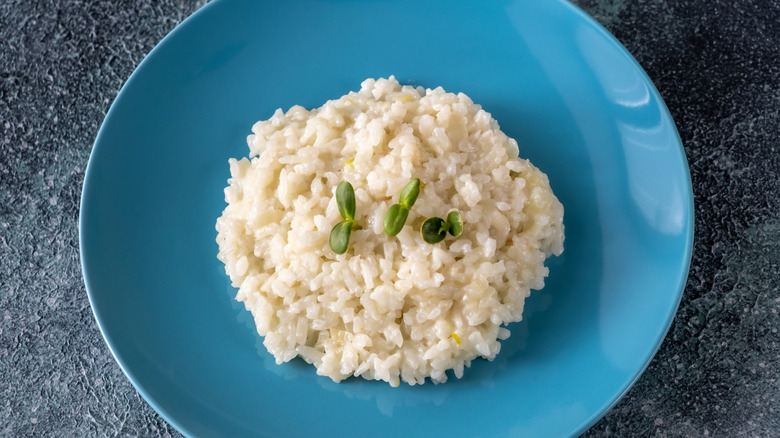
When watching the scene from "Big Night" that Anthony Bourdain refers to, one may wonder whether the customer, for all their faults, does have a point. Most seafood risottos come with garnishes and distinguishable pieces of seafood, and the one in the movie looks relatively plain and homogenous. While not expressly specified, it's possible that the dish served to the customer in the movie is inspired by a classic Venetian dish called Risotto di gò (or gò risotto). In fact, Bourdain eats the very dish while touring Venice in an episode of "No Reservations" and even brings up the scene from the movie (via YouTube).
A risotto di gò is made using a burrowing fish called the grass goby (locally called "gò" in Venice and "ghiozzo" in Italian). Full of bones, the fish must be gently cooked into a broth to extract flavor, while also ensuring it doesn't break apart, as that causes the release of a bitter taste. As Bourdain eats the dish at a Venice restaurant run by the same family for five generations, he and the show's audience learn how the risotto, made with this deeply flavorful broth, looks exceedingly plain but channels a deep flavor and creamy texture that the late chef describes as truly singular. The specific fish aside, making a perfect risotto isn't too difficult, provided you follow a few key pointers. And, of course, don't serve it with a side of spaghetti.